Recently I’ve been between jobs, and I didn’t want to sit at home waiting around, so I went out on my own initiative to scout a few brick-and-mortar industries. After ruling out phone repair and braised deli food, I finally settled on learning barbecue, crayfish and multigrain jianbing, treating the food business as a fallback. But I’m also quite clear about this: food service isn’t an easy lane where you can coast — it’s a heavily saturated, extremely physically demanding industry. So my core strategy is: learn the trade first, test with small costs, absolutely never blindly open a capital-heavy shop, and keep job hunting at the same time, using my technical skills to leave myself a backstop for the future.
I. The Core Idea: Being Between Jobs Isn’t Waiting, It’s Actively Looking for a Way Out
This isn’t an impulsive startup; it’s about paving a few extra roads for myself.
- I don’t want to idle at home: rather than scrolling job apps every day in a state of anxiety, better to go out and look at the real market;
- A trade is a fallback: learning a skill that can feed me gives more security than simply sending out resumes;
- Refusing heavy assets: I’ve seen too many people rent a storefront, buy a franchise and renovate all in one go, and end up losing over a million, so from the very start I set myself a bottom line of “small-scale trial and error.”
II. Industry Scouting: Why Did I Rule Out Repair and Braised Deli Food?
Before deciding to learn the food business, I looked at two directions first, and gave up on both.
1. Phone/Appliance Repair: Demand Is Shrinking
This industry is already a red ocean with brutal price wars. More importantly, people’s consumption habits have changed — replace rather than repair. There are fewer and fewer scenarios where phones and appliances genuinely need fixing, leaving only basic services like screen protectors with a small amount of demand. The room for growth is limited, so I ruled it out outright.
2. Braised Deli Food: Saturated Market, High Franchise Fees
After scouting the area in person, I found the number of braised-deli stalls and shops is enormous — basically saturated. And the brand franchise fee runs to over thirty thousand, so the return on investment isn’t great. Taking everything into account, I gave this up too.
3. Observations at the Food Training Institute: Too Many People Flooding In
After signing up for classes I found students arriving at the training institute without a break, from all kinds of backgrounds: failed entrepreneurs, construction site foremen, office workers eliminated by their industry, across every age group. This shows that the food business has already become a backup option for many people after losing their jobs, and it also indirectly confirms just how saturated this lane has become.
III. The Learning Experience: It’s Not Just About Learning, It’s About Whether Your Body Can Take It
1. Why Barbecue, Crayfish and Multigrain Jianbing?
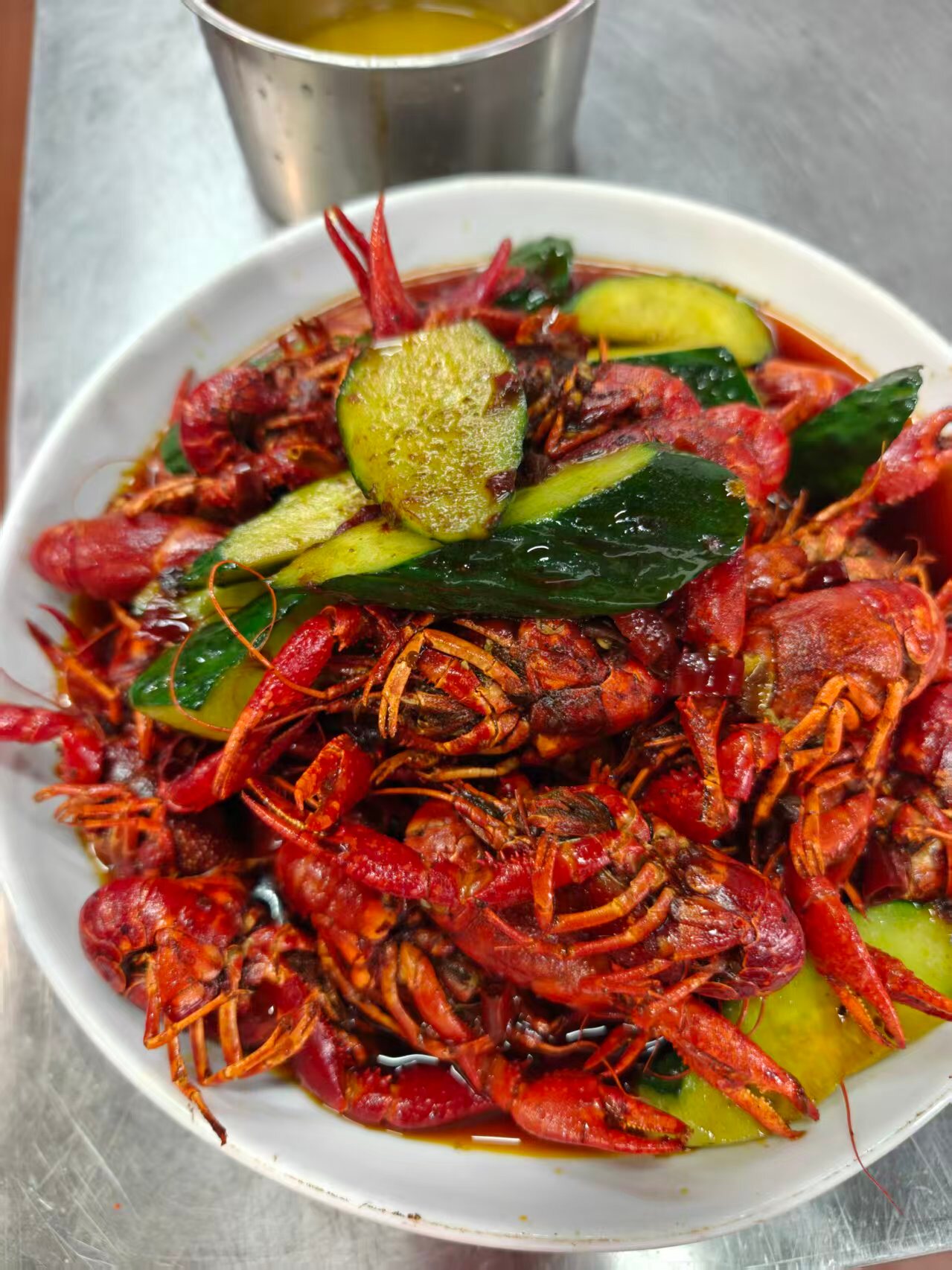
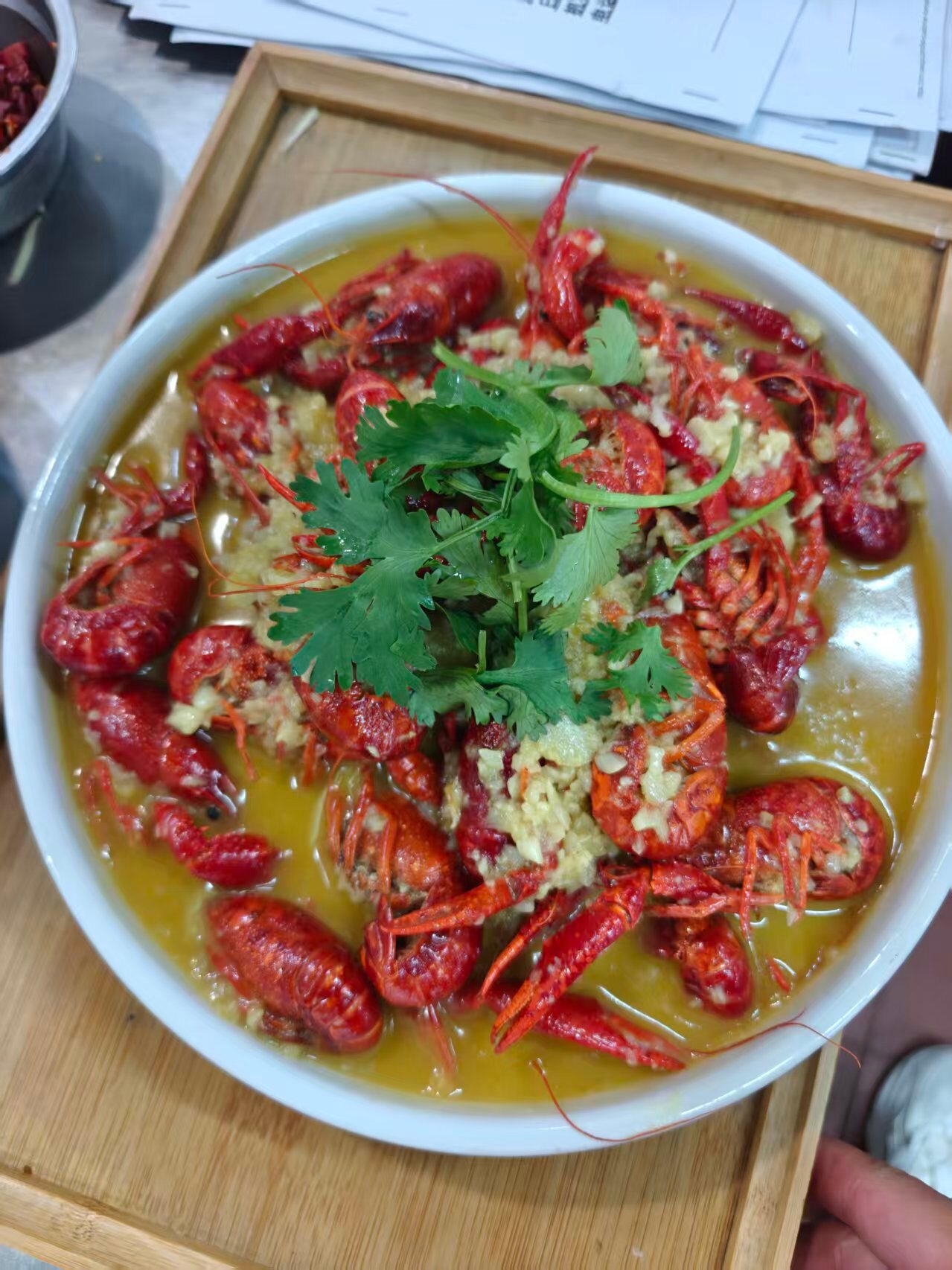
At first I learned barbecue and crayfish for a very simple reason — to be able to cook them at home for myself. But later I gradually noticed that each of these categories has its own characteristics:
| Category | Characteristics | Scenarios I observed |
|---|---|---|
| Barbecue | Strong late-night social appeal, relatively controllable gross margin | Many stall operators nearby; already a red ocean |
| Crayfish | Highly seasonal, high repeat purchase, strong memory point | Good for short-term hit products that draw traffic |
| Multigrain jianbing | Breakfast essential, fast service, low cost | Breakfast options at my neighborhood gate are one-note; there’s a gap |
Around my residential compound, breakfast is basically only steamed buns and mantou; multigrain jianbing is almost entirely absent. So after finishing the course I plan to set up a stall at the compound gate first to test the water.
2. Hands-On Work Is Harder Than I Imagined
Having worked at a computer for years, my first real hands-on experience in food service was a huge contrast:
- Heavy physical burden: prep work and skewering easily stab your hands with bamboo sticks; barbecue requires standing for long stretches until your legs ache unbearably;
- Risk in the operation: commercial burners run hot, and oil splashes out easily and scalds you;
- A psychological challenge: I’m personally afraid of clawed seafood like crayfish and crab, so washing crayfish is both a technical job and a mental battle;
- Common to every industry: every trade has its own difficulties. The barrier to entry in food service is low, but sticking with it isn’t easy.
IV. My Actual Situation: Job Hunting Gets Harder with Age, So I Have to Save Myself
1. Repeated Rebuffs in the Job Hunt
I have an internet-related background, and in recent months I’ve sent out a lot of resumes and interviewed with quite a few companies. For some positions the earlier rounds went well, but in the end they hired younger, cheaper candidates. I did previously land an offer of over 20k, but I didn’t take it. At first my hoped-for bottom line was the same salary as before, but at this point even matching it looks difficult.
2. Employment at an Older Age Isn’t a Personal Problem, It’s a Structural Predicament
Every year tens of millions of fresh graduates enter the job market, on top of layoffs at the big internet companies (like the large-scale layoffs over in Yuhang District, Hangzhou), and AI has replaced some positions too, so competition keeps intensifying. Putting myself in their shoes, companies also prefer to hire young people — a reality that’s very hard to change in the short term.
3. Adjusting My Mindset with “Separation of Tasks”
I thought of how rickshaw pullers of different ages were treated differently in Rickshaw Boy, which is actually quite similar to the situation of older migrant workers today. But I also agree with Adlerian psychology’s separation of tasks: whom a company hires is the company’s business, and I can’t control it. What I can do is find myself a road that lets me survive.
4. Why Not Do Food Delivery or Ride-Hailing?
I haven’t yet reached the point of real financial hardship, and I don’t want to trade pure physical labor for time. I’d rather prioritize mastering a trade that can feed me over the long term.
V. The Plan Going Forward: Two Tracks in Parallel, Trial and Error in Small Steps
1. Principles for Testing the Food Business
- Test endurance first: confirm whether I can withstand the intensity of the long hours of labor in food service;
- Research thoroughly: stake out and observe the stall operators nearby — what time they set up, what time they pack up, peak customer flow, customer preferences;
- Trial and error at small scale: invest at low cost first, recoup the cost and validate feasibility before gradually adding more, and absolutely never rent a storefront from the start.
2. Keeping the Job Hunt as the Main Track
While researching and trying out a stall, keep sending resumes and looking for internet-related work. Don’t put all my chips on the food business.
3. Empowering the Food Business with Technical Skills
If I really do go into food service in the future, I can bring my programming and development background to bear:
- Build my own POS system, customer CRM and ordering system, saving a chunk on software procurement;
- Use AI tools for marketing, copywriting and data analysis;
- Combine internet thinking with brick-and-mortar operations to create differentiation.
4. Some Additional Industry Observations
- Physical retail shops can’t be filled even with a year of free rent; after the big-company layoffs, the once-overheated restaurant market downstairs went under in droves;
- The owner of a restaurant that had been running for years finally shrank the food business and switched to selling fruit, and ended up making more money with less effort;
- The public still prefers food made by hand on the spot; acceptance of stir-fry robots isn’t high yet.
In one sentence: at a time when the macro environment is unstable and job hunting gets harder with age, I’ve chosen to learn a food trade as a fallback, but I won’t blindly sink in heavy assets. Research first, test with small costs, develop on two tracks, and meanwhile use technology and AI to leave myself a backstop. Lifelong learning still beats sitting and waiting for doom.
评论
0 条评论