Introduction
The workplace circles have an absurd set of “unspoken rules”: a long gap = slacking and unstable; having done outsourcing = a dirty resume and inadequate ability. Countless middle-aged wage workers are PUA’d by these stereotyped labels into self-consuming anxiety, always feeling their resume has a stain and their career has been directly downgraded.
But bluntly put, everyone’s been fooled by workplace tricks. Dig through the underlying logic of the workplace with the film Johnny Keep Walking! (《年会不能停》) and you’ll understand: what’s truly dirty has never been the outsourcing resume or the unemployment gap, but this rotten set of workplace rules that only looks at cost-effectiveness, practices identity discrimination, and frantically eliminates middle-aged wage workers.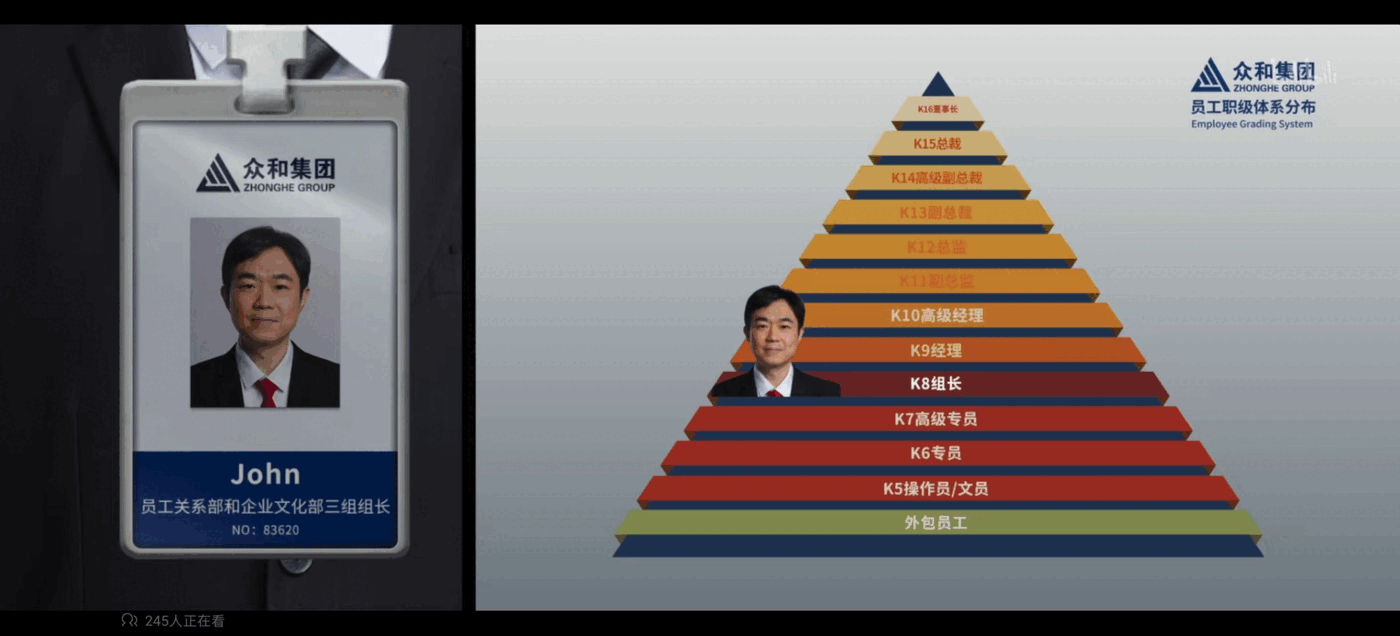
1. The Chain of Contempt: An Artificially Manufactured Identity Barrier
Everyone’s prejudice against outsourcing comes from the naked hierarchical chain of contempt in the workplace. Anyone who’s seen Johnny Keep Walking! understands: the company’s rank pyramid lays out the double standard of employment plain as day:
- Full-time employees enjoy a complete rank system, promotion paths, year-end bonuses, the five insurances and one fund, and a sense of belonging — from the grassroots to senior management, there’s a path to climb and benefits to enjoy.
- Outsourced employees are directly kicked out of the company’s core system, pinned hard at the very bottom of the pyramid, purely workplace “second-class citizens.”
No rank, no promotion, no benefits, no recognition — outsourcing, bluntly put, is the consumable among consumables, a disposable item the company uses at will and tosses when done. The most ironic part: doing the exact same work, a full-time employee calls it “tackling core business,” while an outsourced worker is defined as “low-end repetitive grunt work”; pulling off a project landing the same way, the full-time employee polishes their resume, gets a raise, and earns a promotion, while all the outsourced worker’s effort is directly ignored — even turned into a “minus point” in HR’s eyes.
This artificially manufactured identity barrier forcibly smears an ordinary person’s bread-and-butter job into a workplace stain.
2. People Who Choose Outsourcing Aren’t Unskilled — They’re Backed Into a Corner
Let me say it sincerely: middle-aged people who choose outsourcing really aren’t unskilled; they’ve been backed into a corner by reality. The Liangshan heroes in Water Margin (《水浒传》) weren’t all good-for-nothings either. Most were capable people with nowhere to turn, driven to a dead end by the world. I’ve now joined an outsourcing company, and on my first day I went to be stationed on-site at a certain client big company. I don’t even know where the company I signed the contract with is located, because it doesn’t matter — this company normally doesn’t manage you; all the work is at the client. Bluntly put, it’s dispatch. I see many hospitals now use dispatch too. Labor law is too strict, hiring on your own costs too much, so companies think of every way to avoid the cost of hiring and firing.
I used to be a full-time employee at internet giants too — I worked at NetEase and Youzan for seven or eight years. When my last company hired me, I remember the person in the department who referred me even got a hefty referral bonus of over 5,000. At the time I was solidly an industry veteran and business backbone in the team, able to lead projects independently, building RPA from 0 to 1 and solving forty or fifty thousand online problems a year through automation. But as the industry dividend faded, the economy declined, and layoff waves became the norm, the age-35 workplace red line directly locked off the way out for most people. I looked for half a year — it wasn’t that I couldn’t find anything, but that even matching my old salary was hard, with pay slashed in half.
Today’s workplace is absurdly split: officially we’re required to work until 65 before we can retire and collect, yet the workplace mass-optimizes middle-aged people out and shuts the door on them at 35. Above, you have to support the elderly; below, you have to raise children; on your back presses a decades-long mortgage. Middle-aged people long ago lost the capital to be picky about jobs or talk about ideals. The only demand of going to work is to earn a stable living and keep family expenses steady. When all the decent big-company full-time roles shut their windows completely, outsourcing is the last life-saving straw for ordinary people to not slack off, not cut off income, and carry life onward.

No one is born liking to do outsourcing. I previously got an Alibaba Cloud large-model outsourcing opportunity at 16k, but in the end, hearing it required shift work with one all-nighter a week, I decisively gave it up — the key point was the pay didn’t quite meet my expectations at the time, and I saw the Alibaba Cloud interviewer with a high-and-mighty attitude, which I found very unpleasant, seeing no respect. At my last company, after I was laid off, I also talked about an opportunity in another department, and that vice president probably saw I was older and wanted to squeeze costs — he said the pay would be the same as before, roughly 20-something thousand, but asked me to work as a consultant for 2 months on a trial basis. I saw right away this was just another form of outsourcing. Doing the math, without paying social insurance and housing fund, I’d actually have to fill that gap myself, taking off two or three thousand, leaving about seventeen or eighteen thousand in hand; my monthly commuting-by-car cost was nearly 2,000 a month as before, so in hand it’d be about fourteen or fifteen thousand, and I could be laid off at any time, since there wasn’t even a contract. Once I did the math I directly refused — goodbye, see you never. Later they said I could come back for a full-time role, but asked me to give back the compensation. I completely stopped considering it.
Those forced to accept outsourcing, from what I’ve learned, are either people with poor educational backgrounds or middle-aged people helplessly stuck with a long gap — not because they can’t keep up with the times or don’t want to work hard, but because the workplace simply doesn’t give middle-aged people a chance to compete fairly. The so-called “resume stain,” bluntly put, is the all-purpose excuse companies use for age discrimination and lazy screening.
I recently came across a developer guy, also doing outsourcing at my company, who said he’d been through 2 layoffs, older, born in ‘89, and said his team was all post-2010s kids. My team is actually the same — I’m from December 1990, and I’m the oldest in this department. I don’t think it’s that we’re unwilling to learn AI or can’t keep up with the times; we’re also working hard to learn AI technology, and our foundation and experience are all there, but this society is just so cruel and heartless to middle-aged people. Recently a Hangzhou people’s congress representative said 70% of ride-hailing drivers are people who switched careers after losing their jobs. Every industry is clearing out old employees. That’s enough to show that these Chinese companies only chew the sweetest part of the sugarcane — no one is willing to progress together with employees; that’s all just face-saving talk. They can demand employees be as moral and cultured as saints, with strong communication skills and strong technical skills. And you still can’t have a side business outside, or any other work — you can only sell yourself to them, at their service 7*24 hours, on call anytime.
My former TL, after being laid off, was also unemployed for a while and went to a foreign company. He told me their company has gray-haired old men working alongside them, no age discrimination, and they leave on time, with one day of working from home each week. This is the difference between foreign and domestic companies. So I strongly advise young people to learn English well and go out to see the opportunities. In my last company’s team there was a colleague, very young, who later went to Alibaba and was recently laid off too. I asked him out for coffee before, and he was also studying for IELTS, preparing to “run” to New Zealand. I really admire his courage and determination, and it also shows he’s seen through that China’s current workplace has no opportunities — once you’re older, wage work has no way out at all. Look at Alibaba’s Wuzhao — he’s not even 50, and he got pulled down too. When they need you, you’re a meritorious official; when they don’t need you, go cool off wherever you please. I previously analyzed a listed company’s financial report: only 2 employees were over 50. So why is that? Because the vast majority of people get knocked out at the age nodes of 35, 40, and 45. Those who should go deliver food deliver food, those who should deliver packages deliver packages, and those who should do the “three bao” gigs (security guard, cleaner, nanny) go do the “three bao” gigs. There’s no such thing as stability working for a private company. The vast majority of front-line employees get optimized and replaced with a batch of fresh young blood before 3035, then middle management around 3540, and senior levels 45~50 basically say goodbye. This is the workplace elimination rhythm I’ve observed.
3. The Underlying Logic of Discrimination: Cost-Effectiveness
Peel off the coat of all workplace PUA, and the underlying logic of discrimination is two words: cost-effectiveness. In capital’s eyes, wage workers have never been practitioners — just labor tools to be over-extracted from, without looking at ability or experience, only calculating cost and output.
Young people in their early 20s are the “perfect tool-persons” in capital’s eyes: no mortgage, no childcare pressure, one person fed and the whole family isn’t hungry, low salary demands, able to accept 996 or even 007, single-day-off marathons, and all-night overtime — bodies that can take a beating, on call anytime, easy to control.
The double standard of companies is truly played to the extreme:
- On one hand, extremely dependent on outsourcing — core projects and basic business all rely on outsourced employees to carry; without outsourcing it simply can’t run;
- On the other hand, frantically disparaging the value of outsourcing, ideologically instilling “outsourced workers are unskilled and unstable,” pushing down salaries and cutting all benefits.
Laying off a full-time employee requires N+1 compensation; when an outsourced employee’s project ends, they just leave — zero-cost clearing. Companies dump all employment risk onto the wage workers at the bottom, then turn around and counter-accuse, blaming the outsourcing resume as no good and the job seeker as unstable.
The most laughable thing I’ve found is that many clients use outsourcing on one hand while disparaging it on the other, saying outsourced workers aren’t as hardworking or responsible as full-timers. This double standard is truly beyond compare — did you give them the same salary, treatment, and benefits as full-timers? Many outsourced workers don’t even get a year-end bonus on 12 months’ salary, and their pay is half that of full-timers; for so little money, why risk your life? They’d rather pay the outsourcing supplier a service fee every month than hire a full-timer — wanting it both ways.

4. This Set of Rules Will Come Around to Everyone Sooner or Later
The most chilling thing is that this absurd set of rules has already become an industry unspoken rule. Young HR mechanically screens resumes by template, holding firm to the age red line, not bothering at all to understand the hardship of your gap, the helplessness of doing outsourcing, or your solid ability.
But the wheel of fortune turns. Today they use age standards to screen out middle-aged people; ten years later, they too will step over the 35 threshold and become the ones abandoned by this set of rules. Workplace discrimination has never been aimed at a specific person — it’s just a matter of whose turn comes sooner or later.
5. A Resume’s Gold Content Doesn’t Rely on a “Permanent Post” for Gilding
Everyone says Earth Online is getting harder and harder to play. The compromise of middle-aged wage workers has never been lying flat and admitting defeat, but the clearest burdened march forward of an adult. That Stephen Chow line — “It’s for a living, bro” — tells of the bitterness of countless workplace veterans.
There’s really no need to be PUA’d by workplace toxic chicken soup, and even less need to consume and deny yourself over an outsourcing resume or a brief gap. A resume’s gold content has never relied on the four characters “permanent post” for gilding; it relies on your solid technology, the projects you’ve conquered, the high pressure you’ve endured, and the industry experience you’ve accumulated. The outsourcing experience others won’t recognize, the brief gap — these are merely temporary transitions in the industry’s winter, choices made to survive a desperate situation, and absolutely not stains on your life.
评论
0 条评论