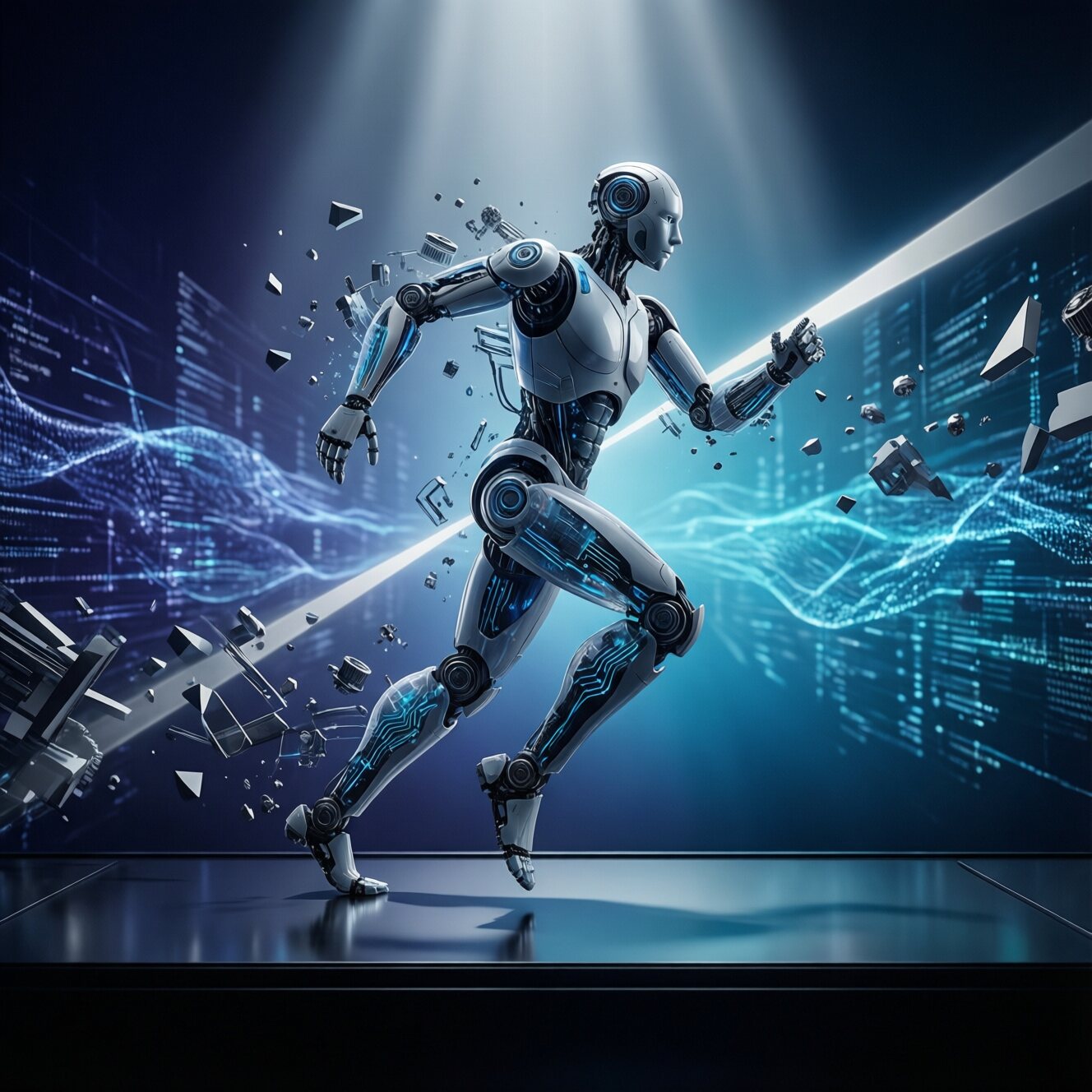
“We are designing a humanoid robot that can perform tasks that are unsafe, repetitive, or boring.” Musk’s bold words at Tesla AI Day still ring in my ears, but when you watch the somewhat stiff gait of Optimus Gen 2, as someone in tech, the first question that pops into my head is: who exactly can manufacture the “joints” of these million robots — build them well, and build them cheaply?
Background: Why Have “Joints” Become the Robots’ Lifeline?
Tesla wants to build a million humanoid robots (Optimus). This is no longer science fiction but a roadmap written into its financial reports. Musk’s logic is clear: use the scale and automation experience from car manufacturing to disrupt the robotics industry. But after the initial excitement, the capital markets and the tech world gradually calmed down. Everyone realized there’s a huge chasm between making a robot “move” and making a robot “move fluidly, reliably, and economically like a human.”
The core of that chasm is the joint.
You can think of a robot joint as a human knee, elbow, or wrist. It isn’t a simple part but a micro high-precision mechatronic system integrating actuation, transmission, sensing, control, and materials science. It directly determines the robot’s strength, speed, precision, energy consumption, noise, lifespan, and — most importantly — cost.
Why has it suddenly become so important? Because of scale. For a few dozen lab prototypes, joints can be loaded with top-tier servo motors and harmonic reducers, and a cost of several hundred thousand yuan apiece is acceptable. But to build a million units and put them in factories, warehouses, and homes, joint cost must drop to the hundreds, even tens, of dollars, while still meeting extremely high reliability and performance requirements. It’s like being asked to make an F1 engine but sell it at the price and ruggedness of a family scooter.
The current situation is that traditional industrial robot joints (mainly from giants like Fanuc, ABB, and Yaskawa) perform well but are expensive, and they’re designed for fixed environments and repetitive trajectories, unsuited to the dynamic, flexible, high-collision-tolerance needs of humanoid robots. Consumer-grade or toy-grade joints, meanwhile, fall far short of the required precision and lifespan.
So the question is: where is the supply chain for the “joints” of Tesla’s million robots? This is a classic “vacuum zone before scale-up,” and the Mount Everest that the entire humanoid-robot industry must conquer to go from PowerPoint to mass production.
Technical Breakdown: A Six-Layer Dissection of a “Perfect Joint”
To understand why joints are hard to build, we have to take them apart and grind them down. A mass-production-oriented humanoid robot joint, in my view, is a six-layer nested “matryoshka doll of technology.”
Layer one: power source and actuation (muscle)
This is the joint’s “engine.” The mainstream solution is the frameless torque motor, which needs extremely high power density (output power per unit volume/weight) and efficiency. Tesla has an edge here, able to reuse its electric-vehicle motor design and supply-chain experience. But the difficulty lies in miniaturization and the extreme refinement of control precision. The raw motion the motor produces is high-speed rotation, which the next layer must handle.
Layer two: transmission and reduction (tendons and bones)
The motor speed is too high and the torque too low, so a reducer is needed to increase torque and reduce speed. This is the hardest-hit “chokepoint” area. High-end robots generally use harmonic drives or RV reducers.
- Harmonic drives: extremely high precision (small backlash), small, light, but with relatively low load torque, too “delicate,” poor shock resistance, and high cost. Japan’s Harmonic Drive Systems has an almost monopoly on the global high-end market.
- RV reducers: good rigidity, large load torque, more rugged, but bulkier and heavier, often used for heavy-load parts like the robot’s base. Also dominated by Japanese companies like Nabtesco.
|
(A single joint’s real-time control loop already involves so many links and compensations, and a robot has dozens of such joints that must coordinate.)
Layer three: sensing and feedback (nerves)
An intelligent joint needs to know every aspect of its own “state”:
- Position sensor: an encoder, to know how many degrees it has turned. High-precision optical encoders are another technology held by overseas giants (such as Nikon and Renishaw).
- Torque sensor: crucial! This is the key to “compliant control” and safe human-robot interaction. Only by sensing external force can it make “handle with care” motions. The cost and technical barrier are extremely high.
- Temperature sensor: to prevent overheating and burnout.
- Current sensor: to indirectly estimate output torque.
Layer four: control and algorithms (cerebellum)
This is the joint’s “local brain.” It needs to run complex control algorithms (such as PID, impedance control, force-position hybrid control) at thousands of hertz, process the massive data from the sensors, and precisely drive the motor. This requires high-performance dedicated chips (such as TI’s C2000-series MCUs or more customized ASICs) and extremely solid low-level software.
Layer five: structure and materials (skeleton)
The joint’s housing, bearings, and gears all need special materials and processes. It must be light (to reduce inertia), strong (to withstand impact), and good at dissipating heat. This may involve precision machining of aluminum alloy, composite materials, even 3D printing.
Layer six: integration and thermal management (system)
Squeeze the above five layers into a space the size of a fist or even an egg, and also deal with the huge heat generated by the motor and driver. Poor thermal design leads to a sharp drop in performance or even failure. The degree of integration directly determines the joint’s power density and reliability.
Each of these six layers has deep technical and supply-chain barriers. Tesla’s challenge is that it needs to find or cultivate a batch of suppliers that can simultaneously satisfy performance, reliability, cost, and capacity — four almost mutually contradictory requirements.
My View / Cool-Headed Thinking: Three “Cold Realities” Behind the Hype
Facing the robot frenzy Tesla has stirred up, we need some cool-headed thinking.
1. “Reusing the auto supply chain” may be a beautiful misunderstanding
Many people think Tesla’s biggest advantage in building robots is reusing the electric-vehicle supply chain, such as motors, batteries, and the electrical/electronic architecture. This idea is partly right but underestimates the differences. Car motors have high power, but their speed and precision requirements are a different matter from robot joint motors. Auto-grade parts are cost-sensitive but far more tolerant of size and weight than robots. A robot joint is more like a monstrous product of “consumer-electronics-level size, industrial-level performance, and auto-grade cost.” None of the existing mature supply chains can be directly applied; tough “cross-industry transformation” or the creation of a new supply chain is required.
2. Software defines hardware, but hardware is the boundary of software
Tesla’s edge in AI and software is beyond doubt; the algorithm accumulation from FSD (Full Self-Driving) can transfer to robot navigation and decision-making. Musk believes in “software defines everything.” But anyone who has built enterprise systems knows that software can optimize hardware but cannot break through hardware’s physical limits. If your joint’s reducer backlash is 0.1 degrees, no algorithm, however brilliant, can achieve 0.01-degree positioning precision. If your torque sensor is noisy and high-latency, the robot will never be as nimble as threading a needle. In robotics, hardware is the 1 and software is the 0s after it. Without a solid 1, any number of 0s is meaningless. Tesla must, like it did in cracking batteries and integrated die-casting, pour heavy resources into core joint hardware — no easy task.
3. “General humanoid” may be a riskier path, and the “joint” is the watershed
Why must it be humanoid? Because Musk’s goal is to replace humans’ work in the physical world, and the human world is designed for the “human form.” The logic is grand and correct. But it also means the robot faces an extremely complex, unstructured environment, and the joint requirement is “all-around”: strong (carry boxes), precise (screw bolts), and compliant (collaborate with people). This is several orders of magnitude harder than a dedicated robot that only carries things (like an AGV) or only does precision assembly (like a SCARA robot).
So the degree of breakthrough in joint technology will directly determine whether Optimus stays at the stage of “displaying intelligence” or truly enters the practical stage of “creating economic value.” If joint cost can’t come down or performance falls short, Tesla may be forced to first launch some “semi-humanoid” or scenario-specific simplified robots, which runs counter to its “general-purpose” ambition.
Implications for Product Builders: What Can We Learn from the “Joint Predicament”?
Tesla’s robot “joint” problem gives everyone building hard-tech products, especially entrepreneurs dreaming of scale, a vivid lesson.
Lesson one: find the golden ratio between “vertical integration” and “open ecosystem”
Tesla is a model of vertical integration, from chips to software to vehicle manufacturing. For a joint — the core of the core — relying entirely on external suppliers is extremely risky (getting choked, uncontrolled costs, slow iteration). I think Tesla will eventually choose a model of core in-house development + strategic investment/support for suppliers. For example, motors, controllers, and core algorithms in-house; while parts like reducers and high-end sensors that require deep craft accumulation may be deeply bound to one or two Chinese or global suppliers through investment, joint R&D, and long-term exclusive agreements, to jointly crack mass production. When building products, especially platform products, you must think clearly about which core links must be held in your own hands and which can be opened for cooperation. This decision is a matter of life and death.
Lesson two: define core components with “systems thinking”
A joint isn’t a standard purchased part; it’s a system-level module. Its definition must be derived backward from whole-machine performance (such as walking energy consumption, overall load, motion speed). Tesla’s advantage is that it’s also the whole-robot designer, so it can optimize the robot’s overall configuration (for example, using fewer joints or a more sensible moment-arm design) for the sake of the joint’s performance and cost. When we define a product’s core modules, we must never look at its spec sheet in isolation; we must reverse-define its performance, interfaces, and cost from the standpoint of user experience and system optimum. This requires architects with strong systems thinking.
Lesson three: the prerequisite for scale is “designing for cost”
A million-unit scale can’t be achieved by squeezing supplier margins; it must be considered from the design source for scale manufacturing. This means:
- Extreme simplification: can the same function be achieved with fewer parts and a simpler structure? For example, explore new types of direct-drive motors (removing the reducer) or more innovative transmission schemes.
- Process innovation: can methods suited to mass production, such as integrated die-casting and injection molding, replace traditional CNC machining?
- Material innovation: can cheaper, easier-to-process materials reach the required strength through structural design?
“Designing for cost” is the highest realm of engineering; it requires the R&D team to dance with the shackles of manufacturing and cost from the very start.
Lesson four: embrace the deep innovation opportunity of the “Chinese supply chain”
This is a huge implication for Chinese tech companies, especially those in precision manufacturing, motor drive, and sensors. In the past, we excelled at “cost reduction” — making existing solutions cheaper. Now, facing the new blue ocean of humanoid robots, there’s no mature, low-cost mass-production joint supply chain overseas either. This is an excellent opportunity to go from “following and cutting costs” to “co-innovating” or even “defining innovation.” Whoever can, while meeting performance requirements, be the first to deliver a mass-producible, highly cost-competitive joint solution could become the “Intel” or “Qualcomm” of this future trillion-dollar market. This requires a long-termism unafraid to chew on hard bones and technical confidence.
Conclusion
Tesla’s million-robot dream is like a searchlight, illuminating the last — and most rugged — stretch of road for “artificial general intelligence” to land in the physical world. That road is called “scaling mechatronic systems.”
The joint, this seemingly inconspicuous part, is now standing center stage, bearing a triple interrogation of technology, cost, and supply chain. Its evolutionary history will, to a large extent, write the evolutionary history of humanoid robots.
As someone in tech, I’m both excited about the engineering challenge at hand and full of expectation for the new generation of core-component industries it may spawn. This isn’t just building joints for robots; it’s forging the most basic, and most critical, physical interface for the grand narrative of “machines entering human life.”
My marathon experience tells me the hardest moments often come mid-race. Tesla’s robot marathon has just passed the cheering starting phase and is now entering the “joint” period that requires adjusting breathing, allocating energy, and coping with complex terrain. Whoever can run this stretch with it can share the glory of reaching the finish line. This race has already fired its starting gun.
评论
0 条评论