Every time I see the words “traditional handmade” or “artisanal heritage” printed on a product label, my first reaction isn’t emotion — it’s wariness.
That wariness was formed by getting burned too many times. But later I gradually realized that the object of my wariness can’t be limited to the “traditional” half — on the other end, those big-brand products with gorgeous packaging and complete quality inspections aren’t necessarily any more reassuring either.
The traditional method hides its defects behind sentiment; the modern method hides its tricks behind standards. That sentence may be the most truthful portrait of the cooking-oil industry.
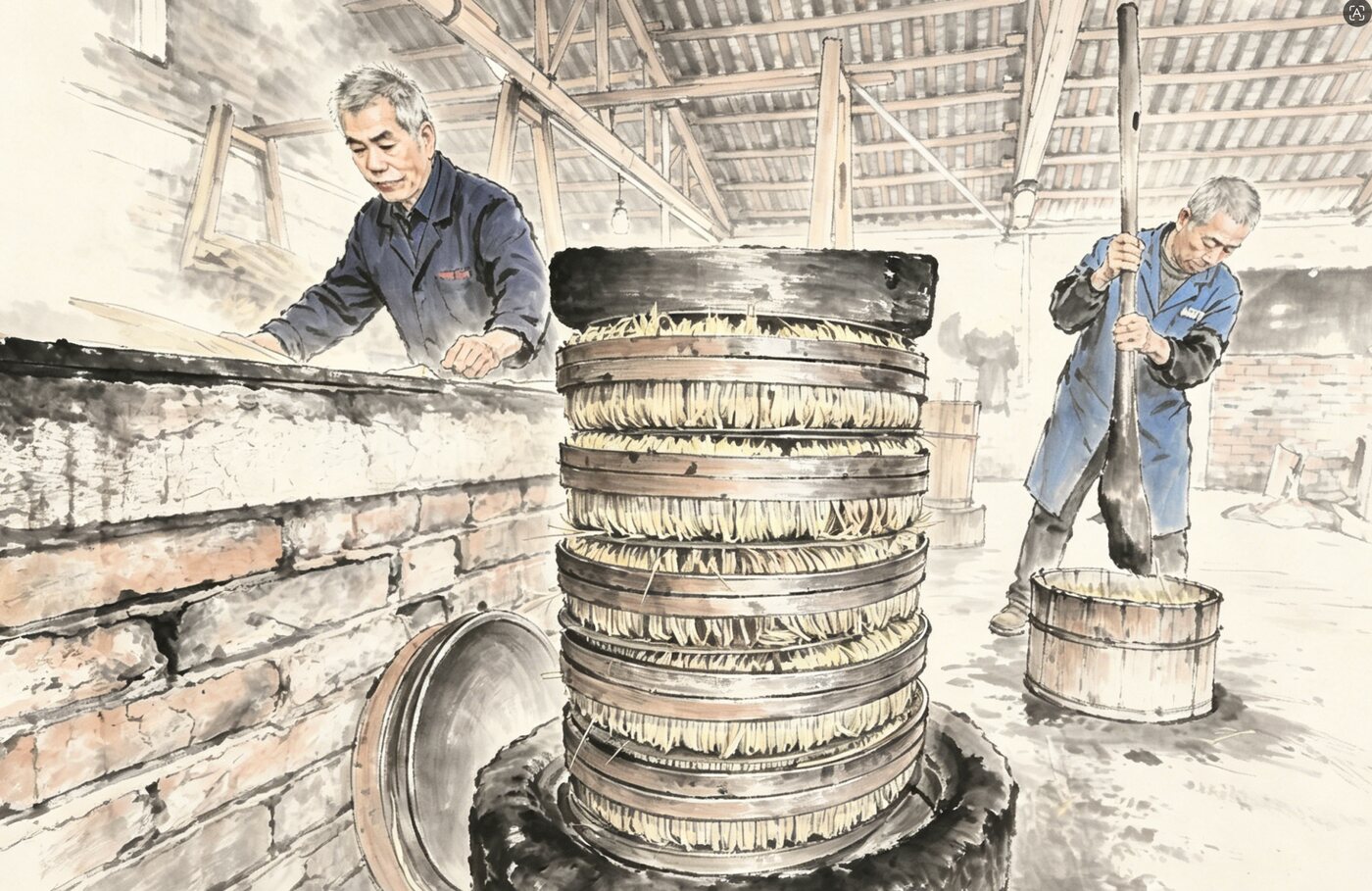
The Barrel of “Traditional” Oil That Disillusioned Me
An elder in my family once bought a barrel of “farmhouse self-pressed rapeseed oil.” In the livestream it looked pressed and shipped on the spot, and it smelled wonderful. Then, stir-frying the very first dish, with the range hood on its highest setting, the kitchen still filled with smoke, so choking you couldn’t keep your eyes open.
Only later did I work out what was behind that “aroma”:
Nobody sorts the raw material. New seed, old seed and moldy seed all get pressed together, and the aflatoxin in the moldy rapeseed goes straight into the oil. Traditional pressing has no refining or removal step, so all the toxins stay.
That heavy fragrance is the smell of scorching. The seeds are stir-fried over a wood fire until they smell toasty and then pressed; the smoke point is extremely low — it starts smoking at around 160 degrees. Quite apart from the lung damage from long-term inhalation, at high temperatures the impurities carbonize and produce benzopyrene.
The composition is ugly too. Traditional rapeseed contains over 40% erucic acid, while modern low-erucic-acid varieties are kept within 3%. High erucic acid damages the heart muscle, and traditional pressing simply can’t bring it down.
Hygiene is a total mess. The oil press isn’t washed for years and is caked with grease, the barrels sit open to the sky, and what arrives is a product with no manufacturer, no address and no standards — if it makes you sick, there’s no one to find.
Up to this point, I was squarely on the side of modern industrial oil. Then I saw the news about oil tanker trucks carrying mixed loads.
The Hidden Illness on the Big-Brand Side: Mixed-Load Tanker Trucks
The tanker-truck mixed-transport scandal exposed in 2024 tore a hole in the bottom line of the modern food industry.
Edible-oil tanker trucks, after hauling diesel, chemical solvents, industrial grease and waste engine oil, get a quick rinse and then carry cooking oil. Residual chemical solvents, heavy metals and industrial waste liquid seep into the oil. The national standard only covers the production workshop, not long-distance transport — an enormous regulatory blind spot.
If you check the quality inspection report, you can only find the ex-factory data; you can’t find out what it was contaminated with on the road. Logistics companies, to save costs, use one truck for many purposes, and the cleaning for food-grade oil is usually the most perfunctory of all. Refined oil that passed inspection at the factory may already be covertly over the limit by the time it reaches your home.
What does this mean? It means that the safety logic of “buy a big brand, check the quality inspection report” gets punched through at the transport stage.
Modern Processing Has Its Own Problems
Setting transport contamination aside, the production end of modern processing isn’t entirely free of tricks either.
Over-refining, with all the nutrition stripped out. The five-stage refining process strips away the flavor, the natural lipids and the beneficial substances until nothing is left but a tasteless “pure fat oil.” The safety floor is held, but there’s hardly any food value left to speak of.
Solvent extraction is used on a large scale. Oil is extracted with No. 6 solvent oil; although the residual amount is said to be within the compliant range, long-term consumption in large quantities adds up little by little.
Cheap imported GMO rapeseed is mixed into the raw material. Some brands don’t label it clearly, substituting cheap imported rapeseed for domestic raw material; the quality takes a hit and consumers never know.
So the problem on the modern-processing side is this: the production end has standards but the execution has loopholes, the distribution end is almost entirely out of control, and the nutrition end has sacrificed flavor and value for the sake of safety.
The Traditional Side Isn’t Much Better
Having covered the big brands, let’s look at the traditional side. Its fatal flaws simply can’t be fixed.
Small workshops have no storage standards; oil tanks and barrels are stacked for long periods, and cross-contamination of flavors, damp and mold are the norm. Bulk oil has no traceability — oil collected from farmers is pooled together, with miscellaneous origins. Add to that the aflatoxin, benzopyrene, high erucic acid and filthy, chaotic hygiene mentioned above, and the problems of the traditional method are inborn; it fails to meet standards at the very root of the process.
The Most Painful Truth
By this point the conclusion is actually pretty pessimistic:
- Traditional handmade: unsafe by nature, sold at a premium on sentiment. The process itself is backward, and toxins, hygiene and quality can’t be guaranteed on any count.
- Modern industry: compliant production, but a blowout in distribution. The oil leaving the factory is fine, but nobody can say clearly what it went through between there and your hands.
Consumers can’t avoid pitfalls on either side. There is no absolutely clean oil; both sides are fooling ordinary people.
So what the public actually resents has never been the tribal question of “which is better, traditional or modern.” What genuinely makes people angry is this: backward processes are hyped as miracle products, rigorous standards are undermined by those supposed to uphold them, and both sides are harvesting ordinary people in their own way.
So What Can You Do?
Since there are pitfalls on both sides, how should an ordinary person choose?
My approach is simple — three rules:
First, buy oil from small local producers or local big factories that use dedicated tanker transport. Local companies have a short transport radius, so the probability of mixed loads is relatively smaller. Try to choose products labeled “dedicated vehicle, dedicated tank.”
Second, use less oil. Whether traditional or modern processing, eat less of it if you can. Chinese households’ oil consumption is already above the recommended level, and cutting back is the most practical form of self-protection.
Third, rotate what you use. Don’t eat only one kind of oil for years on end — switch between rapeseed oil, peanut oil and olive oil. Even if one of them has a potential problem, you won’t be exposed to it singly over the long term.
Don’t put blind faith in the traditional method, and don’t blindly follow big-brand standards either. Stay wary, but don’t go to extremes. This may be the most pragmatic survival strategy for an ordinary person in an industry where both sides have problems.
评论
0 条评论