Heroes are, by nature, extraordinary things for extraordinary times. In a stable, routine order there is no need for heroes, and no place for them.
— The Law of Blood Pay: Survival Games in Chinese History
That sentence is very nearly the sharpest annotation on the “Outstanding Employee.”
1. Han Xin’s Clear-Eyed View: The Curtain Call of the Number One Outstanding Employee
More than two thousand years ago, Han Xin had already spelled this truth out completely.
In 201 BC, Liu Bang had just pacified the realm and settled firmly onto the throne — and then he turned around and seized Han Xin, the great meritorious general who had won him half the empire. Once, Xiao He had chased Han Xin under the moonlight; Liu Bang had built a ceremonial terrace and appointed him commander-in-chief; the whole country had hailed him as a peerless national talent. He was the sharpest blade of the Han, the most essential of its founders, the dynasty’s “number one outstanding employee.”
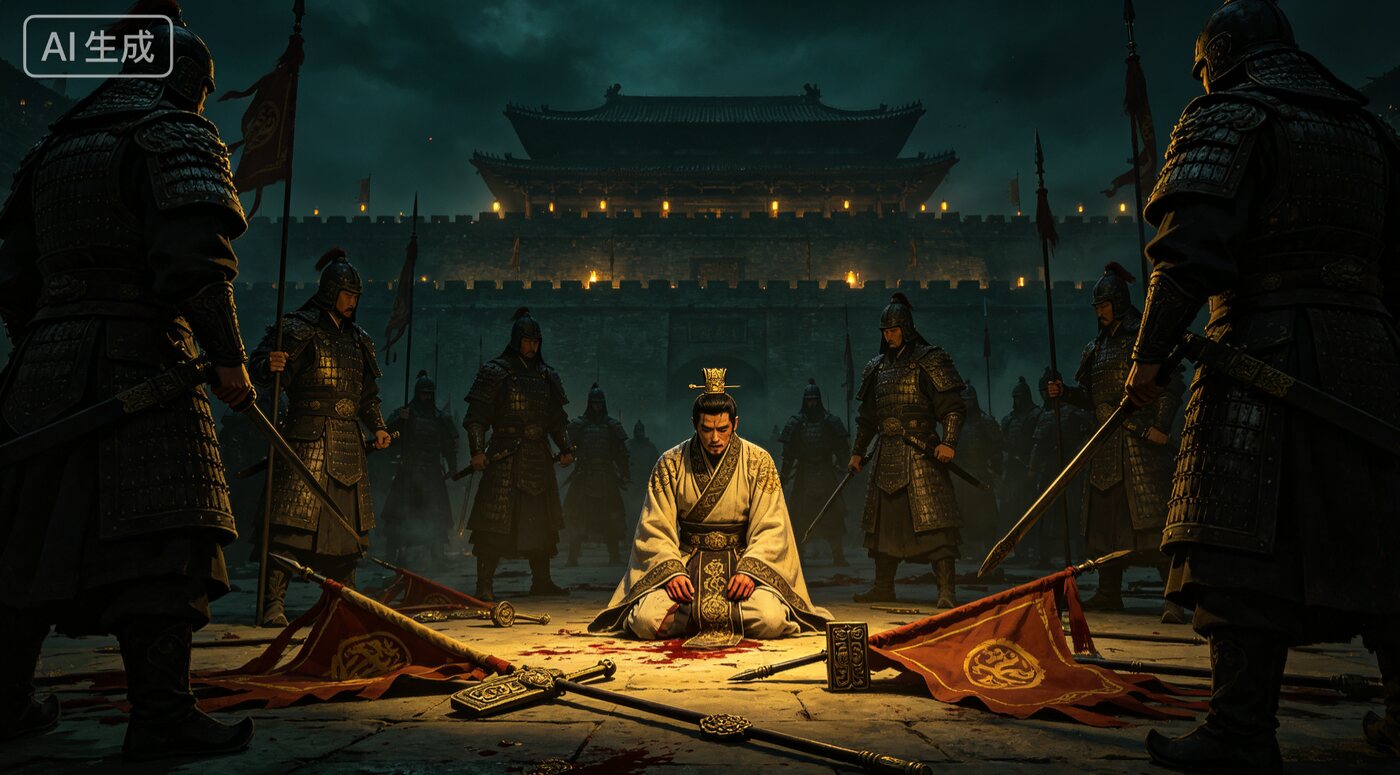
But once the realm was settled, the wars over, and the configuration fixed, Han Xin — bound in a prisoner’s cart — uttered the clear-eyed sigh that has been passed down through the ages:
“When the cunning hare dies, the good dog is boiled; when the high-flying birds are gone, the good bow is stored away; when the enemy state is broken, the strategist perishes. The realm is now settled — of course I should be boiled.”
That “of course I should be boiled” was never a complaint; it was the ultimate lucidity of someone who had seen through the rules.
Had Han Xin changed? His military talent, his capacity for coordination, his loyalty and strategy hadn’t changed one bit. What changed was Liu Bang’s needs — the narrative script of the Han dynasty. In an era of war, Liu Bang needed Han Xin to storm cities, seize territory, break enemies, and quell rebellions, so he rewarded him lavishly and exalted him to the utmost, shaping him into the benchmark of founding merit, to be used for rallying the army and attracting talent. But in a peaceful, prosperous age, Han Xin’s world-beating achievements and unmatched abilities were no longer an asset — instead they became the greatest threat to the stability of ancient royal power.
The “outstanding merit” once praised by the whole nation became, overnight, something superfluous, dangerous, and in need of being removed.
2. Zhu Yuanzhang’s Script: From Pillar of the State to Target of the Purge
It wasn’t only Liu Bang; Zhu Yuanzhang played this “organizational narrative logic” to the absolute extreme.
In the chaos at the end of the Yuan, while Zhu Yuanzhang was fighting for the empire, he relied on and favored his brothers — Xu Da, Chang Yuchun, Lan Yu, Hu Weiyong — in every way. These civil officials and military generals risked their lives and fought blood-soaked battles, helping him sweep away rival warlords and found the Ming. They were founding heroes in the truest sense, pillars of the dynasty, “meritorious servants of the state” conferred by Zhu Yuanzhang’s own mouth.
In the startup phase of seizing the empire, the Ming’s core narrative was “breaking the deadlock and founding the state,” so everyone who dared to fight, could fight, and had achievements to show was in the spotlight and lavished with honor. The court commended them on a grand scale and the official histories wrote of them in heavy ink, shaping these meritorious officials into models of loyalty and righteousness, the backbone of the nation — used to reassure the court and the country and steady people’s hearts.
But once the empire was unified and the realm at peace, the organization’s needs completely reversed.
At that point the Ming’s core narrative was no longer “achieving merit and building a career,” but the sole supremacy of royal power, maintaining the configuration, and absolute control. Those top-tier meritorious officials who had once helped him win the empire — too capable, too accomplished, too prestigious — no longer fit the new organizational rules. And so the four great cases of the early Ming followed one after another: the Hu Weiyong case and the Lan Yu case layered settlement upon settlement, and the founding heroes were very nearly slaughtered to the last.
Yesterday they were the nation’s most celebrated excellence; today they became a danger that had to be eliminated.
3. The Xiaohongshu IPO Storm: The Same Script in the Modern Workplace
Croce said: all history is contemporary history. The ruler-and-minister struggles across a thousand years of dynastic change were never dusty old affairs — they are the game of human nature and rules, replayed over and over in a new skin. History is the workplace writ large; the workplace is a miniature court. From ancient times to now, the underlying logic has never changed.
The recent Xiaohongshu IPO storm that flooded everyone’s feeds is the most vivid modern confirmation. At the crucial moment when the company was sprinting all-out toward a Hong Kong listing and a hundred-billion valuation, the core executives and veteran employees who should have been rewarded for their merit and shared in the dividends were instead, right before their options vested and their returns were about to be realized, rounded up and pushed out on the grounds of being “not competent for the job.”
These were the people who had once pioneered and opened up territory alongside the company, weathered the growth crises, been commended vigorously by the platform, and treated as core assets — genuine “outstanding employees” during the company’s high-speed development, the backbone propping up its valuation. But when the company reached the final stage before listing and no longer needed the heroes of pioneering and hard battles — needing only compliant stability and low-cost monetization — their former merits and abilities and past contributions instantly became a “cost burden” that capital wanted to shake off.
The value once recognized so loudly became utterly void overnight, ending in rapid elimination and options wiped to zero. That also directly triggered the whistle-blowing storm, badly damaging the listing process and leaving the IPO stalled.
4. My Three Years as an Outstanding Employee: I Happened to Hit the Organization’s Narrative Needs
Turning back to my own experience, I feel this especially keenly.
I once won the company’s Outstanding Employee three years in a row. Honestly, all of it was earned through genuine hard work. Those years I kept my head down and buried myself in the business, proactively taking on automation rework and role innovation, staying up late revising plans, testing and optimizing repeatedly, building up results bit by bit.
At the time I naively believed that this honor was a pure certification of ability, the most solid affirmation the workplace offers, the best proof that I was capable and hardworking. Only after I came to understand history, see through human nature, and get a grip on the underlying rules of the workplace did it become fully clear: from ancient times to now, the “excellence” that platforms loudly elevate has never been purely a reward for the individual — in essence it is always a narrative tool serving the organization.
The reason I could steadily win Outstanding Employee three years running was never that my ability crushed everyone else’s; at its core I had caught the right “heavenly timing, favorable terrain, and human harmony.” The leadership of that period championed hands-on work and encouraged innovation, the company’s main thrust was cost reduction and efficiency gains, and the automation rework and process innovation I did with my head down happened to hit precisely the team’s core needs and the organizational narrative — so naturally I became the benchmark singled out for commendation.
But the most realistic and most brutal rule of the workplace is that a new reign brings new courtiers. Change the leadership and you change the management logic and the evaluation system; the company’s core needs from employees can flip completely in an instant. Layer on intensifying industry involution, frequent organizational restructuring, and the broader environment of economic downturn, and the workplace rules changed utterly.
Back in the days of high-speed growth, the company lacked backbone people who could break through, innovate, and improve efficiency, and was willing to pay high salaries to keep hands-on high performers — these people were quality assets helping the company break deadlocks and grow revenue. But in a period of contraction and stability, the company’s core demand shifts from “seek growth” to “control costs, preserve stability, make no mistakes” — and the outstanding employees who once earned high pay and honors through innovation and hard battles instantly changed identity.
Standout performance, solid capability, a somewhat high salary: no longer pluses, but instead burdens and liabilities in the company’s eyes, tagged as “too expensive, hard to control, likes to stir things up,” and reduced to priority targets for optimization.
The organization needs someone to stand up as a benchmark of innovation, a model of hands-on work, in order to tell everyone: see — follow the company’s rhythm, break through steadily, and you too can be recognized and rewarded.
Inside that honor there was my genuine effort, but more than that, the organization needed a story, and I happened to become its protagonist.
5. A Microcosm in the Finance Department: Veteran Backbone Replaced by Cheap Labor
Over the past two years I’ve observed the iteration playbook of countless companies, and the moves are almost identical: first lay off the high-paid, deeply tenured veterans, then replace them en masse with fresh graduates at low pay and little experience, and add a batch of outsourced staff who offer better cost-performance, can be replaced at any time, and carry extremely low employment costs.
When I was helping the company’s finance department implement an automated reconciliation requirement, I noticed a detail that stung: in the whole finance group, apart from the manager — a single regular veteran employee — everyone else was an intern or part of the outsourced team. I remember it especially clearly: in my first few years at the company, the finance department was uniformly staffed by stable regular employees, with a complete structure and solid people. In just a few years, the regular backbone who had once gone deep into the business and created value were gradually replaced, until all that remained was one layer of management, holding up the entire operation with a group of low-cost newcomers and contractors.
This is by no means because the newcomers are more capable or the contractors more efficient — it’s because the organization’s core demands changed completely.
When a company is growing at high speed, it needs seasoned veterans to break through hard problems, optimize processes, build systems, and drive innovation and efficiency, and it’s willing to pay high salaries for experience, capability, and results. But once it enters a phase of contraction, stability, and extreme cost control, the company no longer needs complex innovation or deep optimization — only standardized, low-cost, replaceable basic execution.
The high pay and honors once earned through hands-on work, innovation, and seasoned experience instantly become a personnel burden for the company. Those veterans once rated outstanding, who had created incremental value for the company, are quietly eliminated this way and replaced by cheaper, more controllable, lower-cost labor.
6. The Most Painful Truth: Excellence Is a Temporary, Phase-Bound Definition
The person is still the same person — ability hasn’t regressed, attitude hasn’t grown careless, skills haven’t been lost. But change the leadership, change the strategy, change the team’s direction, and the organization’s narrative script is rewritten on the spot. The innovation and hard battles once exalted to the skies may become “restless adventurism” in a new manager’s eyes; the hands-on capability once recognized may become “doesn’t understand stability” under the new system.
No one is denying your past — it’s simply that you no longer fit the current rules of the game, no longer match the persona the organization needs.
Han Xin committed no crime; his crime was being “useless yet used up.” The meritorious officials did nothing wrong; their fault was that “times shifted, circumstances changed, they no longer fit.” It’s the same for people in the workplace: your excellence has never been a permanent standard answer — it is only a temporary definition under one particular phase and one particular set of rules.
This is the most painful truth: all public halos, commendations, and honors are phase-bound, dependent, and instrumental.
The outstanding employee on stage, the advanced model in the public notice, the highlight moment at the annual party — these were never the final verdict on your personal ability. They are merely the concrete embodiment of the organization’s current values, a management device used to unify the team’s direction, motivate everyone, and package results.
When the company wants innovation, it elevates the innovators; when it wants stability, it elevates the compliant; when a leader wants political achievements, it elevates whoever can produce a highlight; when the configuration needs balancing, it elevates whoever needs appeasing.
Who gets the halo has never depended only on “who is most capable” — far more, it depends on “who is best suited to the story being told right now.”
7. In Closing: Real Skill Is the Ordinary Person’s Steadiest Amulet
Seeing all of this clearly isn’t passive slacking — it’s the highest form of adult lucidity.
I’m still grateful for the version of myself who once gave everything, and grateful to the leaders willing to lift me up. The automation skills, the way of thinking through complex problems, and the grit for tackling hard battles accumulated in those days are hard abilities engraved on me that no one can take away.
But I will never again put blind faith in any empty title a platform bestows.
A certificate is given by the platform and can be taken back at any time; a reputation is manufactured by the organization and can be rewritten at any time. Only the ability you’ve accumulated yourself is a lifelong asset that never depreciates.
From ancient times to now, there has never been eternal excellence — only eternal configurations.
For the rest of my life: work steadily but don’t covet the halo; grow quietly but don’t lean on evaluations. Accept every phase-bound recognition, and accept just as calmly the ups and downs of circumstance. Always remember: merits at court, honors at work, praise from the outside world — all are external things. Only real skill is the ordinary person’s steadiest amulet.
评论
0 条评论