Opening a recruiting app and applying for tech roles was meant to be about finding a solid professional home, but my recent string of job-hunting experiences has made me see straight through the widespread chaos of hiring at today’s small and mid-size companies: unprofessional, sloppy and careless, lacking respect, with inflated salaries. From the frequent low-level technical typos by HR, to the utterly unrefined interview processes run by management, to the helplessness of seasoned 35+ tech workers collectively getting the cold shoulder — every detail hides the unspoken bitterness of today’s tech practitioners.

HR’s professionalism is so low it’s hard to accept
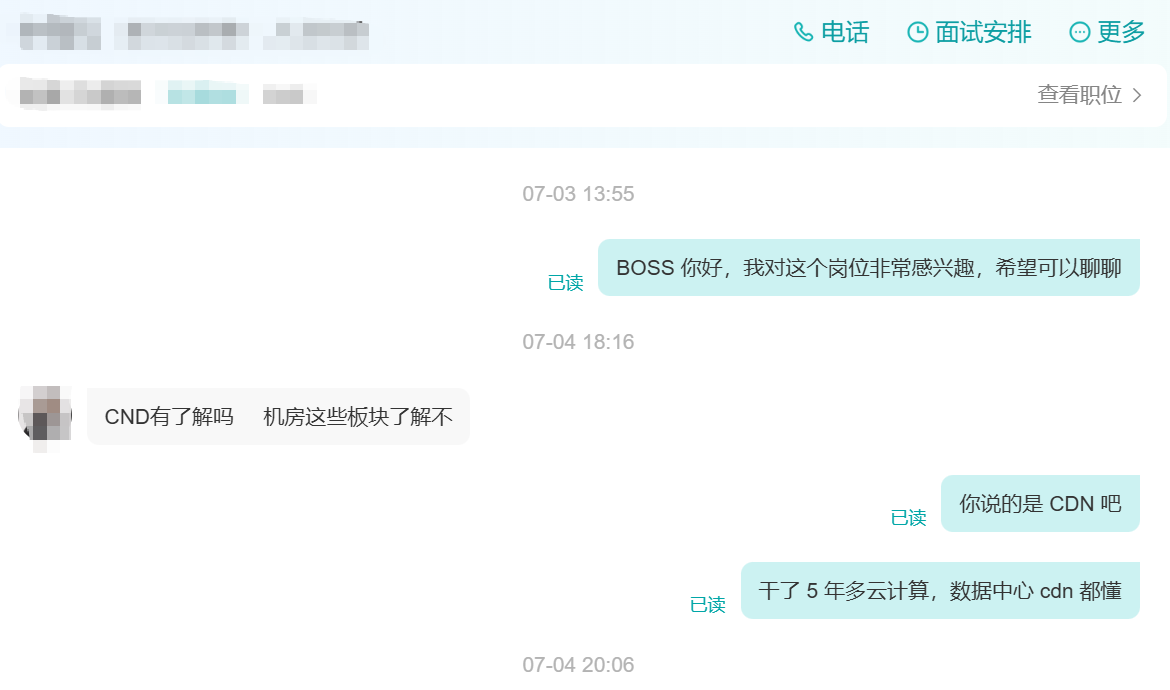
Nowadays the recruiting professionalism of many small and mid-size company HRs has long sunk to an unacceptable level, and this is also the most common turn-off detail when submitting resumes. I’ve received quite a few recruiting messages from small and mid-size companies, with chaos at every turn: one HR mass-sent interview invites and misspelled the core programming language Python as rython, with template copy-pasted throughout, too lazy even to check the most basic technical terms; another company wrote its own core business — the CDN content delivery network — as plain “CND,” fuzzy even on the professional terminology of its own main line of business.
That piercing workplace joke online fits this kind of recruiting’s cognitive disconnect perfectly: an HR, dead serious, asks a candidate whether they know “vibecoding”; the candidate honestly answers that they routinely use mainstream AI programming tools like Claude, Trae, and Cursor, practicing the AI-driven efficient development model; and the HR rigidly concludes “so that means you can’t.” Behind the absurdity is a naked reality: most small and mid-size company HRs double up on admin, logistics, and several other roles, have no dedicated technical-recruiting training, don’t understand the industry’s technical system at all, and can’t keep up with the current industry trend of AI development. When screening resumes they can only mechanically pile up keywords; they can’t read a candidate’s project accumulation and technical depth, communicate entirely through mass-sent templates and go through the motions, and don’t even have the most basic reverence for technical roles.
Why so many HRs can only screen resumes by keywords — the root cause is very real
Think about it, and this cognitive disconnect can’t be blamed entirely on any individual HR. Behind it is the coarse-grained nature of small and mid-size companies’ recruiting systems themselves.
First, there’s the workload problem. An ordinary role can receive over a hundred resumes in a single day; hot roles even thousands. One HR handles five to ten roles at a time, and also has to deal with interviews, background checks, onboarding, and employee relations, spending less than ten seconds on average per resume. Manually evaluating each one for ability simply isn’t realistic, so keyword filtering naturally becomes the most efficient assembly line.
Second, there’s the problem with the tools themselves. Companies widely use ATS resume-screening systems that, after keyword weights are set, automatically score and automatically eliminate. If the role lists vibecoding, Java, and Cursor, the system directly removes resumes that don’t contain these words. In many cases it’s not that HR wants to screen people out — the machine screens them out first. On top of that, when business departments give requirements they only list tools, frameworks, and terminology, without describing “what problem to solve,” and HR’s KPI is to quickly book people who match the keywords, so less trouble is better than more; they’ll never go understand the substitutability between tools. Back to my own vibecoding example: the business wants someone who “knows vibecoding,” HR searches only that word, can’t see that Claude and Cursor are essentially vibe coding tools, and so directly deems the candidate a mismatch.
One layer deeper, many small and mid-size company HRs are simply unprofessional themselves. For technical roles they can’t tell apart similar tools or similar frameworks, recognizing only literal keywords; they can only do “screening,” not “talent discovery,” completely ignoring soft strengths like project outcomes, problem-solving approach, and learning ability; when they see a resume missing some keyword, they can’t be bothered to ask one more question — “what AI coding tools do you usually use” — and just pass; when the business casually mentions some niche term or obscure tool, HR also directly treats it as a hard threshold, without communicating with the technical lead about “whether similar tools are substitutable.”
The harm this screening method does to job seekers is obvious: people who are truly capable but simply use different wording habits directly miss out on interview opportunities; to pass, job seekers can only frantically pile up keywords, and resumes get more and more inflated; and information-gap jokes frequently appear in interviews, like the absurd dialogue of “knows Cursor but not vibecoding.”
As a job seeker, what you can do is proactively adapt to this set of game rules: write all the synonymous keywords into your resume, for example writing AI-assisted programming, Vibe Coding, and Cursor/Claude at the same time; after applying, briefly message the HR to proactively explain the correspondence between tools; and when you meet an HR who only picks at keywords, anticipate the cognitive gap in advance and simply explain the tool logic.
Of course, objectively speaking, you also can’t pin all the blame on HR personally. Many companies don’t have sufficient manpower, budget, and professional training; keyword screening is the lowest-cost, highest-efficiency option, and essentially it’s more a company-process problem than a personal-ability problem. It’s just that, in the long run, this model will miss large numbers of quality candidates, which is also an inefficient internal drain on the company itself.
Panel-interviewing tech roles — management’s refinement is worrying
If HR’s typos are just an early warning signal, then the terrible experience of the in-person, on-site interview displays the unprofessionalism and disrespect of small and mid-size company management to the fullest. The company I interviewed at this time blatantly listed a salary of 12-24k on its recruiting page; the salary range looks impressive, but it’s actually a lead-generation, empty-promise routine. Even more absurd, the company arranged for the vice president to interview directly, yet used a two-person panel-interview mode that only low-end sales and customer-service roles would use.
Any properly mature technical team would never interview a tech role using a multi-person panel format. The core of a technical interview is two-way in-depth communication, requiring deep digging into project details, technical difficulties, and hands-on experience; only one-on-one exchanges can accurately judge a candidate’s professional ability. But this company, solely to save the vice president’s personal time, batch-interviewed and sloppily screened two seasoned tech workers, from start to finish showing no respect for the time cost of job seekers who made a special trip, and understanding nothing of the recruiting logic for technical roles.
The whole interview was a disaster from start to finish, an experience bad to the extreme. I’ve never seen a tech role interviewed two at a time; this company, solely to save the vice president’s personal time, batch-interviewed and sloppily screened two seasoned tech workers, from start to finish showing no respect for the time cost of job seekers who made a special trip, and understanding nothing of the recruiting logic for technical roles. The VP only had us give a brief self-introduction, never posed a single technical question from beginning to end, and spent the whole time droning on about the company’s business. The interview process was chaotic: he frequently answered personal calls, company employees casually pushed the door open and barged in to interrupt the interview, and he even smoked in front of everyone inside the interview room — a total absence of boundaries and workplace refinement.
Even more embarrassing, he compared me with another 35-year-old candidate right in front of us, saying I looked even older than the other guy. This utterly disrespectful conduct went far beyond the scope of an unprofessional interview; it was treating job seekers completely like goods to be picked over. I cut off any thought of joining right then and there — from the conduct of this interview you could tell that this company neither understands technology nor can afford a decent salary.
So when it came to discussing salary, I just named 20k outright, knowing full well they couldn’t possibly afford it, purely to feel them out and watch the show. Sure enough, after hearing it the other side still said bluntly they couldn’t offer it. This confirmed my judgment: the listed 12-24k was a lead-generation empty promise from start to finish, the real internal budget was pitifully low, and it simply didn’t match the decade-plus of accumulation of a seasoned tech worker.
At the Luckin store, the collective helplessness of 35+ tech workers
After the interview, walking out of the company building, I proactively invited the guy who’d interviewed alongside me to a nearby Luckin to sit and have a coffee. A short hour of chatting made me fully empathize with the collective predicament of 35+ tech practitioners. This guy had over a decade of ops-development experience, was about my age with a similar resume — both of us seasoned practitioners who had dug deep into technology for years, usually studying diligently, staying up late to chew through documentation, troubleshoot faults, and iterate on projects, amassing over a thousand technical notes, accumulating solid hands-on experience step by step, and never once treating our careers carelessly.
Yet even someone who digs into technology this steadily has now likewise been laid off and unemployed, trapped in the difficulty of job hunting. Shedding the formality of the interview, sitting in the coffee shop, we talked about past workplace struggles, the current job-hunting predicament, and the shifting fortunes of the industry, our hearts full of exhaustion and helplessness. One sentence the guy sighed captured precisely the inner voice of all middle-aged tech workers: In this era, doing tech is really pointless.
We once thought technology was the solid foundation for making a living — that as long as you were willing to endure hardship, dig deep, and accumulate, you could stand firm on professional ability and get a commensurate return in exchange. We pulled countless all-nighters, conquered one technical difficulty after another, accumulated massive real-world experience, never daring to slack off or lie flat, pouring our youth and energy into deepening our technology. But reality slapped us hard: in the current downturn, small and mid-size companies long ago stopped valuing technical accumulation and the worth of experience; they pursue only extremely low-cost labor, wanting only young workers who can pull all-nighters, are cheap, and are easy to control, while being endlessly picky about and relentlessly lowballing seasoned 35+ tech workers.
The 12-24k salary range this company listed was a thoroughgoing lead-generation routine from start to finish. The high-end salary was just a decoy to attract seasoned candidates to apply; the real internal budget was extremely low. We proactively took a pay cut and made concessions, lowered ourselves and compromised, and still couldn’t meet the other side’s expectation for labor cost — the essence being that the company doesn’t want to pay for a decade of technical accumulation, and only wants to pick up cheap labor at a low price.
Dodging the mine in time is also a blessing
Looking over the whole job-hunting experience, the recruiting chaos of small and mid-size companies is plain to see: at the execution level, HR lacks professionalism, is sloppy and careless, frequently makes low-level technical typos, and doesn’t understand industry trends; at the decision-making level, management lacks refinement and has shallow cognition, doesn’t understand technology, doesn’t respect talent, and paints empty salary promises. When the market was good, this kind of company — with professionalism collapsing across the board and no sincerity whatsoever — wouldn’t even catch the eye of a seasoned tech worker; now that the market is hyper-competitive and employment is under pressure, we’re forced to passively rush around interviewing, time and again burning up time and energy, only to reap sloppiness and rejection.
Of course, one also has to admit that this kind of company often holds certain scarce resources in its hands — for example a carrier’s bandwidth, a data center’s racks, or riding the current boom of AI compute infrastructure — which is how they luckily got a business opportunity. The era’s dividend gave them an entry ticket, but couldn’t buy basic respect for talent in return. They can scrape by on resources, but a place that doesn’t take tech workers seriously like this — better not to go.
Some say an interview is a two-way choice. This terrible interview, and this late-night chat with a fellow practitioner, look like a job-hunting setback, but were actually a precise, timely mine-dodging. Even if we had compromised and taken a pay cut to join, in the end we’d only have fallen into the internal drain of a boss giving chaotic orders, chaotic management, unrecognized value, and a salary seriously mismatched with the effort put in.
What’s most lamentable has never been “not finding a job,” but that people who seriously and diligently dig deep into technology are being cheaply let down by this industry. Those thousand-plus notes, those countless all-nighters, that decade-plus of real-world accumulation — in the eyes of small and mid-size companies that don’t understand technology and only look at cost — are actually worth nothing.
At the end of the day, this company was never on my list of choices anyway. Right now I was just idle with nothing to do, wanting to go out and chat and see the outside world, with no intention of actually joining at all. On top of that it’s still a big-small week (alternating six-day weeks) — going there would just be being over-extracted in a different place. The 20k I named earlier was purely to feel them out and watch the show; as expected the other side couldn’t catch it, which confirmed my judgment — this place, better not to go.
On the job-hunting road, meeting a professional company and a patron who understands your value is luck; meeting a sloppy process, an arrogant attitude, and an inflated salary, and pulling yourself out in time, is also a blessing.
Working for others has no future, doing tech has no future — this is the truth I thoroughly understood at 35, in this AI era.
评论
0 条评论