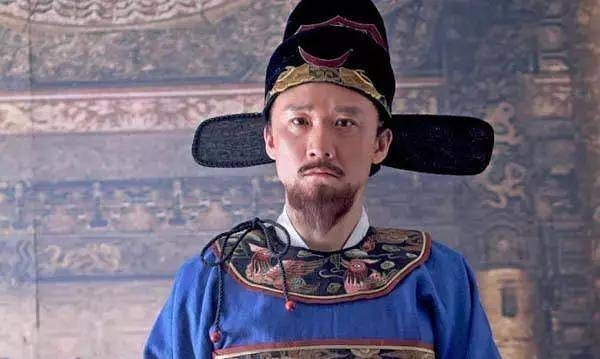
After finishing the chapter on Hai Rui in Ray Huang’s 1587, A Year of No Significance (《万历十五年》), the image that immediately surfaced in my mind was the Hai Rui played by Huang Zhizhong in Ming Dynasty 1566 (《大明王朝1566》), and the line that kept echoing in my head was “put it on record.”
Hai Rui was incorruptible to the extreme, upright to the extreme, compassionate toward the common people to the extreme. When he died, Wang Yongji, the Assistant Censor-in-Chief, went to pay his respects and saw that this second-rank official’s entire estate amounted to eight taels of silver and a few bolts of coarse cloth — he wept until he couldn’t speak. Yet this was a man whose place in history is that of an “eccentric model bureaucrat” — isolated by his colleagues, shelved by the emperor, marginalized by the system, all his lonely courage ultimately powerless.
Why couldn’t a morally near-perfect upright official save the Ming? And why, four hundred years later, does reading his story still give us a stinging sense of familiarity?
Because Hai Rui’s tragedy is, in essence, not the failure of personal morality but the inevitable product of a system that lacked modern organizational structure, a rule-of-law framework, and professional governance techniques. What’s more frightening is that this governance logic of “substituting morality for the rule of law, and ritual propriety for rules” has survived four hundred years and continues to this day in the distribution structure, class psychology, and social value hierarchy, shaping today’s rat race, the civil-service-exam fever, and the urban-rural divide.
I. Hai Rui’s Tragedy: Personal Moral Strength Cannot Make Up for Organizational and Technical Weakness
Ray Huang puts it with extreme restraint in the book, but every line draws blood: the biggest problem of the Ming was not a shortage of upright officials or good men, but a shortage of modern organizational structure, professional governance techniques, and a rule-of-law framework.
The entire empire was governed by a group of literati bureaucrats well-versed in the classics and masters of ethical hierarchy. What were their professional skills? The doctrines of the Four Books and Five Classics, the rhetoric of moral edification, the delicate handling of personal relationships. Substituting morality for the rule of law, ritual propriety for rules, and personal connections for institutions — this was the underlying operating system of the entire bureaucracy.
Hai Rui was precisely the person most out of step with this system. He strictly followed the laws of the founding emperor Zhu Yuanzhang, demanding the return of farmland seized from the common people by the local gentry, cracking down on usury, and re-surveying the land. He believed that with moral courage alone he could set things right.
The most typical example is his conflict with Xu Jie. Who was Xu Jie? A former Grand Secretary, the political patron who had once saved Hai Rui’s life. But after Xu Jie retired to Songjiang, his family occupied several hundred thousand mu of land and lent money to exploit the common people, making them one of the biggest local magnates in Jiangnan. Once Hai Rui took office, he forced Xu Jie to return half his land and even arrested his brother.
Hai Rui wanted to investigate to the end, and as a result he received three to four thousand petitions every day; the scope was so vast it spiraled out of control. What he was moving against was not Xu Jie alone, but the vast network of interests spanning the entire Jiangnan gentry, the civil-official group, and the local magnates. Standing behind Xu Jie were countless bureaucrats and retired officials who likewise occupied land and lent money — and these people were precisely the actual ruling base of the Ming dynasty.
Why could the Xu family occupy several hundred thousand mu of land? Because the Ming’s gentry tax-and-labor exemption system was itself a private reserve designed for the civil-official group: officials and degree-holding scholars enjoyed tax and corvée exemptions, and common people, to escape heavy tax burdens, proactively “offered up” their land to the magnate-bureaucrats, preferring to be tenants rather than owner-farmers. The more the system protected bureaucratic privilege, the smaller the state’s tax base, the heavier the burden on the common people, and the more frenzied the land annexation. And Hai Rui’s investigation into returning land was, in essence, striking at the lifeblood of the entire group.
The system was never “fair rules of the game,” but the protective umbrella of vested interests. The difference between Xu Jie and Yan Song was only “who gets to divide the cake,” not “how the cake is divided.” Yan Song relied on the emperor’s favor to embezzle directly; Xu Jie relied on the civil-official group’s institutional privileges to profit legally — but both were makers and beneficiaries of the rules, and would never make rules that limited themselves.
The civil-official group was also never a monolithic “pure stream,” but a class alliance of mutual protection and bound interests. They formed networks of teacher-student, same-examination-year, and same-hometown ties through the imperial examinations, profited legally through institutional privileges, and then packaged themselves with moral rhetoric. Xu Jie’s takedown of Yan Song was not for the sake of fighting corruption, but for a power reshuffle within the civil-official group. Whoever moved against this set of rules became the enemy of the entire group.
So Hai Rui quickly hit the ceiling.
He could correct individual cases, but not change the system. He could, within the scope of one county, bend the local gentry to accommodate the small folk and settle disputes, but he could not give the bottom layer any real guarantee of rights. The more earnest he was, the more he exposed the innate defects of the entire judicial system; the more incorruptible he was, the more he embarrassed the whole court of civil and military officials.
The final result is deeply ironic: Hai Rui was held up as a moral exemplar and won extremely high social prestige, yet was stripped of real power. The emperor needed him as a symbol of the “upright official” to paper over the peace, but would never let him actually touch the structure of vested interests. Corrupt officials can never be killed off, not because human nature is inherently evil, but because the system is designed from the root for those in power — human nature seeks profit, and as long as there is a loophole to exploit, there will always be someone to fill it.
The moral strength of an individual can never make up for organizational and technical weakness. Hai Rui’s tragedy was written from his very first day inside the system.
II. The Class Coloring of the Scholar-Officials: Even Hai Rui Could Not Escape Class Contempt
There is a passage in 1587, A Year of No Significance of extreme coldness that gives me chills every time I read it:
In our ancient land of ritual and righteousness, the vast majority of peasants had long been classified as stubborn and ignorant folk, outside the pale of cultural edification; even under the pen of the model official Hai Rui, these countryfolk seemed merely a herd of animals — muddled and dazed, yet vicious and cunning, prone to impulse.
This passage precisely exposes the bone-deep, real perspective from which the scholar-official class of ancient China viewed the peasants at the bottom, and it is the coldest, most piercing historical view in the whole book, perfectly matching the institutional discrimination and class condescension of the civil-official group described earlier.
Let me break down three layers of its essence:
First, the “ritual and righteousness” of the land of ritual and righteousness only ever applied within the scholar-official circle
The so-called ritual, edification, classical learning, and morality of ancient times innately excluded the peasants. This system of civilization was a set of game rules reserved for scholars, bureaucrats, and the local gentry. Peasants were by default categorized as: stubborn folk, ignorant masses, common rabble, the black-headed. Institutionally, culturally, and by status, it was decided outright — you are not worthy of cultural edification, not worthy of independent personhood, not worthy of being treated as an equal.
Nominally “the people are the foundation of the state”; in reality the people were objects to be governed, tamed, and looked down upon, not equal citizens.
Second, even a “upright official for the people” like Hai Rui carried class contempt in his bones
This is the cruelest point: Hai Rui was already the most compassionate toward the common people, the most suppressive of the magnates, the most upright and incorruptible man in all the Ming. And yet he still could not escape the class coloring of the scholar-officials. In his eyes, the countryfolk were not ordinary people with thoughts, dignity, and demands, but a quasi-animal herd — muddled, ignorant, sly and selfish, easily provoked into trouble.
Hai Rui’s way of judging cases — “rather bend the younger brother than the elder, rather bend the rich than the poor” — was not treating peasants as equal citizens under legal principle, but treating them as ignorant masses who needed to be placated, controlled, and shown discretionary pity, settling things through ethical hierarchy and stability-maintenance logic, rather than giving rights and justice.
He sympathized, showed compassion, and made concessions, but in his bones he never once looked them in the eye as equals.
This condescension was even carved into his family ethics. 1587, A Year of No Significance contains a chilling piece of domestic horror: Hai Rui’s third wife, née Wang, and a concubine, née Han, died one after the other within eleven days — Han hanged herself, and Wang “fell suddenly ill” and died. Hai Rui insisted publicly that these were normal deaths from illness, but the timeline is far too eerie: a healthy wife in the prime of life suddenly “dying of illness” eleven days after her fellow concubine’s suicide is hard not to find suspicious. His political enemy Dai Fengxiang impeached him at the time for “wives and concubines dying one after another, with suspicion of foul play.”
Looking back at Hai Rui’s family history, it is riddled with abnormal deaths: three wives, two divorced and one dead suddenly; two concubines, one by suicide and one dead young; all three sons died in infancy. His first wife was driven out for “being on bad terms with his mother,” and his second was thrown out of the house by his mother less than a month after marrying in. Hai Rui lost his father at four and was raised single-handedly by his widowed mother, née Xie, a woman of extremely strong will and heavy desire for control. Hai Rui’s response was never to protect his wife, but to stand unconditionally on his mother’s side.
From a modern perspective, this is not “even an upright official finds it hard to settle family affairs,” but a systemic disregard for women’s personhood and life under extreme, foolish filial piety. What he defended was not justice, but the absolute authority of the patriarchal clan system — husband’s power, father’s power, the hierarchy between mother-in-law and daughter-in-law; this rank order stood far above individual life.
Going further: Hai Rui was not a “good official” in the modern sense, only a martyr of the old order
The common people elevated Hai Rui to “Hai Qingtian” (Hai the Blue Sky, i.e., an incorruptible judge). The core logic was that he did not embezzle, did not flatter, and dared to suppress the magnates. But re-examined by the standards of modern civilization, from beginning to end what he defended was the rotten system of imperial supremacy, ritual hierarchy, patriarchal rank, and substituting morality for the rule of law.
He did not embezzle money, but his thinking was extremely pedantic; he was upright and unyielding, but what he believed in was rule by man and governance through ritual propriety; he was compassionate toward the common people, but in his bones he treated peasants as ignorant masses and wives as appendages. He spent his whole life straining with all his might, only to try to drag the already-collapsed Ming order of ritual and rule-by-man back onto the old track — he was not a trailblazer, but the most loyal, most obsessive guardian of the old system.
Yan Song and Xu Jie grabbed money and divided the cake within the rules; Hai Rui kept to the rules and served as a moral benchmark within the rules. Neither stepped outside this rotten system; neither questioned the system itself. The only difference: one was a self-serving vested interest, the other a martyred defender of the old order.
So, measured by feudal standards, Hai Rui was a moral paragon seen once in a thousand years; measured by the standards of modern civilization, he was merely a stubborn conservative, a defender of hierarchical oppression. The common people deified him because the bottom layer so desperately longed for an official who didn’t embezzle; but step outside the theatrical filter, and he was not the least bit progressive.
Finally, the collective consensus of the civil-official group: governing = herding the people, not serving them
The subconscious of the ancient literati bureaucrats was always herding the people, driving the people, governing the people, never being for the people, serving the people, looking the people in the eye. This logic ran through several thousand years: first define the bottom layer as ignorant, intractable, impulsive, and unreasonable; then, as a matter of course, monopolize the power of interpretation, the power of governance, and the power of edification; the rules were set by the scholar-officials, right and wrong judged by them, resources allocated by them; the peasants only needed to obey, pay grain, perform corvée, and keep to their place. The moment peasants resisted or made demands, they were immediately labeled intractable folk, rebellious folk, stubborn folk, and suppression and punishment became naturally justified.
So even a moral paragon like Hai Rui could not escape this instinct of class condescension — he looked down on the peasants, disregarded women, and was foolishly loyal to the old order. This is not an individual problem, but a thousand-year chronic disease of the entire civilizational structure and class culture — the so-called ritual refinement of the land of ritual and righteousness was only ever enjoyed within a closed loop inside the ruling circle; the peasants at the bottom, the women in the family, and all individuals crushed by the hierarchical order have, from ancient times to today, been labeled ignorant and intractable, looked down upon, defined, governed, and marginalized in the allocation.
The moral strength of an individual can never make up for organizational and technical weakness. Hai Rui’s tragedy was written from his very first day inside the system.
III. A Thousand Years of Value Inertia: The Countryside and Manual Labor Nailed to the Bottom
If we pull the field of vision back from the Ming to today, we find a suffocating continuity: the social value hierarchy has barely changed at its root in four hundred years.
Studying to become an official > a respectable office job > clean, leisurely mental work > rural farming and manual labor.
The whole society collectively looks down on farmers and manual work. The cruelest part is that this contempt is no longer confined to city people — the peasants themselves have internalized this value hierarchy. No one wants to stay on the land generation after generation; everyone’s ultimate goal is one and the same: study, pass exams, escape the countryside, jump out of the bottom layer, and squeeze into the system and the city.
This is not the utilitarian mindset of some particular parent; it is a rational choice forced out by the real rules.
So you can see education’s rat race has reached a deformed degree. From kindergarten to the gaokao, from graduate-school exams to civil-service exams, every step is a fight to the death to “escape bottom-layer labor.” Parents push their children to grind through problem sets not because they love learning, but because they understand better than anyone: once you fall into the track of manual labor, it means being marginalized in the distribution system.
The root of this nationwide anxiety is not a restless public mood, but a value coordinate system that has persisted for a thousand years: the countryside and manual labor have never, from beginning to end, been truly respected.
Bai Juyi wrote out this truth in full in “Watching the Wheat Being Reaped” (《观刈麦》):
Their feet steam in the summer earth’s heat, their backs scorch under the blazing sky.
Spent of strength, they heed not the heat, only cherishing the long summer day.
The peasants were not unaware of the heat, unaware of the exhaustion — they dared not stop, because the moment they stopped, the harvest would be discounted and the tax grain would run short. This struggle of “spent of strength, yet heeding not the heat” has merely taken another form today: migrant workers dare not stop working, because the moment they stop, they can’t pay the rent and their children’s tuition is left hanging. The form has changed; the plight of the bottom layer has never.
IV. Bottom-Layer Labor Is Worthless: The Naked Truth of Distribution
Zhang Yu of the Northern Song wrote a poem, “The Silkworm Woman” (《蚕妇》):
Yesterday I went into the city, and came back with tears soaking my kerchief.
Those draped head to toe in fine silk are not the ones who raise the silkworms.
A thousand years ago, the silkworm raisers couldn’t afford fine silk; a thousand years later, the ones who build the towers can’t afford to live in them, and the ones who grow the grain can’t afford good rice. The truth the ancients saw through long ago still exists nakedly in today’s distribution structure.
Li Shen’s “Sympathy for the Peasants” (《悯农》) is one even primary-schoolers can recite:
Hoeing grain in the midday sun, sweat dripping into the soil beneath.
Who knows that the food on the plate, every grain, is such hard toil.
But ironically, Li Shen, who wrote “every grain is such hard toil,” became after entering officialdom a corrupt official who lived extravagantly and governed harshly and cruelly. Historical records say one of his banquets cost several hundred strings of cash, the people under his rule suffered unbearably, and he even killed the innocent out of personal grudges. The man who wrote of sympathy for the peasants was himself over-extracting from them.
This is itself the nakedest metaphor: the rhetoric of sympathy for the bottom layer and the behavior of squeezing the bottom layer’s interests can coexist perfectly in the same person. A poem can be passed down for a thousand ages, but the man who wrote it turned around and made the blood and tears of the bottom layer the nourishment of his own pleasure. Yet though this poem has been passed down for over a thousand years, how many have truly respected that toil? Society pays lip service to respecting labor, but in actual distribution, manual labor and basic farm work are undervalued and cheapened.
The most toil-worn labor of the real economy, exposed to wind and sun — the migrant workers on construction sites, the sanitation workers sweeping the streets before dawn, the old men bending over to transplant rice seedlings in the fields — their wages, their protections, their social status, all sit at the very bottom. Meanwhile, what everyone fights tooth and nail to get into are the leisurely positions with no wind or sun, stable establishment status, and welfare backstops.
This is not resentment of the rich, nor jealousy; it is the naked double result of market pricing and institutional pricing.
The value created by manual laborers is hard to quantify reasonably within the existing distribution system. A programmer writing one line of code can be valued at tens of thousands, while a farmer’s return for a whole season of grain may not even cover half a month’s rent.
But here a crueler truth is being covered up: has that programmer writing code really jumped out of the bottom layer?
Food-delivery riders, sanitation workers, couriers, migrant workers, ride-hailing drivers — they are the visible bottom layer: visibly toiling, running about, without protection, extremely replaceable, categorized at a glance as a vulnerable group.
But many programmers, designers, and operations staff who studied their way out of the countryside and squeezed into office buildings are the disguised bottom layer. They wear clean clothes, sit in offices, need not suffer wind and rain, earn a decent-looking salary, and seem to have escaped the countryside and left manual labor behind — but in reality they have merely switched to another way of being harvested.
The appearance differs; the core is the same: none of them own their means of production, none can decide industry rules, salary systems, or distribution logic; all are bound to their posts, controlled by their companies, swayed by the market, and eliminated when they grow old. No bargaining power, no voice.
What truly divides classes is never the respectability of the profession. Not “office job > field work,” not “mental labor > manual labor,” not “urban white-collar > rural migrant worker.”
There is only one true dividing line: whether you control the means of production, whether you have a voice in the distribution of interests.
Those with means of production, who can set rules and divide the cake, are the upper class; those with no assets, who can only sell their time and labor, priced at others’ whim and replaceable at any moment, are all bottom layer no matter how respectable the profession looks. Programmers look glamorous, but are still merely high-grade labor — not a class leap, just the slightly better-treated category within the bottom layer, in essence still cogs and tool-people.
Looking back from this perspective, from ancient times to today, the fate of the bottom layer has never changed: ancient peasants were controlled by the literati-bureaucratic system, with no voice and no distribution power; today’s delivery riders, couriers, migrant workers, and programmers are still unilaterally priced by the system, capital, and industry rules. Whether toil-worn or respectable, none of it changes one fact — all those who can only survive by selling their labor and cannot take part in rule-making and interest distribution will forever circle within the bottom-layer plate.
So young people desperately sit for civil-service exams, graduate-school exams, and certification exams; what they’re racing over is not learning itself. What they’re racing for is an “institutional dividend of security,” a talisman that can ward off the fate of bottom-layer labor.
V. Three Hidden Chasms in the Distribution Structure
If the value hierarchy is a psychological-level inertia, then the distribution system is a physical-level solidification. What today’s farmers and migrant workers face is a systemic, structural tilt built into the design of the institutions.
1. The multiple-fold chasm in social-security pensions
Urban retired workers’ pensions start at several thousand; rural elders get one or two hundred a month. This gap cannot be explained by individual effort — having likewise contributed a lifetime to society, urban and rural, inside and outside the system, are treated worlds apart. It is not the simple market logic of “pay more, get more,” but the result of a system that from the very outset tilted naturally toward specific groups.
2. The long-standing suspension of migrant workers’ rights
They are the main force of urban construction — infrastructure, service industries, manufacturing; wherever the work is hardest, there they are. Yet they long face the lack of social security and housing funds, wage arrears, no avenue to defend their rights, and marginalized status. Doing the hardest, most exhausting work, they cannot enjoy the city’s public welfare, always outsiders, temporary workers, “the floating population.” Their labor is counted into GDP, but their rights are excluded from the system.
3. The natural neglect in interest distribution
On the surface it’s said everyone is equal and distribution is according to labor; in reality the makers of the rules and the allocators of resources tilt naturally toward the city, toward the system, toward the mental-labor class. Farmers and manual laborers are placed from the start at the end of the distribution chain — weak voice, little protection, extremely low bargaining power. It’s not that they don’t work hard, but that the value of their hard work is systematically compressed within the existing distribution framework.
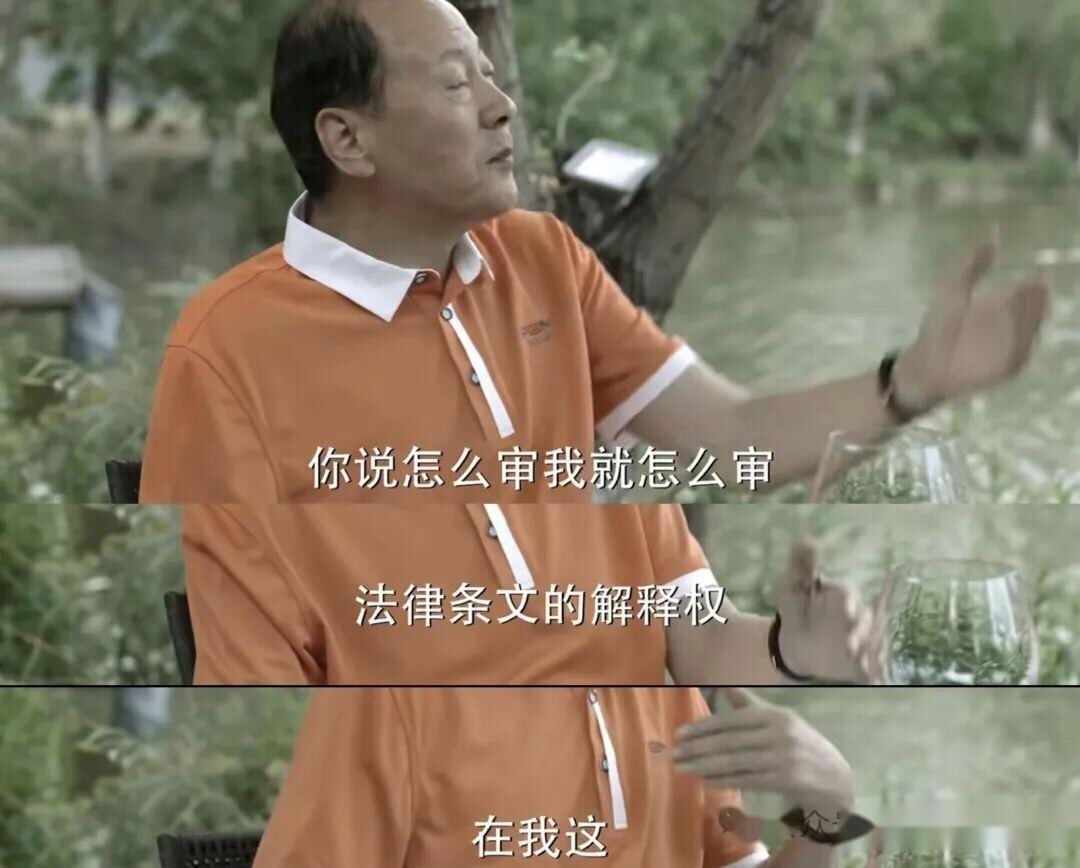
In In the Name of the People (《人民的名义》), Chen Qingquan puts it even more nakedly:
“It’s judged however you say to judge it — the power to interpret the legal provisions rests with me.”
Several hundred years have passed, and the rules of the game haven’t changed: whoever holds the power to interpret the rules holds the win or loss. The literati bureaucrats of Hai Rui’s era held the power to interpret the law; today’s Chen Qingquans hold the power to interpret the legal provisions — the rules are never neutral; they tilt naturally toward those who hold the power of interpretation.
VI. The Closed Loop: The Bottom-Layer Logic Unchanged for Four Hundred Years
Placing Hai Rui’s era alongside today, we see a complete closed loop.
Ancient: literati governed the people, exalting ritual propriety over institutions, and the bottom layer had no guarantee of rights. Hai Rui could, by personal morality, save a few specific common people, but could not shake the gentry’s monopoly on land, could not change the defects of the judicial system, still less give the bottom layer a fair starting point.
Modern: the value inertia hasn’t changed, labor pricing is distorted, the distribution structure is solidified. More counterintuitively, though productivity has multiplied dozens of times over and technology advances daily, this logic has not loosened — it has been reinforced.
Material scarcity disappeared long ago, but the rules of distribution have never changed to match. Before, ten people farming ten mu went hungry; now one person farms a hundred mu and can’t eat it all, yet the power to divide the cake is still not in the laborers’ hands. Technology is responsible for making the cake bigger; the system is responsible for damming up the dividends — the bulk of the benefits from rising productivity goes to capital, to platforms, to those who control the means of production; what’s shared with the bottom layer is only enough to survive, to scrape by, and will never let you lie flat in comfort.
And the more technology advances, the more replaceable ordinary people become. In ancient times, farming and craftsmanship still relied on accumulated experience, and people had some irreplaceability; now it’s different — delivery riders, couriers, assembly-line workers, even office-building programmers, are all standardized, modularized labor, replaceable at any time by newcomers, by AI, by cheaper people. The more replaceable, the less they dare stop, the less they dare lose a job or quit without a backup; they can only race desperately and endure desperately. Everyone lives in fear of being eliminated at any moment — this is the root of the pain.
Technology was supposed to let people work less; instead it turned out that: efficiency rose, so capital compressed manpower, lengthened hours, and lowered the value of each person. One person does the work of three, two get laid off, the profit goes to the boss, the risk to society, the anxiety to the workers. The internet and communications technology have thoroughly shattered working hours — always online, always on call, 996, reachable at any moment. Technology liberated the machines, not people; instead it locked people into a more precise, more boundless cage.
The deeper problem is this: society leaves ordinary people only one narrow upward channel — study, escape the countryside, enter the city, enter the system or a respectable job. Farming is looked down on, manual labor is undervalued, social security and pensions are worlds apart — do you dare go back? No. Everyone can only crowd onto the same single-log bridge and trample one another. The rat race isn’t because there are too many people; it’s because the channel is too singular and the classes too solidified.
And the safety net? Productivity has long been enough for everyone to live in peace and contentment, but social security lags far behind. Farmers’ pensions are one or two hundred; migrant workers do the hardest work yet lack social security, with wage arrears the norm; flexible-employment workers sit almost at the edge of the protection system; even programmers must face mid-life layoffs, the age-35 threshold, and no lifelong security. It’s not that the system can’t provide a safety net; it’s that it doesn’t want to — because once the bottom layer is secure and protected, who would still be willing to do the hard, cheap work, who would still be willing to be over-extracted?
So ordinary people see it crystal clear: honestly farming, heads-down manual labor, cannot buy respectability, protection, or dignity; even if you squeeze into a respectable mental-labor job, as long as you don’t control the means of production and the voice in distribution, you are still bottom layer — priced, harvested, replaceable at any moment. Escaping the countryside and squeezing into the system is merely switching to a slightly more comfortable spot within the bottom-layer plate.
So the nationwide rat race, everyone wanting to “reach shore” (get a secure position), is not because this generation of young people can’t take hardship, not because parents are too utilitarian. It’s because ordinary people, with the blood and tears of several generations, have seen through a value hierarchy and set of distribution rules that have persisted for a thousand years and still have not fundamentally changed. Technological progress solves the material problem; what it cannot solve is the class problem, the distribution problem, the power problem, the problem of value discrimination.
An upright official cannot save the system, and individual effort can hardly stand against structural discrimination. Hai Rui’s tragedy replays again and again today in another form: those who are most hardworking and lowest down are still the group most easily overlooked in distribution; those who strain hardest to change their fate still smash their heads bloody against institutional barriers. As long as the means of production and distribution power are not in ordinary people’s hands, no matter how strong AI becomes or how many times productivity multiplies, ordinary people will still race, still be exhausted, still be anxious, and the bottom layer will still lack protection.
VII. Longing for an Upright Official: The Last Straw in Institutional Despair
There is a phenomenon worth pondering: the common people of ancient China always hoped for an upright official like Bao Zheng or Hai Rui to appear and uphold justice for them, and this mindset even developed into various theatrical performances — The Case of Chen Shimei (《铡美案》) and Hai Rui Dismissed from Office (《海瑞罢官》) have been sung from generation to generation.
This is not ignorance, but the last straw grasped in institutional despair.
The judiciary and administration of ancient times were entirely in the hands of the ruling class. The laws were made by them; the power of interpretation and enforcement was all in their hands; the common people had no independent judicial channel, no right of appeal, still less any possibility of oversight and check. Faced with the mutually protective interest group of officials, the power to interpret the law that could be wielded at will, and the yamen power that could ruin you at any moment, ordinary common people simply had no possibility of “seeking justice through the system.”
They could only pin their hopes on one person among those in power whose conscience had not been blackened by interest.
Why were Bao Zheng and Hai Rui deified? Because they were the “odd ones out” in the civil-official group — not embezzling, not grabbing, daring to confront the powerful, even unafraid to offend the entire bureaucratic system. For the common people, what they longed for was not the identity of “upright official,” but an “exception” that could confront the injustice of the system. The system itself tilted toward the magnates and the powerful; only by relying on the “personal morality” of an upright official could they, in individual cases, bend the scale — tilted by the system — a little back toward their own side.
But the upright official in the theater actually serves a double function:
For the common people, it is spiritual compensation. Unable to win against officials or bring down the powerful in reality, they could only watch Bao Zheng execute the emperor’s son-in-law and Hai Rui battle the magnates in the theater. This fictional “great satisfaction” let the bottom layer feel “so justice does exist, it just hasn’t been my turn in reality,” dissipating some of the resentment and preventing conflict from bursting out directly.
For the rulers, it is a low-cost stability-maintenance tool. In the theater, all injustice is blamed on “corrupt officials and greedy clerks,” and the hope of solving the problem is pinned on “an upright official appearing,” but no one ever dares question the system itself that lets corrupt officials run rampant and lets upright officials end in tragedy. The people’s anger is directed toward “cursing corrupt officials and longing for upright ones,” not toward “opposing the system and opposing injustice.”
Several hundred years have passed, and this mindset has actually never fully disappeared. People today still habitually pin their hopes on “some good leader,” “some conscientious enterprise,” “some righteous media outlet” — the essence is still the same: in an environment lacking institutional guarantees, one can only entrust justice to “the conscience of those in power.”
But conscience can never be relied upon. Hai Rui couldn’t save the Ming, and Bao Zheng couldn’t save the Northern Song either. As long as the system itself is not neutral and the power of interpretation is not in ordinary people’s hands, longing for an upright official will forever be only a collective act of spiritual self-gratification.
Final Words
Reading Hai Rui, the most painful thing is not his poverty, his stubbornness, his loneliness.
The most painful thing is that four hundred years have passed, and we still live inside a logic that “Hai Rui cannot save.” We praise Hai Rui, put him in textbooks, call him an exemplar, yet are never willing to face what he truly wanted us to see: in a society without the rule of law, without professional governance, without guarantees of the bottom layer’s rights, even the most morally perfect person is doomed to tragedy.
What is needed today is not more Hai Rui-style moral paragons, but a set of institutions and rules that can let ordinary laborers live with dignity, and let the bottom layer no longer have to survive only by “escaping.”
Otherwise, the story of Hai Rui will be told for another four hundred years.
评论
0 条评论