Introduction
During the 2021 National Day holiday, my wife and I traveled to Beijing together and walked into Dingling, one of the Ming Tombs — the mausoleum of the Wanli Emperor, Zhu Yijun.
Time has long since swept everything away; even Wanli’s own remains turned to dust and smoke during a special era of history. Dingling is also the only imperial tomb in Chinese history to have been actively excavated by archaeologists. Led at the time by Guo Moruo and Wu Han, the excavation of the underground palace yielded over three thousand artifacts, spanning categories such as crowns and robes, gold objects, gold and silver vessels, fine jade and curios, imperial silk textiles, and official-kiln porcelain — every one of them a national treasure. The most celebrated pieces are peerless rarities like Wanli’s gold-thread yishan crown and the empress’s six-dragon three-phoenix crown. These artifacts have never been mere piles of gold and jewels; they are the peak testimony to Ming craftsmanship, court ritual, and the culture of the era.
Looking back at history, Dingling endured several catastrophes over its existence. When Li Zicheng’s forces stormed Beijing, they treated the imperial tombs like palaces and gardens to be wantonly destroyed; most of Dingling’s above-ground wooden halls, gate towers, and corridors were burned down. That same year the Qing army entered through the pass, and the tomb grounds were dismantled and damaged again — the once magnificent surface structures fell into ruin and decay.
Today, when we walk into Dingling’s underground palace, most of the coffins and furnishings we see are later restorations and replicas; the originals were long ago moved into museums for safekeeping.
In earlier years my understanding of Wanli, and of the entire Ming dynasty, was shallow — just fragmented impressions. Only later, after reading Dangnian Mingyue’s Stories of the Ming Dynasty (《明朝那些事儿》), binge-watching classic dramas like Ming Dynasty 1566 (《大明王朝1566》), and combining all that with the firsthand experience of walking through Dingling, did I slowly come to understand Wanli’s life — and the deep entanglements of power, institutions, and human nature behind the Ming empire.
Recently, in Ray Huang’s 1587, A Year of No Significance (《万历十五年》), I gained a deeper understanding of this emperor and some of the ministers who served during his reign. In Chapter 3, “There Will Be No More Zhang Juzheng,” one passage made me stop and read it three times over:
His ancestors’ every word and deed had been praised by their ministers as absolute moral standards, yet he had grown up under the tutelage of his own officials. The scope of his responsibilities had been arranged by these civil officials. His emotions, moreover, had to be absolutely suppressed. The difference between before and after, though subtle in form, was in substance unambiguous. The reason is that the founding monarch created the dynasty and, at the same time, established the civil-official system as an instrument of administration; but today’s civil officials have long since matured. All they need is an emperor of bland personality to serve as the representative of the Mandate of Heaven, whose task is to render compulsory arbitration when their disputes cannot be resolved. They require this maintenance-minded monarch to be cut off from daily life and, in arbitrating disputes, to carry no personal tastes or preferences that might stir up more conflicts. Frankly put, the emperor had better have no opinions of his own at all — that way he is all the more fit to represent the Mandate of Heaven.
This passage turns the real relationship between the Ming bureaucracy and the emperor completely inside out. On the surface it’s about Wanli; in reality it exposes a hidden logic of how imperial power operated in ancient China.
The History of Ming, compiled under Zhang Tingyu in the Qing dynasty, says: “Hence commentators hold that the fall of the Ming actually occurred under Shenzong [Wanli] — is this not indeed the case?” But after reading this book, my own thought is: the Ming fell because of a corrupt old system. Pinning the fall on Shenzong is attribution by surface symptoms; the rigid, corrupt old institutions are the root cause. Many Qing institutions were inherited from the Ming, and the Qing was no great shakes either — the same feudal ritual-system template.
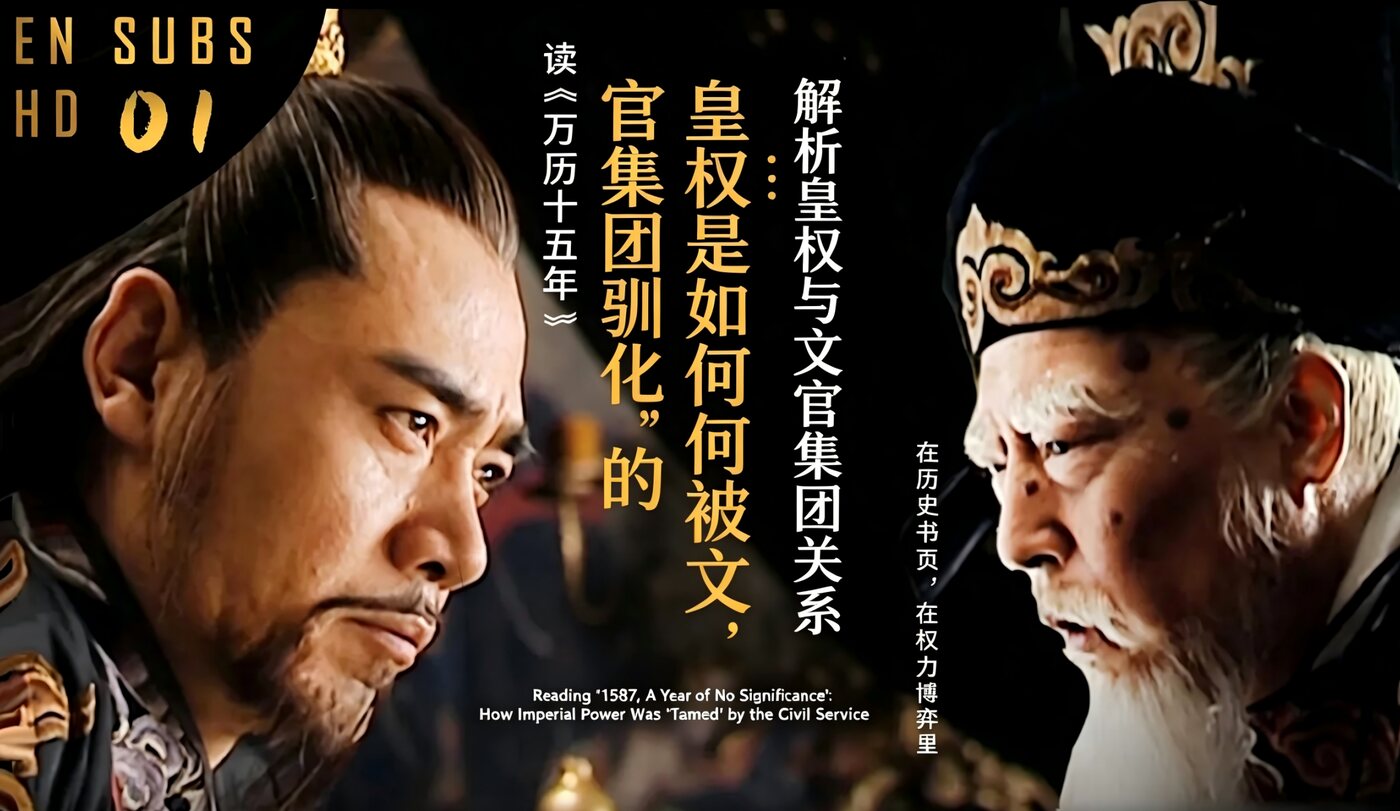
The Founding Emperors Made the Rules; Their Successors Were Held Hostage by Them
The generation of Zhu Yuanzhang and Zhu Di were the men who conquered the realm and built the institutions. The civil officials were tools of imperial power; the emperor’s word was final, and the officials could only bow and obey. Back then, the system served imperial power.
But by Wanli’s generation, things had flipped completely.
After more than two centuries of evolution, the institutions, the ritual code, and the bureaucratic corps had all matured and hardened. At this point the emperor had no need of personality, opinions, or ideas — those were liabilities instead. What the bureaucracy needed was only a symbolic mascot.
The mascot’s role was clear: when the officials were squabbling irreconcilably and deadlocked, he would step out, apply the stamp, and render a compulsory arbitration. That was all.
The Officials Didn’t Want an Enlightened Ruler — They Wanted an Obedient Tool
The book puts this very bluntly, with a trace of cruel honesty:
They require this maintenance-minded monarch to be cut off from daily life and, in arbitrating disputes, to carry no personal tastes or preferences that might stir up more conflicts. Frankly put, the emperor had better have no opinions of his own at all.
The scholar-officials knew perfectly well: the emperor must not have personal preferences, must not have private affections, must not have his own positions. His daily life had to be insulated from court factions; he must not get mixed up in partisan struggles. Best of all: plain, weak-willed, and easy to manipulate. The less self he had, the better he fit their definition of a “sage ruler.”
Seen from today, this logic still stings.
The operating logic inside many institutions and big companies is strikingly similar — the top doesn’t need leaders with ideas, the nerve to reform, or personality. It only needs people who behave, follow the rules, take no sides, show no personal preferences, and exist solely to stamp documents and take the blame. Those with ideas get squeezed out; the opinionless, the followers, the obedient get praised as “steady and reliable.”
Tamed from Childhood: An Emperor Raised from a Template
Wanli’s tragedy began the day he ascended the throne.
From childhood, every word and action was locked inside the officials’ moral framework. What he could do, what he couldn’t think, which preferences had to be suppressed — all arranged for him down to the last detail. He wasn’t raised as a person; he was cultivated as a job role.
The scope of his responsibilities, the standards for his words and conduct, the expression of his emotions — all drawn up by the civil officials, leaving him no space for a self. Later, when he wanted to name the son of his beloved Consort Zheng as crown prince, the bureaucracy brought out “ancestral institutions” and “ritual law” to pin him down ruthlessly. He wanted to resist, only to discover that the entire system refused to let him be “a man with feelings.”
This wasn’t Wanli’s tragedy alone; it was the inevitable result of a Ming civil-official system that, in its late evolution, had thoroughly hollowed out imperial power, leaving only a symbolic vacancy.
Hongzhi: Setting Up the Model Puppet
The book singles out the Hongzhi Emperor — Wanli’s great-uncle — as the “role model.”
The more modest and gentle Hongzhi was, letting the civil officials arrange everything, the more they hailed him as an enlightened sage-king. The logic is brutally realistic: the more obedient you are, the more we praise you; the more you have a mind of your own and want to decide for yourself, the more we besiege you with ancestral institutions, morality, and ritual law.
And so the standard of the “sage ruler” was redefined by the bureaucracy: not expanding the realm, not governing with vigor, not pleading the people’s cause — but behaving obediently, causing no trouble, and letting the officials run the state machine comfortably.
The Other Side of History: Emperors Turned into Villains
Once you understand this logic, many of the verdicts on history’s “imbecile emperors” — those nailed to the pillar of shame — deserve to be weighed anew.
Liu He: The Marquis of Haihun Tomb Retrial
Historical records say Liu He was deposed by Huo Guang for debauchery and flouting ritual law — committing over a thousand outrageous acts in his twenty-seven days on the throne. But the excavation of the Marquis of Haihun’s tomb shattered that received image completely.
The tomb was packed with classical texts, sage relics, musical instruments, and literati curios; the funerary arrangement was scholarly and weighty — nothing like what a dissipated playboy emperor devoted only to food, drink, and fun would leave behind.
The real logic was most likely this: after taking the throne, Liu He was unwilling to be Huo Guang’s puppet and tried to cultivate his own faction and gather power. But Huo Guang controlled the military and court appointments — his roots ran too deep. Liu He wanted to seize power but couldn’t match Huo’s hard strength, so he could only be deposed. And once deposed, the narrative had to be rewritten and packaged: shape him into an absurd, unfit ruler, so that Huo Guang’s deposition of him becomes “saving the state.”
It wasn’t that Liu He was too rotten — it was that he refused to be a mascot and blocked a powerful minister’s power, so he was kicked off the board and then splashed with mud by the history books.
Zhengde (Zhu Houzhao): The Same Script
The Zhengde Emperor has always been cursed as a playboy who favored eunuchs, loved fooling around, and disrespected ritual law. But strip away the labels and look at the essence, and he faced the same predicament as Liu He and Wanli.
What the bureaucracy wanted was an emperor who followed the rules, restrained his desires, and obediently lived and governed by Confucian ritual law. Zhengde was free-spirited by nature, had opinions, even dared to lead troops into battle personally, and refused to play by the officials’ rules. He also deliberately bolstered the eunuchs to counterbalance the bureaucracy — moving the scholar-officials’ cheese directly.
So the bureaucracy collectively slapped negative labels on him, magnified his private life, and downplayed his governance, casting him as an absurd idler. The real Zhengde was not necessarily incompetent — he had skill, military ability, and knew exactly what was going on. His “original sin” was only one: refusing to live according to the template the officials had designed.
Honestly, I quite like the Zhengde Emperor. Of all the emperors, he’s the one who managed to be himself.
Only Three Men Could Truly Keep the Bureaucracy Down
Of the Ming’s sixteen emperors, when it comes to statecraft, nerve, and control — men who could truly keep the bureaucratic corps in check — only three stand in a class of their own.
First: Zhu Yuanzhang.
The founding emperor, who fought his way from beggar to dragon throne — he had seen every scene there is. To him the bureaucracy was a tool; disobey and die. The Hu Weiyong case and the Lan Yu case implicated tens of thousands each, whipping the meritorious officials and the bureaucratic corps thoroughly into line. The institutions he created were themselves designed to serve imperial power; the officials were mere executors with no bargaining power at all.
Second: Zhu Di.
He seized the throne from his nephew in the Jingnan campaign — not on the legitimacy of bloodline, but on real military merit and iron-fisted nerve. Five personal campaigns into the Mongol steppe, Zheng He’s voyages to the Western Seas, moving the capital to Beijing — which of these wasn’t decided by his sole judgment? If the bureaucracy dared say no: exile at best, prison at worst. He didn’t need the officials’ approval; he himself was the rule-maker.
Third: Jiajing.
After Zhengde died (as mentioned above), Yang Tinghe picked a provincial prince who looked easy to handle as successor — and ran into a top-tier hard case.
The moment Jiajing arrived in the capital, the Great Rites Controversy erupted; he went head-to-head with the entire bureaucratic corps, conceding not an inch. Young as he was, he saw through the scholar-officials’ moral blackmail and their monopoly on discourse, and step by step used their own force against them — pressing down the grand secretaries, gathering imperial power, splitting the officials, and controlling the court. Zhengde was extroverted rebellion; Jiajing was introverted statecraft — expressionless on the surface, razor-sharp within, grinding the bureaucratic corps into the dirt and firmly wresting imperial power back into his own hands.
What do these three have in common?
None of them was a “template emperor” cultivated by the bureaucracy; none of them swallowed the scholar-officials’ discipline; all had their own crews and methods; all dared to flip the table at the crucial moment.
Zhu Yuanzhang established authority through killing, Zhu Di through military merit and force, Jiajing through political art and counterbalancing. Different paths, same result: the bureaucracy couldn’t hold them down — instead, they held the bureaucracy down completely.
And the other emperors?
Either docile and obedient like Hongzhi, praised as “sage rulers” while actually puppets; or like Wanli, seeing through it all yet powerless to break free, left only to rot on the vine; or like Zhengde, refusing to be tamed — stigmatized and smeared as imbeciles.
The entire Ming dynasty, when all is said, was one tug-of-war in which imperial power and the bureaucratic corps waxed and waned against each other. At the founding, imperial power held absolute dominance; from the middle period the bureaucracy steadily grew mighty; by the late period the emperor had become a prisoner of the institution. Only the three men above could break that trend.
The Underlying Logic: Whoever Controls the Discourse Is the Referee
String these threads together and the underlying logic is plain to see:
| Emperor | Choice | Outcome |
|---|---|---|
| Liu He | Refused to be a puppet, tried to seize power | Insufficient strength → deposed + stigmatized |
| Zhengde | Refused the template, refused to be tamed | Smeared and defined by the court historians |
| Wanli | Saw through his fate as a pawn, yet couldn’t flip the table | Nonviolent non-cooperation; hid in the palace and gave up |
For many emperors in the official dynastic histories, the verdicts of “debauched, imbecilic, and worthless” were not at all questions of character or ability — in essence they were power struggles between imperial power and powerful ministers, between the emperor and the bureaucratic corps. Lose, and you’re stigmatized and nailed to the pillar of shame; win, and you’re hailed as a sage ruler.
The history books were never objective verdicts — they are the winners’ narrative. The obedient, the compliant, those willing to be symbols get exalted as enlightened rulers; those with personality, opinions, a desire to take back imperial power, and a refusal to be controlled either get deposed or get cursed as imbeciles and buffoons.
From the Imperial Court to the Office: The Same Taming Logic
Shift this logic onto today’s workplace and you’ll find that thousands of years of human nature and power mechanics haven’t changed at all.
A Company’s “Values” Are the Ancient Officials’ “Ritual Law and Morality”
The ancient officials boxed the emperor in with sage teachings and ritual law: you may not have private desires, personality, or ideas of your own — you may only be a symbol, following the rules we set.
Today’s companies box people in with corporate culture, values, and office rhetoric: be dedicated, think of the big picture, be sensible, keep a low profile, obey. The essence is to make you give up your own demands and surrender your personal will to the organization and its superiors.
Speak up for your personal rights, boundaries, or pay-for-performance, and you’re instantly labeled: small-minded, immature, a poor values fit, hard to manage.
The So-Called Good Employee Is the “Workplace-Puppet Version of the Hongzhi Emperor”
Just as the officials loved emperors like Hongzhi — docile, modest, opinionless, manipulable — the good employees most praised in the workplace are those who:
never talk back, never get serious, never fight for personal interests; work overtime without a word, take losses without complaint, accept whatever the leader assigns; no personality, no factions, no dissent.
Such people, even of mediocre ability, get praised as reliable, loyal, and upright in values.
Whereas personalities like Zhengde, Liu He, or Wanli — people with their own ideas and bottom lines, unwilling to obey blindly, daring to question and to fight for legitimate rights — in the workplace become: troublemakers, hard to manage, not team players, a bad values fit. However talented, they get marginalized, made scapegoats, even “optimized” out on some pretext.
The Exact Same Double Standard as in Ancient Times
Ancient times: the rules were for constraining the emperor and honest people, while the bureaucratic corps itself engaged in factional strife and self-enrichment — and no one held them to the ritual law.
Today’s workplace: values are for constraining the rank-and-file workers — demanding your dedication, forbearance, and disregard for personal gain; while management and the well-connected slack off as usual, form factions, grab resources, and get special treatment — and no one holds them to the values.
Rules always bind only those who follow rules and hold to principles.
And in the End, Even the Mindset Replicates Wanli
Many working people today are a budget-version Wanli:
They see through the hypocritical values and workplace games; they don’t want to join the mud-wrestling, don’t want to cater without a bottom line, don’t want to sacrifice their own interests and kneel to the rules — but they can’t flip the table either, and lack the security to quit and fight openly. So they can only choose passive compliance, slacking, lying flat, nonviolent non-cooperation.
Clocking in on the surface, utterly detached inside. No longer believing the slogans, no longer swallowing the pie-in-the-sky promises, no longer giving blindly — just guarding their own bottom line and interests, muddling through the days.
In the Name of the People: So Many Corrupt Officials? It’s Just Your Infighting
In In the Name of the People (《人民的名义》), Zhao Ruilong has a line that cuts to the bone:
So many corrupt officials? It’s nothing but your infighting.
This line exposes another layer of truth: in a system of power games, the labels of “corrupt” and “honest” often depend not on what you objectively did, but on which faction you’re in, whose orders you follow, and whether you’re standing in someone’s way.
Today you’re called corrupt; tomorrow the wind shifts and you may become a reform pioneer. Today you’re praised as clean, upright, and sound in values; tomorrow one wrong alignment and you’re branded an embezzler, a traitor.
Take my own case: I spent a full five years at my previous employer. For the first three years, I was named Outstanding Employee of the Technology Department and Company Advanced Individual every year, labeled with every title from “Most Accountable” to “Rising Star,” and won trophies, bonuses, and promotions.
Three years in, the industry cooled, the company declined, and the veteran leader who had mentored me was laid off. After the new leader took over, my reputation flipped overnight.
I began to be labeled as having a values problem — deliberately PUA’d, wholesale negated, deliberately suppressed, and forcibly categorized as an oddball with attitude issues who couldn’t collaborate. In plain terms: a new emperor brings new courtiers.
From start to finish, my attitude toward work, my professional ability, and my way of doing things never changed. What changed was only the person holding the power of evaluation.
The so-called good employee and bad employee, good performance rating and bad performance rating — there is no objective, fair standard at all. They are merely management tools the company uses to handle people’s hearts and control people.
Rules have always been served à la carte, based on who you are: total obedience and blind catering make you sound in values, a good employee; having opinions, principles, and refusing to fall in line gets you branded a misfit with a values problem.
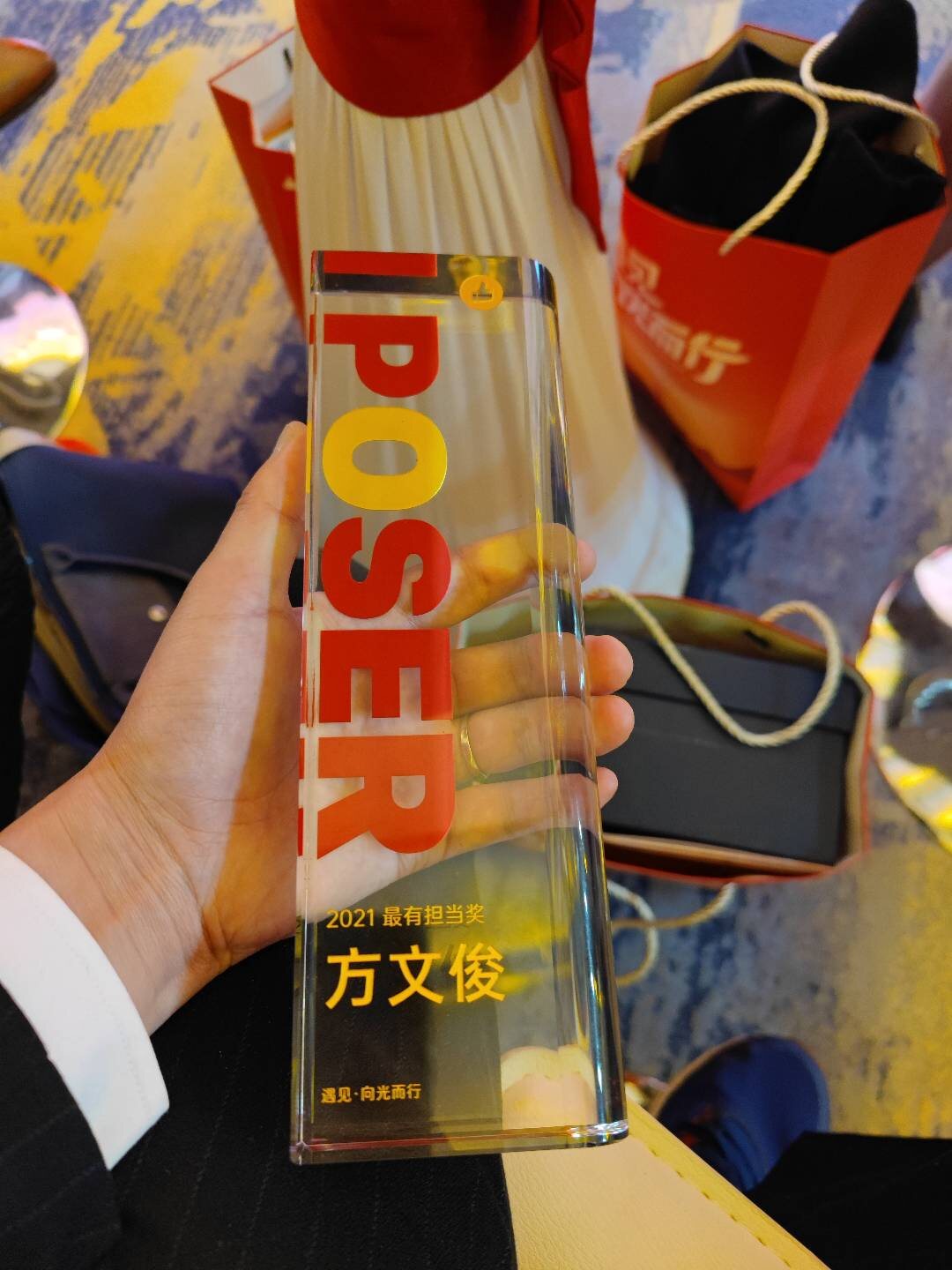
Just like those Ming emperors: the obedient and docile ones, who let the officials arrange everything, get hyped as sage rulers for the ages; those with minds of their own, who kept their true hearts and wanted to be themselves, get deliberately smeared by the bureaucratic corps as imbeciles and buffoons.
In truth I never changed. My original intent in doing the work, my professional attitude, and my principles in dealing with people were always there. What changed was only the new leader’s value system and staffing standards.
That’s why I can especially empathize with Wanli’s predicament inside the palace walls — and I too went through a long period of self-doubt and self-negation: I genuinely had the team’s interests at heart, offered fair and pragmatic suggestions, and wanted nothing more than to run the processes smoothly and keep the business stable — so how did I end up a workplace misfit? I asked myself again and again: Am I too rigid? Do I not understand the ways of the world? Is my vision too small? Am I too sensitive? Is my collaboration really that poor?
Until I finally saw it all clearly: there is nothing wrong with me. If my character, ability, and vision really were the problem, then what about three straight years of awards, raises, and promotions — and the unanimous collaboration praise from every business partner? Was that all fake word-of-mouth I conjured out of thin air? And even after the leadership changed, in the eyes of external business partners my reputation remained solid and reliable — never once did it crash.
What really has the problem is this double-standard workplace evaluation system — the unspoken rules that look only at factional alignment and never at actual contributions; the organizational logic that shouts original intent and mission on the surface while running entirely on interest calculations behind the scenes.
For the first three years, the company was in an upward expansion phase: short of people to shoulder work, short of people to dedicate themselves, short of people to proactively fill gaps and backstop problems. So it hyped me as Outstanding Employee and Company Advanced Individual, crowned me with every halo from Most Accountable to Rising Star, handed out honors, trophies, and bonuses — all simply to motivate me to keep giving for free and create more value for the organization.
But once the industry turned down and the company declined, plus a new leader arrived and the internal factions were reshuffled, the standards for judging people were instantly rewritten. In an economic downcycle, the company no longer needs steady, dedicated doers; instead it must negate veteran employees, deliberately suppress and marginalize them, to accomplish cost-cutting and efficiency gains by proxy — even to pave the way for layoffs.
After seeing all this, I no longer look for the cause in myself whenever anything happens, and I no longer strain to perform proactively or pour my heart out to cater to an organization that long ago disappointed me. The corporate-culture slogans and values posters all over the company walls — seemingly fair and selfless — are completely severed from the real-world ways of the world and factional infighting, just like Wanli’s Forbidden City and the bureaucratic corps: mouths full of benevolence, righteousness, rules, and ritual law on the surface; nothing but private calculation and double standards behind the scenes.
Now I simply hold to my duty, do my job well, put away the extra enthusiasm and the pointless dedication, stop the excessive internal friction, and stop blindly ingratiating myself.
In fact, looking across today’s society and workplaces, the severance has always been the same: laws and regulations in black and white are often a different matter from their real-world enforcement; the moral standards and values requirements hung high on the wall are completely disconnected from human nature and the games of interest.
In fact, looking across today’s society and workplaces, the severance has always been the same: laws and regulations in black and white are often a different matter from their real-world enforcement; the moral standards and values requirements hung high on the wall are completely disconnected from human nature and the games of interest.
Just like the eternal truth laid bare by Jiajing’s Yangtze-and-Yellow-River discourse in Ming Dynasty 1566:
The Yangtze runs clear, the Yellow River runs muddy; the Yangtze irrigates fertile fields, and the Yellow River likewise nourishes the people. One never favors a river merely for being clear, nor discards one entirely for being muddy.
Applied to the court: the “pure stream” faction is the Yangtze, the corrupt officials are the Yellow River. The emperor never judges by simple good and evil — he understands only counterbalance and use.
Applied to the workplace and real life, it is exactly the same:
There are no eternal good people or bad people, and no absolutely fair standard of evaluation. If you please the powers that be, obediently listen and fall in line, you are the clear Yangtze — hyped as a benchmark backbone. If you have opinions, hold principles, and won’t blindly cater, you become the muddy Yellow River — branded with crooked values and poor collaboration, even treated as an object needing to be “rectified.”
The so-called good and bad, right and wrong, excellent and backward are never defined by your true heart and your real work; they are held solely in the hands of those who control the discourse and the rules. From the ancient court to the modern workplace, from the feudal ritual system to today’s guanxi society, this underlying logic has not changed in a thousand years.
Charges and honors alike are ammunition in the power struggle.
The ancient officials used “ritual law and morality” as their weapon; today the weapons are “values,” “compliance,” and “audits.” The essence hasn’t changed: first define what is “right,” then define the disobedient as “wrong,” and then remove them with full legitimacy.
From the imperial court to the office, thousands of years of human nature and power logic remain unchanged:
Whoever holds the power of discourse defines right and wrong, good and bad, and the values themselves; the obedient are deified, and those with a self are smeared.
Final Words
The year 1587 was, on the surface, one in which “all was calm within the four seas, and the whole year contained no event worth recording.” But Ray Huang used this seemingly flat year to expose the deep pathology of an empire sliding from its peak into decline — when institutions have ossified to the point that even the emperor himself is a prisoner of the system, the dynasty has already lost its capacity for self-renewal.
Wanli’s final choice was to hide in the inner palace and skip court for twenty-eight years. That wasn’t laziness; it was a lucid, desperate resistance — he saw through the fact that no matter what he did, he could never escape the script the bureaucracy had written. To be a real person, he could only rot on the vine; to be an enlightened ruler, he had to castrate his own self.
He chose the former.
And the Ming, trapped in this deadlock where “everyone is held hostage by the institution,” slid step by step into the abyss.
评论
0 条评论