I. The Heretic of the Late Ming: Li Zhi the Man and the Groundwork of His Thought
In 1602, at the moment a razor in prison cut across his throat, Li Zhi ended his contradictory life in the most resolute way possible. That day he asked his attendant to shave his head, and in the gap while the attendant stepped away he picked up the razor and cut his own throat, yet did not die at once. Seeing him drenched in blood, the attendant hurried over to ask after him. Li Zhi, no longer able to speak, wrote his answers with a finger on the attendant’s palm. The attendant asked: “Does the monk feel pain?” He answered: “No pain.” The attendant asked again: “Why has the monk cut himself?” He slowly wrote: “What does a seventy-year-old man have left to seek!” Behind that calm resolve to meet death lay the struggle and the stubborn holding-on of his whole life. This thinker, born in the Wanli era, spent his entire life trying to break free of the fetters of his age, yet was forever swept along by it. He fiercely attacked hypocritical ritual teachings and the orthodox lineage of the Way, yet could never truly sever his connection with the mundane world. He longed for the freedom of the individual, and in the end became a martyr to feudal ethics. Having read the chapter on Li Zhi in 1587, A Year of No Significance, together with those notes that strike directly at the essence, it isn’t hard to see that Li Zhi’s life was both the self-awakening of an intellectual and the tragic microcosm of an era. His thought and his struggle can still provoke deep reflection on human nature, ritual teaching and freedom. Li Zhi’s core intellectual traits can be summed up as the “extreme rebel version” of Wang Yangming’s philosophy of mind — he pushed the monism of that philosophy to its most furious, most anti-traditional limit, specifically to lock horns with Zhu Xi’s dualism. His philosophical divergence over “monism/dualism” and his intellectual trait of “defiance before belief” were embodied in him to the fullest.
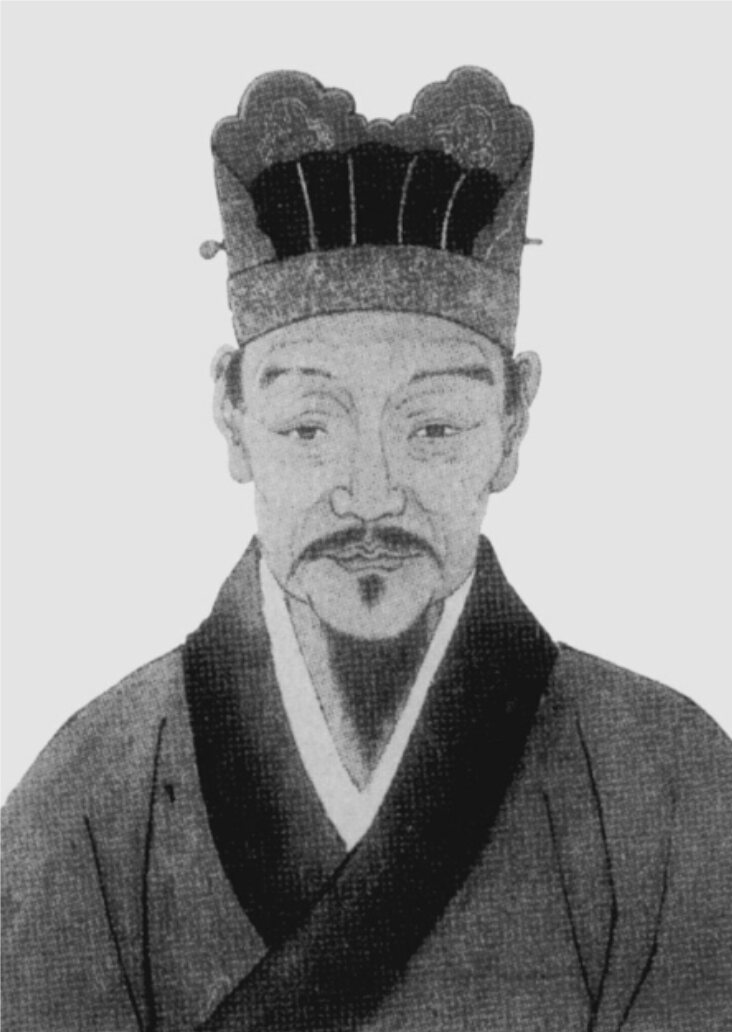
Who was Li Zhi? One sentence pinpoints him precisely: the number-one “heretical” thinker of the late Ming, an inheritor of the Wang Yangming philosophy of mind and the Taizhou School, who thoroughly “feralized” and “de-Confucianized” that philosophy. His literary name was Zhuowu; he was from Quanzhou, Fujian (1527–1602). He once served as an official, later shaved his head to become a monk but did not keep the monastic rules — eating meat, drinking wine, taking female disciples — styled himself a “heretic,” openly denounced Zhu Xi, attacked fake moralists and ritual teachings, and was finally thrown into prison, where he cut his own throat. For such an “iconoclastic” thinker, all his outcry and resistance centered on his confrontation with Zhu Xi’s dualism and his extreme extension of Wang Yangming’s monism.
II. The Core of the Contradiction: Li Zhi’s Three Struggles
(1) Resistance to and Dependence on Worldly Rules
Li Zhi’s first contradiction was resistance to and dependence on worldly rules. As the notes reflect, he was “the bottom-tier version of Wanli” — Wanli could not decide his own successor, and Li Zhi likewise could not decide the course of his own life; even his successor after death was designated by his clan against his wishes. He knew well the constraints of the feudal clan system, and in order to escape the entanglement of his kinsmen and break free of the turmoil of mundane affairs, at sixty-one he resolutely shaved his head to become a monk and withdrew into seclusion at the Zhifo Abbey, trying to buy spiritual freedom with a posture of “not returning.” He stated his original intention plainly: “The idle people at home constantly hope I’ll go back, and constantly travel a thousand li to press me, forcing worldly affairs upon me. So I shaved my head to signal that I will not return, and I am absolutely determined not to attend to worldly affairs.” This resolve was an open rebellion against the feudal concept of family, a breaking free of the predetermined life track of “study, become an official, buy land,” and above all the first practical application in his life of his “extreme monism” — taking his own original heart as the standard and resisting the bondage of the external mundane world.
Yet this rebellion was ultimately fragile. The Zhifo Abbey where he lived had never been registered with the government, held no official license, and paid no taxes; in essence it was still an “anomaly” drifting outside the rules. He attacked those hypocrites whose “mouths disagreed with their hearts,” accusing them of “aiming at full bellies and warm backs while calling themselves Boyi and Shuqi; being by nature the man from Qi, while calling themselves sated with the Way and stuffed with virtue” — and yet he himself had no choice but to live on the charity of the very people he attacked. He often wrote to friends asking for “half a salary” in aid, even for “the stipend of a third-rank official, to support me for a year.” This awkwardness of condemning and relying at once was proof that he could not truly detach himself from the mundane world. As the notes joke, it was a kind of helplessness: “his heart didn’t want it, his mouth said it didn’t want it, but his body was quite honest.” This tug-of-war between resistance and dependence ran through Li Zhi’s whole life and doomed his inability to achieve genuine absolute spiritual freedom. Behind it lay the violent collision between his extreme monist thought and the dualist rules of the mundane world.
(2) Thought Ahead of Its Time, an Era Lagging Behind
Li Zhi’s second contradiction was thought ahead of its time and an era lagging behind, and at the core of that forwardness lay his thorough rejection of Zhu Xi’s dualism and his extreme advancement of Wang Yangming’s monism. In an age when “preserve heavenly principle, extinguish human desire” was revered as the ultimate standard, Zhu Xi advocated a “dualism of principle (heavenly principle) + qi (matter),” holding that principle precedes qi and that heavenly principle is an external absolute authority. Li Zhi directly denied this view, proposing that “heaven and earth contain only the two qi of yin and yang; there is no Supreme Ultimate, no heavenly principle,” and stating bluntly, “Heaven is merely one thing among the ten thousand things” — reducing heaven to a natural object and shattering the sacredness of heavenly principle. His proposition that “wearing clothes and eating food is itself human relations and the principle of things” raised the basic survival needs of ordinary people to the same level of importance as ethics and morality. In essence it advocated that “human desire is heavenly principle,” opposing Zhu Xi’s repressive doctrine of “preserve heavenly principle, remove human desire.” This is precisely the core embodiment of his extreme monism — denying external authority and taking the human original heart and human desire as fundamental.
In the political and moral sphere Li Zhi was even more outspoken, cursing Zhu Xi as a “fake moralist, a practitioner of the art of information asymmetry,” holding that Zhu Xi’s whole apparatus of “heavenly principle, the cardinal constants, hierarchy” was essentially official ideology, used to bind people, deceive people and maintain rule. He denounced the moralists as “dressed in Confucian elegance, behaving like dogs and swine,” accusing them of talking nothing but benevolence and righteousness while their bellies were full of thievery and whoredom. At the same time he firmly opposed “taking Confucius’s judgments of right and wrong as right and wrong,” holding that Confucius too was a man, not a god; Zhu Xi’s elevation of Confucius into a god was essentially about monopolizing truth and suppressing thought. This is the core expression of his trait of “defiance before belief” — he did not blindly follow the Confucius-Mencius orthodoxy or Zhu Xi’s rationalism, but first took his own original heart as the standard and arrogantly, willfully challenged every external authority.
Comparing the monisms of Wang Yangming and Li Zhi makes Li Zhi’s “extremism” even clearer. Wang Yangming’s monism was mild: he advocated “the mind is principle,” yet still emphasized “extending innate knowing, preserving heavenly principle, removing human desire,” retaining the Confucian moral bottom line and ethical constraints, not opposing the Confucian cardinal constants — belonging to the category of “cultivating the mind, strengthening the self, not opposing the system.” Li Zhi’s monism, by contrast, was the thorough extreme version. He put forward the “doctrine of the child-like heart,” holding that the “child-like heart” is the original mind of the very first thought, free of falsity and pure of truth, and is the sole standard of truth; once one studies the Six Classics, Confucius and Mencius, and rationalism, the child-like heart becomes polluted. He even said plainly that “the Six Classics, the Analects and Mencius are the talking points of the moralists and the reservoir of fake men,” treating the classics as the excuses of hypocrites. He advocated that “everyone is born knowing; sage and commoner are equal,” denying all external authority, all hierarchy, all dogma, and turning Wang Yangming’s “the mind is principle” thoroughly into “my desire is principle” — as long as it is a genuine heart, a genuine desire, a genuine feeling, it is right, entirely setting aside the constraints of the classics and ritual teaching.
Yet his thought could never be accommodated by that era. The notes mention that Li Zhi was combative and loved to argue, unwilling to be bested in words; as an official he frequently clashed with his superiors, and this “contrarian” stubbornness made him hit wall after wall in officialdom. He named his own works A Book to Burn and A Book to Keep, having long foreseen that his thought would be treated as “heresy” and banned by the authorities. Sure enough, his writings were repeatedly suppressed and prohibited, and in the end, for publishing and circulating them “utterly without restraint” and thereby challenging the social order, he was thrown into prison. Even more ironic: while he was persecuted as a “heretic,” the Western missionary Matteo Ricci had long been active at court, able even to make officials and imperial consorts into believers — whereas Li Zhi, merely for expressing respect for human nature, ended up cutting his own throat. Behind this lay the rigidity and cruelty of feudal ritual teaching, the era’s zero tolerance for dissenters, and above all the fact that Li Zhi’s thought thoroughly shook the foundations of the dynasty. As noted earlier, intellectuals were officials and landlords, the true masters of society; Li Zhi’s denial of heavenly principle, of Confucius and of Zhu Xi shook the official ideology. His advocacy that everyone take their own mind as truth would make people refuse to submit to the cardinal constants or to governance. His promotion of equality, opposition to hierarchy and opposition to ritual teaching further undermined the privileges of the scholar-officials and the social order. By comparison, Zhu Xi’s dualism could “stabilize the dynasty, stabilize the order, stabilize the position of the scholar-officials,” and Wang Yangming’s monism “cultivates the mind but does not oppose the system — controllable.” Li Zhi’s extreme monism, “thoroughly anti-system, anti-Confucian, anti-authority,” naturally became the most dangerous man in the court’s eyes and had to be suppressed.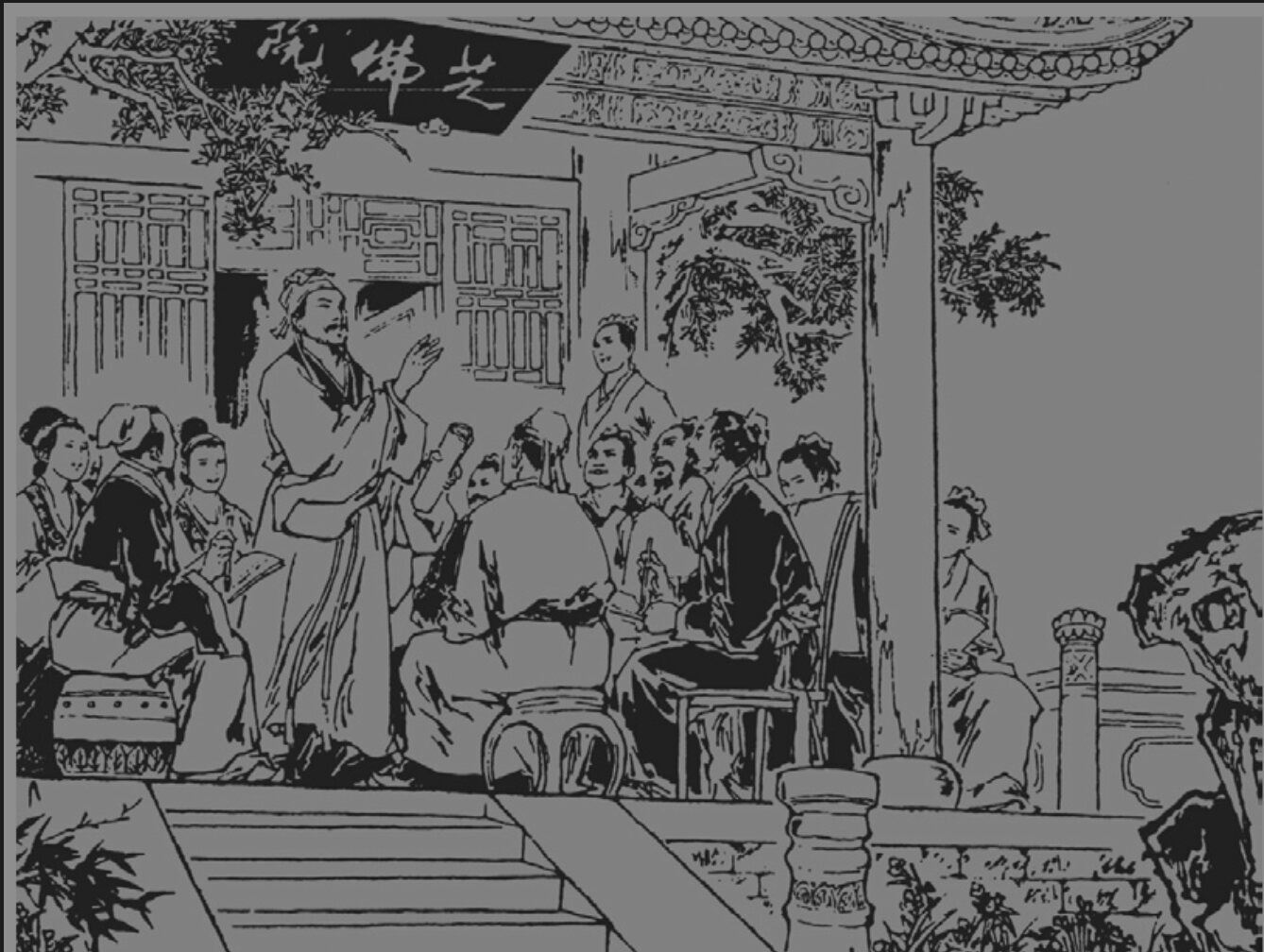
(3) Individual Awakening and Collective Sinking
Li Zhi’s third contradiction was individual awakening and collective sinking. The era he lived in, as 1587, A Year of No Significance depicts, was one in which the entire Ming Empire had already reached its end. The civil-official bloc was hypocritical and rigid, morality had been reduced to a tool for pursuing private gain, and the split between “yin” and “yang” had reached its extreme — officials outwardly flaunted benevolence and righteousness while secretly taking bribes, perverting the law, forming cliques and pursuing private interests. Li Zhi saw through this hypocrisy. He tried, through his own writing, to awaken people’s conscience and break thischaotic state of “saying one thing and meaning another.” He criticized Zhu Xi’s “investigating things to extend knowledge” as too fragmentary, agreed with Wang Yangming’s “the mind is principle,” yet did not follow it blindly, advocating the “child-like heart” as the standard of truth and emphasizing respect for the individual’s genuine heart and desires.
But he could not ultimately awaken a sinking collective. The notes reflect: “The social environment compresses individual intellectual freedom within the smallest possible limits; a person’s integrity and honesty can only grow as shrubs, never forming a forest.” In that era the overwhelming majority of scholars remained absorbed in the examinations and official honors, regarding Confucian ritual teaching as the very foundation of their place in the world. They were unwilling to break the existing structure of interests and unwilling to admit their own self-interest and hypocrisy. Li Zhi’s outcry, seen at the time, was merely ill-timed raving, even regarded as “heresy containing evil.” His loneliness lay in seeing the truth of his era clearly and being powerless to change it; he longed to find kindred spirits, yet in the end could only hold to his convictions in solitude. As in the words he left before cutting his throat in prison: “What does a seventy-year-old man have left to seek!” Behind that calm lay endless desolation and despair — he had striven his whole life and ultimately failed to shake the foundations of feudal ritual teaching, and failed to have his thought understood by the world.
III. An Elegy for the Age: Li Zhi’s Tragedy and Its Eternal Lesson
Drawing together the many reflections in the notes, it isn’t hard to see that Li Zhi’s life was not only his personal struggle but a microcosm of all the intellectuals of that era who pursued freedom and truth. His “fierce independence” was not the petulance of a bigot but resistance to hypocritical ritual teaching. His “contradiction” was not a splitting of personality but the collision of the era’s shackles with individual awakening. The notes observe that “it is the same now”: the predicament Li Zhi faced still casts its shadow today — those who hold to their original heart and dare to speak the truth often face worldly pressure, and those who try to break existing rules and pursue individual freedom often fall into struggle and confusion.
Li Zhi’s tragedy lay not in his thought being insufficiently profound, but in being born into the wrong era. He proved with his whole life that when a society’s rules have rigidified to the point of being unable to accommodate dissent, when an ethic has become so repressive as to disregard human nature, then no matter how many awakened figures like Li Zhi there are, they can hardly change the direction of the age. But his value lies precisely there too — he dared to face his own heart, dared to challenge established authority, dared to hold to his convictions in achaotic era. His thought was like a seed which, though it failed to take root and sprout at the time, left a precious spiritual inheritance for later generations, letting us, a thousand years on, still feel his courage and his loneliness and still reflect on the true meaning of human nature, ritual teaching and freedom.
Li Zhi’s life was a lonely resistance, a failed awakening. But with his life he told us: even amid shackles, hold to your own “child-like heart”; even if the world does not understand you, dare to make your own voice heard. This is perhaps the most precious lesson Li Zhi left us. And to understand Li Zhi’s thought more clearly, let us first quote a classic passage from his writings and interpret it deeply in light of his core propositions:
Just look at your own conduct, sir: there is nothing in it that differs greatly from other men. Everyone is like this, I am like this, and you are like this. From morning till evening, from the time we first had understanding until today, we have alike tilled the fields to seek food, bought land to seek seed, built houses to seek shelter, studied books to seek examination success, held office to seek honor and eminence, and sought out fine feng shui far and wide in the hope of blessing our descendants. All the affairs of daily use are calculated for one’s own person and family, with not a hair’s breadth planned for others. Yet the moment they open their mouths to discuss learning, they say: you act for yourself, I act for others; you are selfish, I wish to benefit others; I pity the hunger of the family to the east, and also think the cold of the family to the west unbearable; such-and-such men are willing to go to people’s doors to teach them — that is the aspiration of Confucius and Mencius; such-and-such men are unwilling to meet people — they are the self-interested, self-serving sort; so-and-so’s conduct may be careless, yet he is willing to do good to others; such-and-such men’s conduct may be upright and careful, yet they love to harm people with the Buddha’s teaching. Looking at it this way, what they expound is not necessarily what you practice, and what you practice is not what they expound. How does this differ from “words regard deeds, deeds regard words”? Can this be called the teaching of the Sage Confucius? Thinking it over, they are actually inferior to the small men of the marketplace, who do a thing and speak of that very thing: those in trade speak only of trade, those who till speak only of tilling. Solid and flavorful, truly the words of a virtuous man — hearing them makes one forget weariness and boredom.
This passage comes from Li Zhi’s “Reply to Vice Minister Geng,” and is one of his sharpest pieces of writing criticizing the fake moralists of the late Ming. Its core is to expose the hypocritical essence of the moralists’ “mismatch between words and deeds,” and it is precisely a vivid embodiment of his “doctrine of the child-like heart” and his anti-fake-moralist thought. Together with what has been said above, it can be read on three levels:
First, it points directly at the moralists’ “double personality” and punctures their hypocritical mask. Li Zhi opens by naming the core: those who flaunt “moral learning” behave in no way differently from ordinary people — tilling fields to seek food, buying land to seek seed, studying books to seek examination success, holding office to seek honor and eminence. All these daily acts are planned for themselves and their families, without a hair’s breadth of thought for others. This aligns closely with Li Zhi’s earlier denunciation of the moralists as “dressed in Confucian elegance, behaving like dogs and swine,” exposing their essence: outwardly flaunting Confucian righteousness while in reality deeply sunk in utilitarian calculation, no different from the self-interest of worldly people.
Second, it criticizes the moralists for “words not regarding deeds,” betraying the teaching of the Sage Confucius. Li Zhi points out sharply that once these moralists open their mouths to discuss learning, they instantly switch to a “lofty” posture: accusing others of selfishness while flaunting their own altruism and love of others; declaring that going to people’s doors to teach is fulfilling the aspiration of Confucius and Mencius, and accusing those unwilling to associate with people of being self-interested. Yet what they say and what they do are entirely disconnected — their mouths discuss benevolence and righteousness while their actions are selfish; they flaunt their own uprightness while in reality they may harm people with the so-called “Buddha’s teaching.” Li Zhi asks back: can this mismatch of word and deed be called following the teaching of Confucius? This is the extension of his opposition to “taking Confucius’s judgments of right and wrong as right and wrong” — the moralists practice hypocrisy in Confucius’s name, which is essentially a profanation of the Sage’s teaching and a betrayal of the core Confucian standard of “words regard deeds, deeds regard words.”
Third, it extols the authenticity of the “small men of the marketplace,” fitting the core of the “doctrine of the child-like heart.” Li Zhi holds that, compared with the hypocrisy of the moralists, those common marketplace folk are instead more “authentic”: those in trade speak of trade, those who till speak of tilling — word and deed in accord, plain and unadorned, sounding “solid and flavorful,” which is truly the speech of virtue. Behind this lies the core proposition of Li Zhi’s “doctrine of the child-like heart” — the child-like heart is “free of falsity and pure of truth, the original mind of the very first thought.” The small men of the marketplace have not been polluted by moralist dogma and retain the most genuine state; their words and deeds issue from the original heart, without deliberate disguise or deliberate inflation. This is precisely the “genuine heart” Li Zhi extolled, and it is the core demand of his critique of moralism and his pursuit of individual freedom. He held that such authentic words and deeds are far more valuable than the empty, hypocritical preaching of the moralists, and far more in accord with the essence of human nature.
This passage is essentially Li Zhi’s indictment of the hypocritical social atmosphere of the late Ming, and also a concrete embodiment of his “extreme monism” — denying the “external heavenly principle” and “moral authority” the moralists flaunted, extolling the authenticity of the individual’s original heart, and opposing all hypocritical dogma and disguise. This too was an important reason he was treated as a “heretic” and suppressed by the authorities. And to understand Li Zhi’s thought more clearly still, the following comparison list makes plain the core differences between him, Zhu Xi and Wang Yangming in their theoretical positions.
Core Differences in the Thought of Zhu Xi, Wang Yangming and Li Zhi (Detailed Table)
| Core dimension | Zhu Xi | Wang Yangming | Li Zhi |
|---|---|---|---|
| Philosophical position (monism/dualism) | Dualism: principle (heavenly principle) + qi (matter); principle precedes qi; heavenly principle is an external absolute authority | Mild monism: the mind is principle, there is no principle outside the mind; innate knowing is the moral substance | Extreme monism: centered on the “child-like heart” (genuine heart); denies all external authority; advocates “my mind is truth” |
| Standard of truth | External heavenly principle, the Confucian classics, the words of Confucius | The inner innate knowing (still conforming to Confucian standards of good and evil) | The individual’s genuine heart, genuine desires, and own feelings |
| Relation of principle and desire | Preserve heavenly principle, remove human desire; regards human desire as the opposite of heavenly principle and advocates suppressing it | The mind is principle; though it speaks of conquering the self and returning to heavenly principle, it does not deny reasonable human desire and holds fast to the Confucian ethical bottom line | Wearing clothes and eating food is itself human relations and the principle of things; human desire is heavenly principle; advocates indulging the genuine heart and reasonable desires, with no need for suppression |
| Political and moral position | Defends official ideology, extols the cardinal constants and hierarchy, provides theoretical support for feudal rule; belongs to orthodox moral learning | Does not oppose the Confucian cardinal constants or the feudal system; advocates extending innate knowing and cultivating the mind to strengthen the self; belongs to mild philosophy of mind | Opposes fake moralism and ritual teaching, denies hierarchical order, styles himself a “heretic,” openly criticizes the official orthodoxy; anti-system, anti-authority |
| Attitude to the classics and to Confucius | Deifies Confucius, reveres the Confucian classics as absolute truth, takes Confucius’s judgments of right and wrong as right and wrong | Respects Confucius and the classics but does not follow blindly; emphasizes interpreting the classics with innate knowing as the core | Denies the sacredness of Confucius, regards the classics as the excuses of fake moralists, opposes taking Confucius’s judgments of right and wrong as right and wrong |
评论
0 条评论