As the classic magnum opus of Nobel laureate in economics Daniel Kahneman, Thinking, Fast and Slow (《思考,快与慢》) thoroughly overturns the traditional understanding of “rational decision-making.” The whole book unfolds around how the human mind operates, peeling apart layer by layer the interactive logic of intuition and reason, and revealing the underlying roots of our everyday judgments, choices, and mistakes. It is at once the founding work of behavioral economics and a practical guide for ordinary people to avoid thought traps and optimize their decisions. Kahneman presents the research he did over many years with Amos Tversky in an accessible way — no pile-up of obscure theory, but a large number of classic experiments and everyday cases that let readers see the truth of how the brain thinks and understand the hidden logic behind their decisions.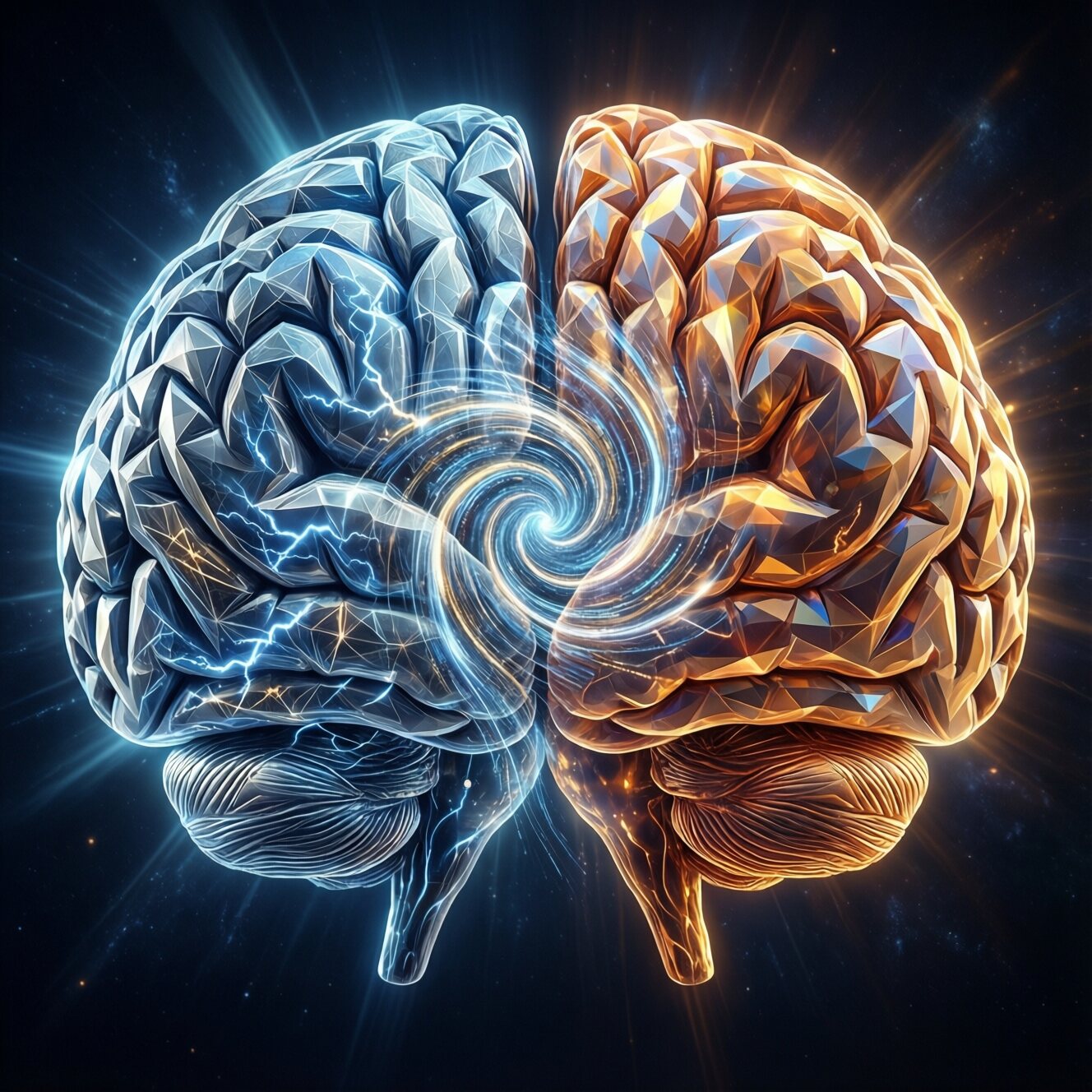
I. The Core Foundation: Dual-System Thinking, the Brain’s Two Sets of Decision Mechanisms
The most central theoretical framework of the whole book is that the human brain has two completely different thinking systems — System 1 and System 2. The two have different divisions of labor and wildly different characteristics, and together they govern all our behavior and judgments. This is also the foundation for understanding everything else in the book.
System 1, that is, fast thinking, is the brain’s “intuitive lead actor.” It runs entirely unconsciously, quickly, and without effort, operating automatically on instinct, experience, association, and emotion, and it needs no deliberate focus of attention — it is the director of our daily lives. Instinctively feeling happy when you see a smiling face, instantly working out simple addition and subtraction, automatically dodging obstacles while walking, judging someone by a first impression — all of these are System 1 at work. It is efficient, energy-saving, and fast to react; it is the basis of human survival. But it is born with flaws: it cannot be turned off at will, it easily produces cognitive illusions, it prefers coherent stories over objective facts, and it is extremely easy to manipulate with all kinds of biases.
System 2, that is, slow thinking, is the brain’s “rational supporting actor.” It requires concentrated attention and burns a lot of mental energy, handling logical reasoning, complex calculation, self-control, and deliberate verification. For example, working out a hard multiplication problem, devising a work plan, and holding back an impulsive emotion all require System 2 running at full capacity. But System 2 has a fatal weak spot — it is extremely lazy. Unless it runs into a problem System 1 cannot solve, it stays in a relaxed state and, most of the time, just silently approves System 1’s judgments, too lazy to actively check the math and correct errors. What we usually call “not using your brain” is essentially the result of System 2 slacking off and handing everything over to System 1.
The interactive logic of the two systems is quite clear: everyday small matters are fully led by System 1, which handles life’s trivia efficiently; only when System 1 hits a roadblock, when the task is too complex, or when something abnormal appears does it wake System 2 to step in and correct things. But the vast majority of the time, System 2’s laziness means our seemingly rational judgments are in fact entirely the product of intuition leading the way — which is the core root of why humans so frequently make decision errors.
II. Thought Traps: Common Cognitive Biases Under System 1’s Leadership
Because System 2 is lazy, System 1’s intuitive thinking spawns a large number of systematic cognitive biases. These biases quietly affect our judgments, spending, social interactions, and work, making us err without noticing. Kahneman lays out all the classic thought pitfalls in the book, covering every aspect of life, and this is also the most practically valuable content in the whole book.
The most common one is the anchoring effect: the number you receive first firmly “nails down” your judgment. Whether it is a merchant’s initial asking price when you haggle over a purchase, or a random number used when evaluating something, it will quietly affect the final decision. To avoid it, you have to set your own psychological expectation in advance and not be led astray by outside numbers. The availability bias makes us judge probability by how easily an event comes to mind — the easier something is to recall, the more common we think it is. For instance, seeing frequent news of plane crashes makes you mistakenly believe flying is more dangerous than driving, when in fact you are ignoring the objective data.
WYSIATI (“What You See Is All There Is”) is a typical System 1 mistake: we often rush to a conclusion based only on the limited information at hand, ignoring the missing key information. Add to that the halo effect, and if we like one good quality in a person we default to assuming he is good in every way, while hating one thing about someone makes us reject him entirely, completely losing the ability to evaluate objectively. Beyond these, the planning fallacy makes us always underestimate the time and cost of a task and overestimate our own ability; loss aversion makes the pain of losing 100 yuan far greater than the joy of gaining 100 yuan, leading us to fear loss and make conservative choices; and the conjunction fallacy makes us mistakenly believe that an event with more details is more likely to happen, violating the most basic logic of probability.
There is also the illusion of hindsight, where after something happens you always feel “I knew it all along,” overestimating your own predictive ability; the mistake of regression to the mean, where we attribute the natural ups and downs of things to the effectiveness of rewards and punishments, ignoring the objective law of random fluctuation; and the framing effect, where the same fact, expressed differently, triggers a completely different decision — for example, a 90% survival rate sounds far more reassuring than a 10% death rate. These biases cannot be rooted out entirely, but as long as you can identify them precisely, you can deliberately avoid them at key decision points.
III. The Core of Decision-Making: Prospect Theory and the Truth About Rational Decisions
Traditional economics has always assumed people are “rational economic agents,” but Kahneman’s research thoroughly overturns this assumption and proposes the far-reaching prospect theory, uncovering the underlying logic of human risk decisions. The central claim of prospect theory is very clear: people judge gains and losses not by absolute value but against a reference point, caring more about the change in wealth than the final total.
Among these, loss aversion is the core of prospect theory. People are far more sensitive to losses than to gains; when facing gains they lean toward avoiding risk, always wanting to lock in a certain benefit, while when facing losses they lean toward risk-taking, wanting to gamble to avoid the loss. This theory explains a great many everyday phenomena: investors always want to sell their winning stocks and cling to their losing ones, and merchants prefer to phrase things as a “discounted price” rather than the original price — both exploit people’s psychology of loss aversion.
Beyond this, the endowment effect makes us, once we own something, instinctively overvalue it and be reluctant to part with it easily; mental accounting makes us artificially divide money into different uses, treating it differently even though it is all our own wealth, violating economic rationality; and overconfidence makes both experts and ordinary people overestimate their own knowledge and judgment — most professional investors’ performance is due to luck, and experts’ predictions are sometimes less accurate than random choices. To make more rational decisions, you must deliberately adopt outside opinions, refer to the objective data of similar cases, and avoid sinking into a subjective internal perspective. At the same time, learn to use a “premortem”: assume the decision has failed and work out the possible causes in advance, overcoming blind optimism.
IV. The Nature of Happiness: Two Selves, the Conflict Between Experience and Memory
In the last part of the book, Kahneman steps out of decision and judgment and digs deep into the nature of happiness, proposing the two core concepts of the experiencing self and the remembering self, puncturing our common misconceptions about happiness.
The experiencing self is responsible for feeling the present, recording each moment’s pleasure and pain; it measures happiness by the total duration and average level of real-time feeling, and it is the vessel of true experience. The remembering self, by contrast, is responsible for storing memories and follows the “peak-end rule”: it only remembers the peak feeling and the ending feeling of an experience, completely ignoring the duration of the process. For example, with a painful colonoscopy, extending the exam time but reducing the pain at the end will make the remembering self feel the whole thing was more comfortable, even though the actual duration of pain increased; and a trip, however plain the process, will be judged by the remembering self as happy as long as it ends well.
The conflict between these two makes us constantly misunderstand happiness: we always care about the highlight moments and perfect endings in our memory, while ignoring the experiencing self’s real feelings in the present. Through his research, Kahneman found that poverty magnifies life’s unhappiness, while once income rises above a certain level, the experienced happiness brought by material things no longer improves — high-quality social interaction and time spent with loved ones are the core sources of happiness. At the same time, the focusing illusion makes us overestimate the influence of some single factor on happiness, mistakenly believing wealth or appearance determines happiness, when in fact the ordinary daily routines of life and the real experience of each moment are the essence of happiness.
V. The Book’s Core Message: Be a Clear-Headed Thinker
What Thinking, Fast and Slow ultimately wants to convey is not a rejection of intuition or a total reliance on reason, but a way to let us see the limits of our thinking and learn to actively awaken System 2 in key situations, to be clear-headed thinkers. We need not demand that we be entirely rational — after all, System 1’s intuition is the foundation of an efficient life — but in major decisions, important judgments, and interpersonal dealings, we must deliberately guard against intuitive traps and admit our own ignorance and bias.
Most of life’s mistakes, impulse purchases, misjudgments of others, and blind optimism are essentially System 1 running too fast while System 2 hasn’t gotten out of bed. Reading this book, we can learn to recognize cognitive biases, optimize the logic of our decisions, and stop being led by emotion and intuition; at the same time we can re-understand happiness and cherish the real experience of the present rather than clinging to the perfect ending in memory. As the book says, avoiding intellectual laziness and actively questioning intuition and verifying judgment is the core of improving the quality of your decisions and embracing a clearer life.
评论
0 条评论