1. Why We Need an External Knowledge Base
Dify’s built-in knowledge base is great to use, but there’s one precondition: you have to upload your data to Dify’s servers. For scenarios where you already have massive amounts of documents stored on Alibaba Cloud OSS (like my blog articles or a company’s internal document library), re-uploading is neither elegant nor realistic.
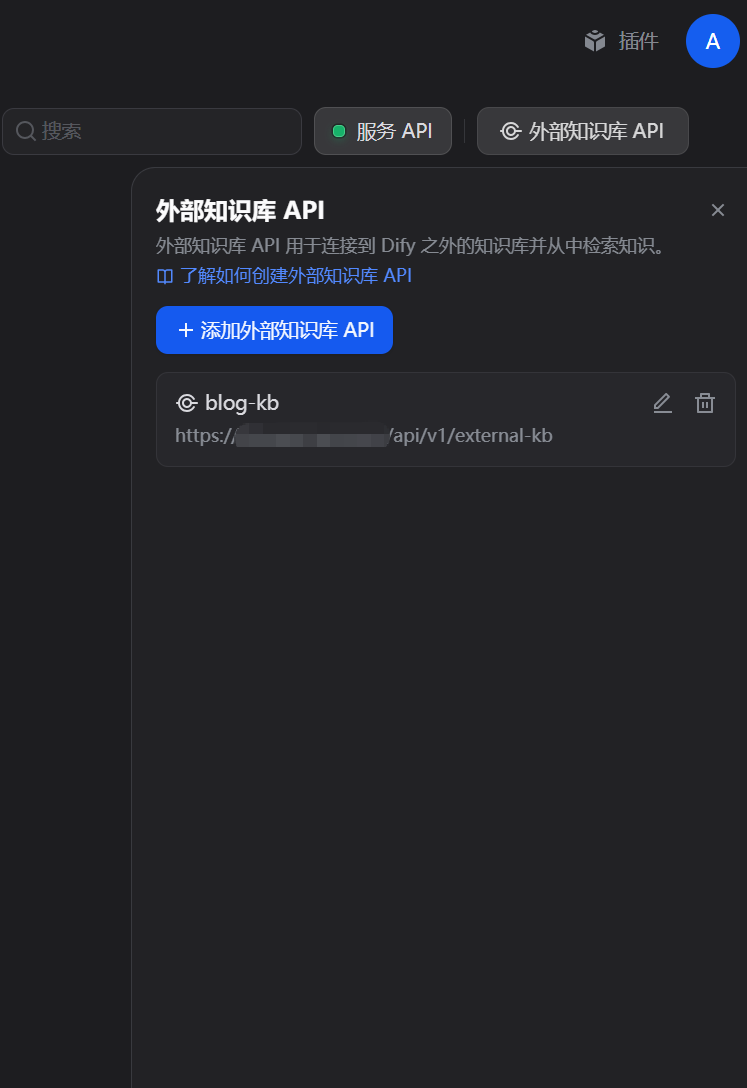
The Dify External Knowledge Base API offers a perfect solution: Dify only takes responsibility for sending retrieval requests, while the actual knowledge base is maintained by your own service.
|
2. Comparing Two Retrieval Approaches
Before integrating vector retrieval, I first built a version using keyword matching. After comparing them, the gap was glaringly obvious:
| Retrieval method | Result returned for query “grandma” | Principle |
|---|---|---|
| Keyword matching | “Let’s Talk About Hijacking.md” | “grand” and “ma” matched separately as single characters |
| Vector retrieval | “My Grandma Never Internalized Stress.md” | Semantic understanding of the concept “grandma” |
The problem with keyword matching is that single-character matching in Chinese is far too prone to false hits. Almost every article contains the characters “grand” or “ma,” making the search results meaningless. Vector retrieval, based on semantic similarity, can genuinely understand the user’s query intent.
3. Alibaba Cloud OSS Vector Search
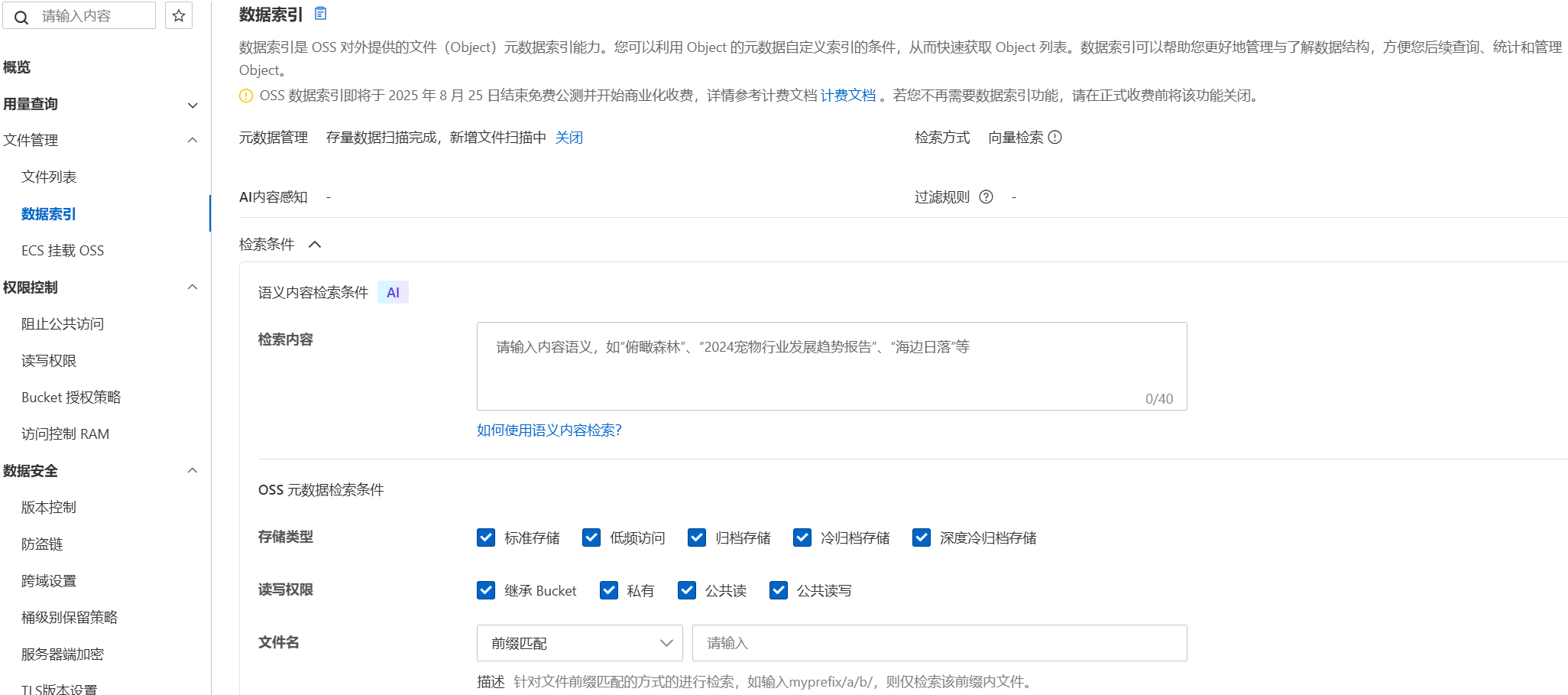
Alibaba Cloud OSS launched its vector search feature in 2024. Its core capabilities include:
- Automatic vectorization: Once enabled, OSS automatically extracts content features from text, images, audio, and video to generate vector indexes
- Semantic retrieval: Supports retrieval by natural-language description, such as “grandma,” “snowy outdoor surveillance,” or “2024 business analysis”
- Multimodal support: Unified retrieval across text, images, audio, and video
- Regional coverage: Already supported in major regions such as Hangzhou, Shanghai, Beijing, and Shenzhen
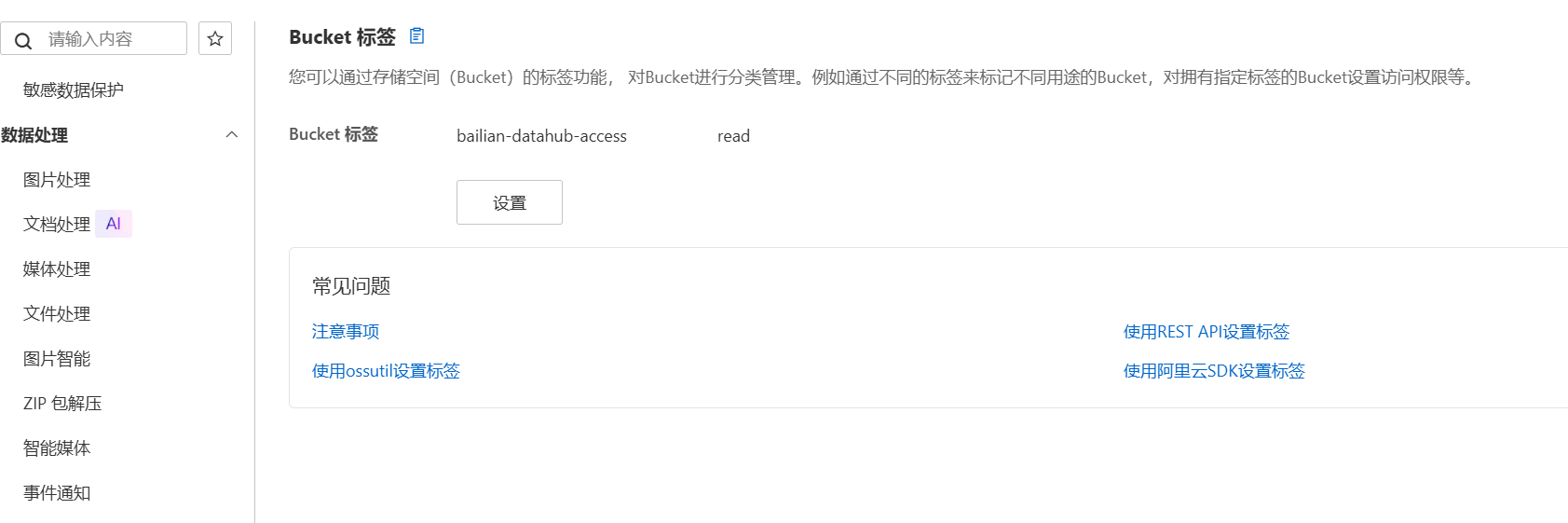
Configure the tag
bailian-datahub-access with value read
How to Enable It
In the OSS console → Data Indexing → select “Vector Search” mode to enable it. Once enabled, the system automatically scans existing files and builds the index; about 200 Markdown files are ready in just a few minutes.
Note: Vector search incurs API call charges. It’s recommended to evaluate the cost based on the actual volume of files.
4. Project Architecture
My project is based on the Go + Gin framework, with the overall architecture as follows:
|
Two Alibaba Cloud OSS SDKs are used here:
- V1 (
aliyun-oss-go-sdk): Handles basic operations like file upload, download, and listing - V2 (
alibabacloud-oss-go-sdk-v2): Supports new features such as vector search
5. Core Code Implementation
5.1 Vector Retrieval Service Wrapper
|
5.2 Integrating with the Dify API Spec
Dify external knowledge bases require implementing a standard retrieval interface:
Request:
|
Response:
|
The core logic of the Handler:
|
5.3 Cross-Bucket, Cross-Region Access
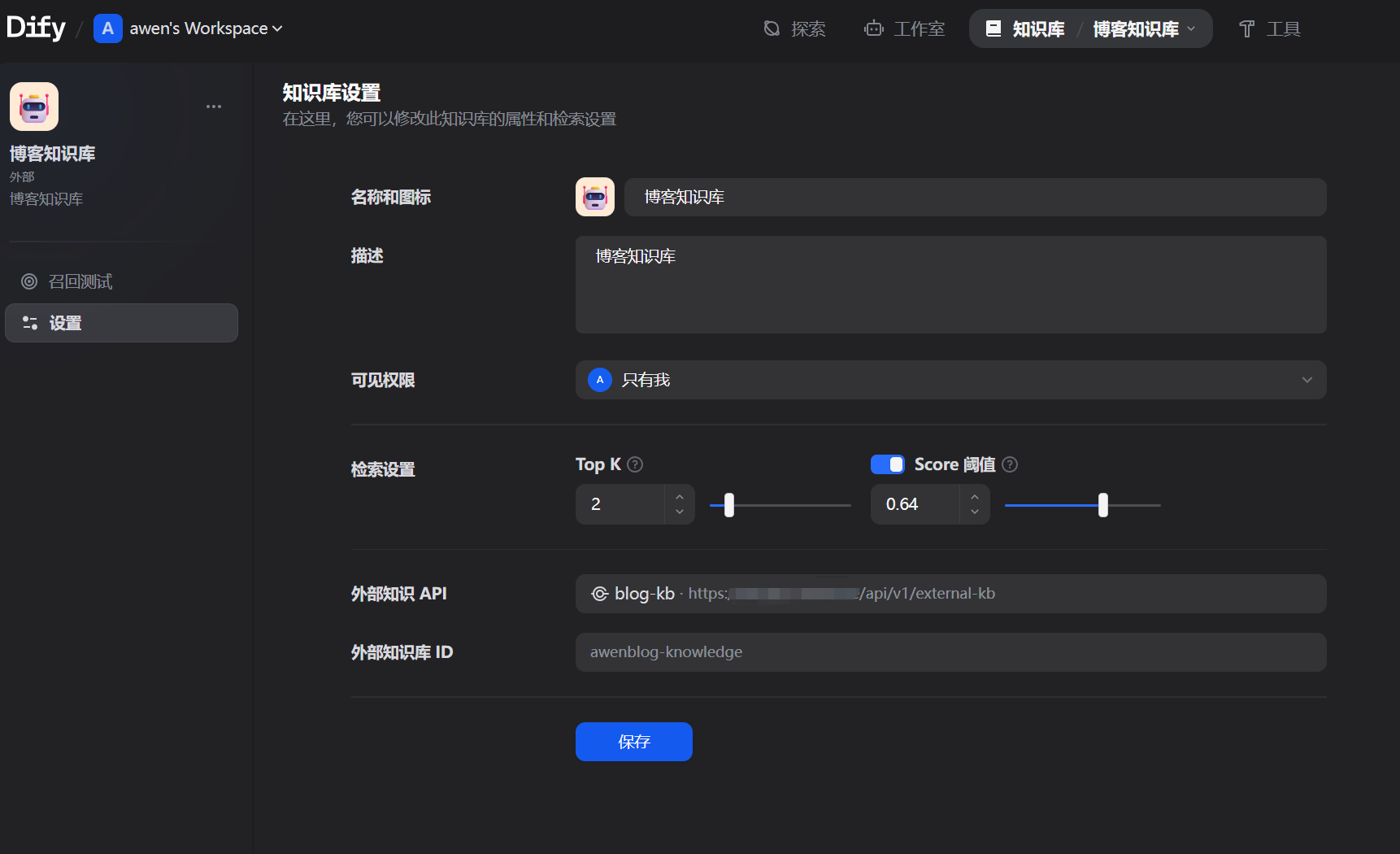
My blog articles are stored in the awenblog bucket in the Hangzhou region, while the project’s original configuration connects to file201503 in the Shanghai region. Here I need to dynamically create an OSS Client for the corresponding region:
|
6. Potholes I Stepped Into
Pothole 1: GOMODCACHE Permission Issue
During local compilation I got the error mkdir /usr/local/gopath: permission denied. The fix is to set a user-writable GOPATH:
|
Pothole 2: CGO and GLIBC Version Incompatibility
A binary compiled directly with go build threw GLIBC_2.34 not found when run on the server. Static compilation was required:
|
Pothole 3: Endpoint and Region Mismatch
awenblog is in the Hangzhou region, but the original Client connected to Shanghai. When EXTERNAL_KB_REGION isn’t configured correctly, you get AccessDenied: The bucket you are attempting to access must be addressed using the specified endpoint.
Pothole 4: Nginx 504 Timeout
Serially downloading 200 articles for keyword matching took longer than Nginx’s default timeout. The fix was to use goroutines for concurrent processing:
|
After the concurrency optimization, the response time dropped from several seconds to 0.2 seconds.
Pothole 5: Empty Array vs null
Dify requires {"records": []} to be returned when there are no matches, but Go’s nil slice serializes to null in JSON. I needed to add a fallback before returning:
|
7. Config Quick Reference
|
8. Showing the Results
Testing semantic retrieval with Postman:
|
The returned result:
|
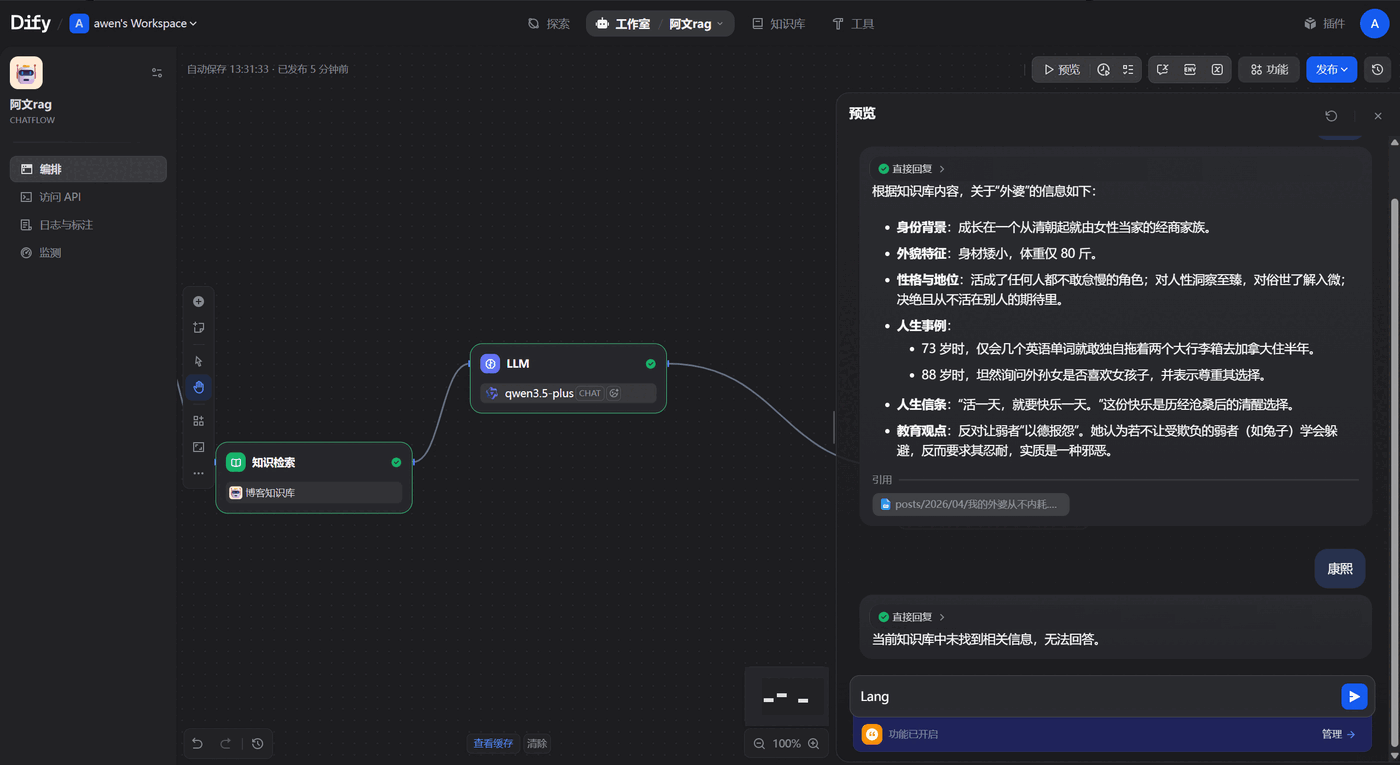
Then try searching “Docker,” “reading notes,” or “internalized stress”—they all return semantically relevant results, not literal hard matches.
9. Final Thoughts
Going from keyword matching to vector retrieval isn’t just a technical upgrade—it’s a leap from a “string game” to “semantic understanding.” When your knowledge base has hundreds or thousands of articles, users won’t remember each article’s title and keywords; they’ll just ask in natural language. Vector retrieval turns “can find it” into “finds the right thing.”
The advantage of Alibaba Cloud OSS vector search is zero operations: you don’t need to set up your own vector database, write embedding code, or handle vector index updates—OSS does all of it for you. For scenarios where you already heavily use OSS to store documents, this is one of the lowest-cost and best-performing RAG solutions.
The complete code is open-sourced in the blog_api project—feel free to reference it and discuss.
评论
0 条评论