My take: a bit of overtime is acceptable. Long-term, excessive overtime and relentless competition is just squeezing out value and over-demanding, and it should be clearly refused. Besides, for many roles, no matter how hard you grind, nothing good will come of it.
A 32-Year-Old Programmer Collapsed and Died Suddenly on a Weekend
The lights in the emergency room flickered on and off, the beeping of the ECG monitor gradually growing fainter. Gao Guanghui, a 32-year-old programmer, was fighting a hard battle against death. No one could have imagined that at that very moment, on his phone screen, an invitation to a new work group quietly popped up; even more heartbreaking, eight hours after he was declared clinically dead, a colleague’s message still arrived on his personal WeChat: “There’s an urgent task first thing Monday morning. Today’s inspection didn’t pass, so this needs fixing.”
This tragedy, which took place on November 29, 2025, instantly struck a nerve with countless wage earners when it was recently reported by the media. Gao Guanghui came from a poor family; as a child he collected trash to earn pocket money, studied at a software school, and helped ease his family’s hardship through work-study. After graduation, through sheer effort, he joined a company, rose to department manager at 28, and became the role model that countless strivers looked up to. In his diary he wrote, “Fate and setbacks have made me grow slowly,” never imagining that this all-out growth would ultimately fall before endless work.
This tragedy was never an accident. Gao Guanghui’s wife, Ms. Li, recalls that it was Saturday, and her husband said that morning he felt unwell, yet he still had four work tasks due that day on his mind and planned to sit in the living room and handle them along the way. Even when he was rushed to the hospital, he thought his condition wasn’t serious and specifically told his wife to bring his laptop, afraid of delaying work. But who could have guessed that a single convulsion and collapse in the elevator would become a final farewell—from dialing 120 at 8:58 to being declared clinically dead at 13:00, four hours of all-out resuscitation ultimately could not save this young life. The cause of death was preliminarily ruled as cardiac and respiratory arrest, suspected to be Adams-Stokes syndrome, and a note on the medical record—“programmer often stays up late, high work intensity, high stress”—laid bare the cruel truth behind the tragedy.
Even more chilling are the details hidden in those work messages that weren’t checked in time. On the day it happened, Gao Guanghui’s browser history showed that he had accessed the company’s OA system at least five times; even as his body had already sounded the alarm, he never stopped working. At 10:48, while the resuscitation was in full swing at the hospital, he was pulled into a WeChat tech group; at 11:15, a colleague in the group @ed him to “help with this order,” and no one knew that the person on the other end of the screen had long since lost the strength to respond. It wasn’t until 21:09 that night, eight hours after his death, that his WeChat still received a work private message, as if he had merely gone offline temporarily rather than departed forever.
These piercing details tear away the fig leaf of the distorted overtime culture in some workplaces today. Building elevator surveillance showed that in the workday week before Gao Guanghui’s sudden death, the earliest he got home was 21:38 and the latest was 22:47; throughout the workdays of November, there was even a day he didn’t get home until 23:58 late at night. As a department manager, he always said he “had to carry the load together with the brothers”; even when he took sick leave with a fever, he would review code remotely from home. His wife would check his car’s location every night at nine or ten o’clock and repeatedly urge him to get off work, but his reply was always “I’ll come back after I finish this bug” or “there’s an emergency that needs support.” Until the very last moment of his life, he could never truly put down the burden of work.
In fact, Gao Guanghui’s experience is only a microcosm of the predicament of countless working people. Data shows that the internet industry averages over 2,800 hours of overtime a year; 82% of programmers work more than 10 hours a day, 65% suffer from cervical spondylosis, 38% have chronic insomnia, and 91% endure persistent anxiety; working 55 hours or more per week increases the risk of stroke by 35% and the risk of dying from ischemic heart disease by 17%. The proliferation of “invisible overtime” further compresses workers’ right to rest—work group messages know no day or night, working from home blurs the boundary between work and life, and the “low base salary, high performance pay” compensation model pushes employees to overdraft their time and health without limit. His base salary was only a 3,000 base, with take-home of 10,000+, which should be after tax; by that math, his monthly salary would be just over 20,000 before tax.
Today, Gao Guanghui’s company has already submitted a work-injury determination application to the Huangpu District Human Resources and Social Security Bureau of Guangzhou, and the related investigation is still ongoing. But no matter what the final work-injury determination is, no matter how much compensation can be obtained, it cannot bring back a living life, nor can it soothe the pain of a broken family. Work-injury determination is ultimately after-the-fact remediation; what we truly need is awe and protection beforehand—awe for every life, and protection of every worker’s right to rest.
We never deny the value of striving, and we understand the cruelty of workplace competition, but striving should not come at the cost of life, and effort should not be alienated into endless overtime. For companies, so-called “performance growth” and “boundaryless collaboration” should not be built on excessively demanding employees’ health; improving employment systems, regulating working hours, and abandoning the distorted overtime culture are the foundation for a company’s long-term development. For every wage earner, we can work hard and pursue dreams, but we must remember even more that the body is never a “consumable”—health is the “bottom line” of life, and there is no need to gamble your entire future for a job.
Gao Guanghui, at 32, never got to experience the joy of successfully conceiving a child with his wife, never got to see his parents enjoy their old age in happiness, and never got to the day when he could truly put down his burdens and rest well. His tragedy is a disaster for one family, and all the more a warning to the whole of society.
Don’t Be Fooled by the Company
As someone with more than a decade in the internet industry, I know the unspoken rules of this trade well; I’ve worked at companies big and small. Many times, even during rest hours, you must stay on call 24/7. I remember one year I took annual leave to bring my wife to Beijing for sightseeing, and while strolling through the Forbidden City, the Temple of Heaven, and the Great Wall, I still had to find a step to sit on and open my laptop to work. I joked with my wife that I don’t have the fate of an emperor, yet I worked in the very places where emperors once worked. Taking leave to rest, I still had to handle issues at any time. On weekends, while accompanying my family to browse IKEA in Linping, I’d be urgently pulled into a group and have to handle tickets remotely with my phone; going out with the kid, I had to constantly watch the Feishu group, and in the dead of night, at three or four in the morning, I’d get up to put out fires. These invisible overtimes are everywhere, yet in the eyes of the company and supervisors, it’s all just what you’re supposed to do. This time when I was laid off, a classmate from the customer-service team sent me a farewell gift—an “xx coin”—inscribed with “a man who keeps working hard even on leave.” Over the past few years I’ve been at several companies and won all kinds of so-called “Outstanding Employee” titles; I’ve collected quite a few of those medals that cost a few dozen yuan on Taobao. To the company, these are honors given to you, things others want but can’t get—but only I know what good they are. I didn’t make much money, and a body full of chronic diseases came calling: IgA nephropathy, ulcerative colitis, chronic atrophic gastritis. The time consumed by these medical reports and the cost of medical visits far exceed these worthless scraps of metal.
Once your value is squeezed dry, either you can’t take it anymore and your body just crashes, and you die, ruining your wife, kids, and family—or after 35, when you’re older, they just kick you out. For the company, it’s nothing more than hiring another batch of young, cheap people to keep over-exploiting, then swapping in another batch once they’re used up. And they call it “delivering a batch of talent to society.”
The so-called dreams of many companies are, most of the time, just a pie in the sky that you’ll never get to eat. Or you have to see clearly your role and position: can an ordinary grassroots 996er and a high-level 996er obtain the same resources? Whether your superior treats you well or not, it’s essentially just his management style. Whether he praises or scolds you, fundamentally it’s only because you have use value, and he wants to squeeze more out of you. Whether you’re a frontline executor or a supervisor or even middle and senior management, to your own superiors you are a resource. Now you understand what “human resources” means, right? Everyone is a resource to the system, not a person. Those so-called humane and flat management measures—flexible working hours, health checkup benefits, and the like—are nothing but worthless trinkets. Once they’ve used you up and feel they can’t extract more, some companies won’t even give N+1 severance in layoffs, or they under-calculate the year-end bonus when compensating.

What a grassroots wage earner can get from a system is extremely limited—almost only a pitiful salary and a pitiful year-end bonus whose very receipt is uncertain. So before joining a company, you must understand the salary structure clearly, the contribution ratio of social insurance and housing fund, and whether there’s overtime. When negotiating salary on joining, adopt the mindset of “peaking the moment you join”—don’t fantasize that once inside you’ll get more resources through promotions and raises. When you find you can’t get more, remember to adjust your way of working in time; don’t naively believe that grinding desperately will earn your supervisor’s recognition and a chance at promotion and a raise.
Workplace Stability Is Fragile, and So Is a High Salary
Companies hire to screen people, not to cultivate them—cultivating people costs too much. They’d rather you come in knowing everything, able to work without being taught, and even able to produce results beyond expectations.
So-called promotions and raises are merely a management tool. In essence, promotion and a raise is a management technique of “value exchange + risk bundling,” and its core purpose is to drive employees to create more value for the company, not simply to reward an employee’s ability or seniority. Giving you a higher salary and a more respectable position comes with the corresponding demand that you take on greater responsibility and produce higher performance. Put plainly, they want you to grind harder than before. But no industry stays forever young and unchanging, able to live for hundreds or thousands of years. According to statistics, the average lifespan of small and medium-sized enterprises in China is about 2.5–3.7 years, and large enterprises 7–9 years; in the US, SMEs are about 7–8 years and large enterprises 30–40 years; in Japan, SMEs are about 12.5 years and large enterprises about 58 years. When industry dividends fade and company profits decline, “cost reduction and efficiency improvement” will replace “promotions and raises” as the core management goal. At that point, those who rode promotions and raises to high positions with high salaries will instead become the first targets for optimization. It is not the ultimate recognition of your personal value, but a stage-by-stage transaction between the company and you. By then, if all you know are narrow skills related to this one company’s business, you’ll find it very hard to develop once you leave.
Work Hard for Yourself and Your Family
Work hard for yourself and for your family, not for the company, the boss, or your supervisor. We spend years studying and fighting hard, never to fulfill the business blueprint of some company or some boss, not to trade for those cheap “Outstanding Employee” medals, and certainly not to exhaust our health and life in endless overtime. It’s for a decent life for ourselves, for the right to choose, so we don’t, under the pressure of making a living, have to accept invisible overtime, be forced to overdraft our bodies, and end up with a body full of ailments—or even dead. Most of the time, those pies in the sky may never be eaten in a lifetime. For a wage earner, only the salary in hand each month is real; all other bonuses and benefits not written into the labor contract can be erased at any time. Most of the time, those things are like the carrot dangling in front of a donkey grinding at the mill—visible but never to be eaten.
But many people always get lost in the pies the company draws, thinking that desperately working overtime and being available on call will buy them long-term stability and a high salary, thinking that the boss’s talk of “the future is promising” and his recognition can really light up their lives. Only those who’ve been through it understand: those so-called “honors” are nothing but the company’s cheap incentives—a medal costing a few dozen yuan is far cheaper than a single hospital visit; those so-called “promotions and raises” are nothing but shackles binding us—giving you a higher position only means making you bear more responsibility and overdraft more energy. Once the industry dividend fades and the company’s performance declines, the first to be optimized and abandoned will still be us wage earners who give our all. These are thoughts and conclusions bought with my own firsthand experience.
So what we should consider more is what skills and resources we can learn from a job to improve our own abilities, and then convert them into abilities and resources we can use ourselves. If there’s none of that, and it’s just day after day of repetitive work—like the job content of most functional roles—then this job is purely consumption for the individual, continuously eroding your personal growth space and development, your energy, and once your value fades you’ll quickly be replaced.
Exercise Regularly, Avoid Prolonged Sitting
The World Health Organization recommends that adults get at least 150 minutes of moderate-intensity aerobic exercise per week.
Having gone through the torment of a body full of ailments and seen the painful lessons others paid for with their lives, I understand more and more that regular exercise and refusing to sit for long periods is never a “nice-to-have” choice but a “required course” for wage earners to counter workplace depletion and protect their own health—and all the more the confidence that lets us fight long-term for ourselves and our families. The sedentary 996 pattern seems like “working efficiently,” but in fact it silently destroys our bodies—holding one posture for a long time makes stiff neck and herniated discs the norm, slowed blood circulation adds burden to internal organs, and the metabolic decline from sitting still makes anxiety even worse. All of this slowly accumulates into irreversible chronic damage—like the IgA nephropathy and ulcerative colitis in my body, which seem to have come out of nowhere but are in fact inextricably linked to years of sitting, excessive fatigue, and lack of exercise.

We need not pursue professional sports gear, nor spend large blocks of time at the gym. Exercise for working people can always “poke in at the seams,” fitting our work rhythm, rejecting “formalism” and seeking only “regularity.” Every day at work, stand up and move for 5 minutes every hour—stretch, rotate your neck and lower back, walk to the window and gaze into the distance for a while. It eases the fatigue of sitting and gives your tense brain a brief relaxation, avoiding the mental rigidity from long, high-intensity work. On the commute, if the distance isn’t far, you might abandon a few stops of subway or bus and choose to walk or cycle, which exercises your cardio and also lets you sort out your thoughts and shake off work anxiety. At lunch break, don’t slump over the desk and doze off; spend 15–20 minutes doing a simple set of stretches, or take a few slow laps downstairs, which wakes up your body’s vitality and makes the afternoon work more efficient, avoiding the inefficient internal churn caused by drowsiness from sitting too long.
Weekends are even more of a golden time for us to repair our bodies and accompany our families. Refuse the company’s “invisible overtime,” put down the laptop and phone, take the family for a walk or a jog in the park, or play badminton together or do a parent-child yoga session—it exercises body and mind, deepens family bonds, and is far more meaningful than curling up on the sofa handling work or scrolling your phone. If you really can’t find a big block of time, even 10 minutes before bed doing a few sets of planks and squats, kept up consistently, will let you clearly feel the change in your body—your neck no longer aches frequently, your mental state becomes fuller, and anxiety is effectively eased. Regular exercise is never “a waste of time” but an investment in your own body—an investment far more valuable than the cheap honors and fleeting high salary bought by desperately working overtime. After all, only with a healthy body do we have the confidence to strive for a better life, to accompany our families through the long years, and to realize our true life value.
More importantly, we must learn to actively refuse the internal churn pattern of sedentary 996 and refuse to be held hostage by “ineffective overtime.” Many times, what we think is “must-overtime” is actually just habitual procrastination, or an “overtime atmosphere” the company deliberately creates, not a truly “urgent task.” Learn to plan your work time reasonably, improve work efficiency, land the work that should be done efficiently within working hours, and decisively put down work after getting off. Leave enough time for rest and exercise for body and mind. Faced with unreasonable overtime demands from the company, learn to refuse gently but firmly; there’s no need to endlessly overdraft your health just to please the boss or curry favor with your supervisor. Remember, we work in order to live better, not to exhaust our lives in endless sitting and overtime.
Gao Guanghui’s tragedy has already sounded the alarm for us, and my own ailments have made me deeply realize that health can never stand to be squandered, and that sitting still and excessive fatigue are never synonyms for striving. No matter how cruel workplace competition is, no matter how tempting the company’s pie, none of it is worth gambling your body on. Regular exercise and refusing sedentary 996 is not laziness or slackness, but clear-eyed self-protection and a rational life choice.
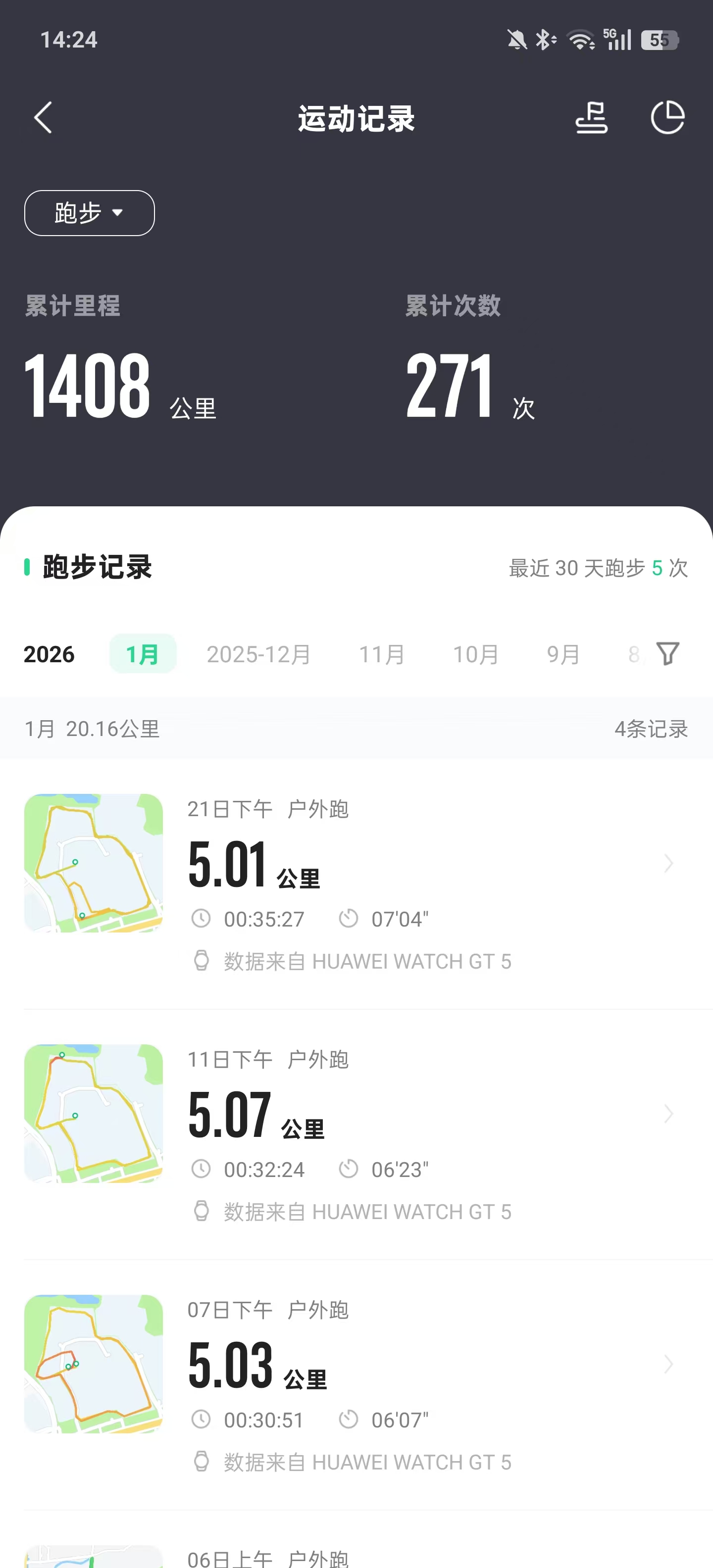
For example, since 2024 I’ve kept exercising, running at least 150 minutes of cardio a week, occasionally doing strength training. It was hard to stick with at first, but I gritted my teeth and slowly increased from 3 kilometers; now I’ve run over 1,400 kilometers. Running releases stress and improves my physical fitness—I haven’t gone to the hospital for a cold in a long time. In the past I used to run to the hospital often.
May every wage earner break free from the shackles of the distorted overtime culture, shake off the drain of sitting still, develop the habit of regular exercise, and protect their own health. May we all understand that the underlying color of striving is never the sacrifice of health, but moving steadily forward with a healthy body, for ourselves and our families—not failing time, not failing ourselves, and not failing those who love us and those we love. After all, for a wage earner, health is the greatest capital, and family’s company is the most precious happiness—and these are far more worth cherishing and protecting than the company’s medals and the boss’s recognition.
Avoid Joining 996 Companies
The first step to protecting your health and refusing internal churn is to avoid the trap at the source—avoid joining 996 companies, and don’t give the distorted overtime culture a chance to consume you. Many wage earners fall into the cycle of “the more they work overtime, the more they churn internally; the more they churn, the more passive they become,” and the root cause is choosing the wrong platform from the start, mistakenly believing that “overtime = striving” and “996 = high salary,” only waking up when their body flashes red and they’re physically and mentally exhausted—but by then they’ve long paid the price in health, and even missed better choices. If Gao Guanghui, mentioned above, had avoided 996 companies back then, perhaps he could have avoided this tragedy; and if I had been wary of the 996 trap in my early years, I wouldn’t have been plagued by chronic diseases so early, and wouldn’t have, in countless late-night overtime hours, consumed the time spent with family and my own growth potential. The GitHub project 996.ICU company blacklist.
Avoiding 996 companies is not escaping from striving but a rational choice, being responsible to yourself and your family. When job hunting, we need not be fooled by slogans of “high salary,” “big-company halo,” or “the future is promising”; we should learn to keep our eyes open and precisely judge whether a company has hidden or explicit 996 demands. In the interview, dare to proactively ask the core questions: is there a clear working-hours policy? Is there reasonable overtime pay or compensatory leave for overtime? Are there the hidden rules of “voluntary overtime” or “unpaid overtime”? Are you required to be on call on weekends and holidays? Is employees’ right to rest protected? Those companies that dodge these questions, speak vaguely, or even hint that “overtime is the norm,” “being able to work overtime is what counts as ability,” and that they “rank by overtime hours” are most likely 996 disaster zones—no matter how tempting the salary, they deserve our careful choice.
Beyond that, we should learn to find out the truth about a company through multiple channels: check the real evaluations of current or former employees on platforms like Maimai and Zhihu, and watch for a large number of complaints about “forced overtime,” “invisible overtime,” and “over-exploiting employees”; understand the company’s compensation model—if it uses “low base salary + high performance pay,” with vague and extremely intense performance assessments, it will most likely push employees into unpaid overtime; observe the company’s culture—if it promotes a “wolf culture” or “boundaryless work” but never mentions employee rights and rest protection, it’s essentially making excuses for 996, using “sentiment” to hold employees’ time and health hostage.
Some might say that with employment pressure so high, it’s hard enough just to find a job, so who has the right to be picky? But we must understand that a job that consumes your health and overdrafts your life is far more terrifying than temporary unemployment. Unemployment can be solved by finding another job, but once health is damaged it’s very hard to reverse; a temporary salary gap is far less valuable than lasting health and a stable life. Rather than joining a 996 company and draining body and mind in endless overtime, it’s better to spend a bit more time looking for platforms that respect employees, regulate employment, and value employees’ health—even if the salary is a bit lower or the platform a bit smaller, if it protects our right to rest and lets us have time to exercise, accompany family, and improve ourselves after work, such a job can enable long-term growth and truly achieve “striving for yourself and your family.”
The workplace is a long cultivation, not a sprint that overdrafts your health. Refusing 996 is not laziness or slackness, but clear-eyed self-protection; avoiding 996 companies is not evading responsibility, but a rational life choice. May every wage earner hold their own bottom line, not be swept along by employment pressure, not be fooled by pies in the sky, decisively avoid the 996 trap, and choose a platform that truly suits and respects them—striving without consuming health, so they can have both a decent life and protection of their health and family’s happiness. That is the state of life a wage earner should most pursue.
Become a Slash Youth: Explore Side Hustles, Keep Learning
To shake off workplace internal churn and refuse the excessive demands of 996, beyond avoiding traps at the source, you must actively add confidence for yourself—become a slash youth, explore side hustles, keep learning, break the shackles of a single job, and truly seize the initiative in life. As we repeatedly mentioned above, workplace stability is extremely fragile and a high salary is only a stage-by-stage transaction; whether it’s the crisis of being optimized at 35 or the health drain brought by 996, fundamentally both come from over-relying on one job and lacking a way out. The core of a slash youth is never blindly following the trend of “taking multiple part-time jobs,” but, on the basis of doing your main job well and protecting your health, tapping your own strengths and developing side hustles so income is diversified and abilities are diversified, completely escaping the predicament of “being held hostage by the company.”

Exploring a side hustle is adding a “Plan B” for yourself and, more importantly, realizing the original intention of “striving for yourself.” For a wage earner, a single salary income forces us to accept unreasonable overtime and endure excessive demands; even when we clearly know it’s a 996 trap, we compromise because “there’s no way out.” The extra income from a side hustle gives us the confidence to say “no”—even if the main job’s pay isn’t high, even if we get laid off or optimized, the side hustle can support our basic living, so we don’t have to overdraft our health under the pressure of making a living, and don’t have to compromise in a distorted workplace culture. Like me—after going through a body full of ailments and being over-exploited by the company, it was precisely by developing side hustles that I gradually shook off my dependence on a single job, no longer on call 24/7, no longer desperately working overtime for cheap honors, able to balance both health and family and realize my own value.
Exploring a side hustle needs no blind trend-following; the key is to “fit yourself and act within your means,” avoiding the trap of “the side hustle becoming the main job and churning even more.” We can combine our main-job skills and hobbies and choose low-threshold, high-fit side-hustle directions: if you’re a programmer, you can use spare time to take on small development projects, write tech blogs, or teach programming; if you’re in clerical work or operations, you can take on copywriting, layout design, or community operations as part-time work; if you’re good at communication and love sharing, you can try short-video creation, livestream e-commerce, or knowledge paid content; even without prominent skills, you can start from simple side hustles like self-media articles, handmade crafts, or local life services.
More importantly, the core of a side hustle is to “add to the icing on the cake,” not “provide coal in the snow.” We must hold two bottom lines: first, it must not affect the development of the main job and physical health—a side hustle uses spare time to improve yourself and add income; you can’t stay up late and overdraft energy because of it, still less let it delay the main job, or you’ll just put the cart before the horse and fall into new internal churn; second, refuse “cheap-labor” side hustles—part-time work that’s time- and energy-consuming with meager pay, or even sacrifices rest time, is better left undone. We should choose side hustles that leverage our strengths, accumulate experience and resources, and can even develop long-term, making the side hustle an extension of our abilities rather than a pure “physical labor for money.”
Becoming a slash youth and exploring side hustles is, in essence, the wage earner’s “self-redemption.” It lets us escape dependence on a single company and a single position, breaking the shackles of the “35-year-old crisis”; lets us tap our potential and achieve diversified growth after work, no longer repeating the daily drain; and gives us more right to choose, so we don’t have to accept 996 under the pressure of making a living, don’t have to lose ourselves in the company’s pie, and truly “strive for ourselves and our families.”
Cultivate Your General Abilities, Avoid Over-Binding to a Platform
The most hidden and most fatal trap in the workplace is never the blatant 996, but the imperceptible “platform binding”—many wage earners, after staying at a company for a long time, mistake the resources and halo the platform gives them for their own abilities; mistake the company’s proprietary processes and tools for their capital to make a living. Over time, they lose the drive for independent growth and are completely reduced to a “cog” in the platform. Once the platform collapses, the industry declines, or they themselves are optimized out, they suddenly realize that the “skills” accumulated over years are worthless outside this company, and finally fall into the desperate straits of “midlife unemployment, nowhere to go.” This is also a core reason many 35-year-old workplace people find it hard to re-establish themselves after being eliminated.
We must clearly understand: the platform is an amplifier, not a safe harbor; the position and resources the company gives are a stage-stage boost, not eternal security. Like a colleague I once worked with, who was an operations supervisor at a big company for years, holding the company’s core traffic resources and managing a small team of over a dozen people. He was usually the center of attention and once thought he was “irreplaceable.” But after the company adjusted its business and he was laid off, he discovered that for years he only knew how to use the company’s proprietary internal operations tools and only knew how to follow the company’s fixed processes. He understood neither general operations logic nor had the ability to run a project independently; even basic data analysis and copywriting had grown rusty. After interviewing at over a dozen companies, either the salary was less than half of before, or he couldn’t even pass the interview—the former “big-company supervisor” could only be forced to change careers and start from zero.
Those who can stand long in the workplace and escape the fate of being over-exploited are never the “cogs” attached to a platform, but “generalists” with transferable general abilities. So-called general abilities are core abilities not limited to a particular industry or position, reusable across contexts and fields; they have nothing to do with specific business or proprietary tools, and are the confidence that supports us in coping with all changes and resisting all risks. For a wage earner, general abilities are never “nice-to-have” but “coal in the snow”—the core capital for escaping platform binding and refusing 996 internal churn. Even if you lose a job, even if you leave a familiar industry, with these general abilities you can still quickly adapt to a new environment and start a new journey, without accepting unreasonable overtime under the pressure of making a living or being stuck on one tree.
Drawing on my own decade-plus of workplace experience and the countless ups and downs I’ve seen, I’ve summarized the 4 categories of general abilities that wage earners should most focus on cultivating. Each can help us break platform binding and seize the initiative in life.
The Ability to Solve Problems Efficiently
The core essence of the workplace is never “completing tasks” but “solving problems.” Many people seem busy and working overtime every day, yet they merely mechanically execute instructions; when they hit a problem outside the process, they’re at a loss and can only ask others for help. Truly valuable wage earners, no matter their position or the difficulty, can quickly pinpoint the core of the problem and lay out solutions; even in a field they’ve never touched, they can, through rapid learning and integrating resources, efficiently push the problem to resolution. This ability has nothing to do with whether you’re a programmer, in operations, or in clerical work, and nothing to do with whether you’re at a big company or a small one—it lets you stand wherever you are. Like a programmer: even if you change companies or development languages, as long as you have the ability to efficiently fix bugs and break down projects, you can quickly adapt to a new job. Like operations: even if you change industry or product, as long as you have the ability to break down goals and optimize processes, you can quickly produce results. The key to cultivating this ability is to abandon the “passive execution” mindset, ask “why” and “how” more when facing problems, review and summarize more, and turn every problem-solving process into an opportunity to accumulate experience and improve ability.
Cross-Context Communication and Collaboration Ability
The workplace is never a battlefield of solo combat; whether it’s cross-department collaboration, dealing with clients, or managing a team and reporting work, communication and collaboration are indispensable. Many people are bound to a platform precisely because they’ve worked in a fixed small circle for a long time, familiar only with their own department’s processes and colleagues, lacking cross-context communication experience; once they leave the familiar environment, they can’t quickly blend into a new team or meet new demands. Those with strong communication and collaboration ability can clearly and accurately express their views and needs, and patiently listen to others’ opinions and suggestions; they can coordinate resources from all sides and resolve conflicts and disagreements, and quickly adapt to different teams’ work atmospheres and communication styles. This ability is a “universal must-have” for all positions and an important support for escaping platform shackles—even if you change industry or position, as long as you can communicate efficiently and collaborate smoothly, you can quickly gain recognition and open up the work situation. To cultivate this ability, take on cross-department projects proactively, connect with colleagues in different positions, learn to put yourself in others’ shoes during communication, and accumulate experience and skills in collaboration.
The Ability to Keep Learning and Iterate Quickly
The times develop at high speed, industries keep transforming, and the rules of workplace competition keep updating. The former “iron rice bowl” no longer exists; former core skills may be obsolete within a few years. Just like the internet industry—from the PC era to the mobile internet era, from short video to artificial intelligence—each transformation eliminated a batch of people unwilling to learn and stuck in their ways, and also made a batch of people who actively learn and iterate quickly. Those bound to a platform and ultimately eliminated have a core problem: they stopped learning, mistakenly believing that the skills in hand would support them for a lifetime, and ended up far behind by the times. Those who can truly stand long all have a strong sense of crisis and know how to actively step out of their comfort zone, keep learning new knowledge and new skills, and quickly adapt to industry changes and demands. This ability to keep learning, regardless of age or position, is the confidence for coping with all uncertainty—even if you’re already 35, even if you’re in a traditional industry, as long as you keep the passion for learning and quickly master new general skills, you can break the limits of age and industry and escape the platform’s shackles. To cultivate this ability, don’t aim for “covering everything”; you can, based on your career direction, learn general skills in a targeted way—advanced office software, logical thinking training, data-analysis basics, and the like. Improve a little every day; over the long term, you’ll achieve a qualitative leap.
Emotional Management and Stress-Resistance Ability
The workplace never lacks hardworking people; what it lacks are people who can stay clear-headed under high pressure and remain resilient through setbacks and difficulties. Especially in today’s workplace environment, with intensified internal competition and fierce rivalry—whether it’s the overtime pressure of 996, the anxiety of performance assessments, being criticized by the boss, being excluded by colleagues, or the blow of a layoff or unemployment—all require us to have strong emotional-management ability, not be swept along by negative emotions, and not be broken by setbacks. Many people fall into internal churn and become bound to a platform precisely because their stress resistance is too poor: afraid of unemployment, afraid of change; even when facing unreasonable overtime and excessive demands, they dare not resist or leave, only gritting their teeth in pain, and ultimately exhaust their health and passion. Those with strong emotional management and stress resistance can calmly face setbacks and pressure in the workplace, rationally view their own value, not be fooled by the platform’s halo, and not be swayed by others’ evaluations. Facing unreasonable overtime demands, they can refuse gently but firmly; facing unfair treatment from the platform, they can decisively choose to leave; facing unemployment and setbacks, they can quickly adjust their mindset and set out again. This ability is the core of protecting yourself and escaping internal churn, and the key to going far in the workplace.
Cultivating general abilities is not about “quantity” but “quality”; not about “blind trend-following” but “fitting yourself.” We need not pursue becoming an “all-around talent”; we just need, on the basis of doing the main job well, to polish 1–2 core general abilities to the extreme, and we can break the platform’s shackles and gain the confidence to say “no.” At the same time, we must learn to distinguish “platform skills” from “general abilities,” avoid wasting time and energy on proprietary skills usable only in this company, and spend more time polishing those transferable, reusable general abilities—turning the resources the platform gives into our own abilities, and refining the experience accumulated at work into general methodology.
The ultimate competitiveness in the workplace is never which platform you’re attached to, but how many irreplaceable general abilities you possess. Like a tree: rather than leaning on a big tree for shelter, it’s better to root in the soil and strengthen itself, so that even in a storm it can stand firm. For a wage earner, refusing to over-bind to a platform and cultivating your own general abilities is not “betraying” the platform but being responsible for yourself; not escaping striving, but rationally choosing a longer path of growth.
Every wage earner should clearly recognize the relationship between the platform and themselves, not be fooled by the platform’s halo, not fall into the “cog” predicament, but actively polish general abilities and accumulate their own confidence. May we all escape the platform’s shackles and refuse the internal churn of 996; on the premise of protecting our health, strive for ourselves and our families, so we can have both a decent life and the courage and ability to cope with all changes—truly seizing the initiative in our lives, not failing time, not failing ourselves.
Avoid Overspending; Live Within Your Means
On the road to refusing 996 and shaking off workplace internal churn, there’s another easily overlooked but extremely damaging trap: overspending. In today’s society, ads for various consumer loans, credit-card installments, and online lending are everywhere, and slogans like “spend tomorrow’s money to realize today’s dream” and “the refined life needs no waiting” keep battering every wage earner’s consumption outlook. Especially driven by the psychology of comparison, many people fall into the “paycheck-to-paycheck with debt” predicament, and this debt ultimately becomes an invisible shackle, forcing us to compromise with 996, overdraft health and the future, and fall into a vicious cycle of “the more indebted, the more internal churn; the more churn, the more exhausted.”
The first fatal harm of overspending is that it robs wage earners of the confidence to say “no,” reducing them to slaves of work. As we repeatedly stressed above, the core of escaping 996 is having the right to choose, and this right often needs a stable financial situation as support. But once you fall into the quagmire of overspending, credit-card bills, online-loan monthly payments, and consumer-loan interest will press down on you like mountains. To repay on time, even when facing unreasonable overtime, harsh leaders, or a distorted workplace culture, we dare not easily resign or refuse overtime, only swallowing our anger and grinding desperately. Like many colleagues around me—clearly suffering greatly from 996, clearly with their bodies already sounding the alarm—but because they must repay the mortgage, car loan, and consumer loans, they can only grit their teeth and stay up late working overtime. Even if they’re long sick of it inside, there’s no way out—once unemployed and the income source cut off, the penalty for overdue repayment and the harassment of collection calls would instantly crush both themselves and their whole family. This forced striving is never active growth, but the helplessness of being held hostage by debt. The salary we exhaust our energy for is mostly used to repay interest and debt, so in the end we’re just working for the bank and the online-lending platform, while we ourselves end up with a body full of ailments and empty hands.

The risk of overspending is far more hidden and cruel than we imagine. Many people at first just occasionally use a credit card to buy a piece of clothing beyond budget or the latest phone, feeling “the installment pressure isn’t much.” But over time, the desire to consume keeps being amplified—from luxury goods and high-end electronics to refined dining and high-end travel—the urge to compare grows heavier, and the debt amount grows higher. Even more terrifying, the interest on much overspending seems low, but stacked up it’s enough to crush an ordinary wage earner—the actual annualized interest rate on credit-card installments often exceeds 10%, and online-lending interest is even higher. Once overdue, penalties and default interest roll up like a snowball; in just a few months, a small debt can turn into an unpayable huge amount. Worse, to repay old debts they can only borrow new ones and rob Peter to pay Paul, finally falling into the abyss of using loans to pay loans. At best it affects your personal credit; at worst you face legal proceedings, ruining your career prospects and your life’s future.
For a wage earner, the original intention of our hard striving is to give ourselves and our families a decent life and the confidence to cope with risk, not to pursue momentary refinement and comparison and end up mired in debt. Many people mistakenly think overspending brings happiness and superiority, but in fact this happiness is brief and false; behind it lies endless anxiety and pressure. Seeing people around buy the new phone, they follow suit with installments, forgetting that their monthly salary barely covers the monthly payment; seeing others check into high-end restaurants and travel abroad, they also overdraft to follow and compare, ignoring that their finances are already overwhelmed. This blind, trend-following overspending brings not real happiness but instead makes us lose ourselves in comparison and churn anxiously in debt, ultimately affecting work state and physical and mental health—long-term financial anxiety makes people restless and depressed, unable to concentrate, with work efficiency falling sharply, and then falling into the vicious cycle of “work errors → criticism → more anxiety → consume to relieve stress → more debt,” or even, like Gao Guanghui, having the body completely collapse from long-term high pressure and excessive fatigue.
Truly clear-headed wage earners all understand living within their means, refusing overspending, and holding their financial bottom line. We must understand that a decent life is never built by overspending but earned through down-to-earth effort, reasonable consumption planning, and steady wealth accumulation. Rather than overdrafting the future for a moment of refinement, it’s better to consume rationally and increase income while cutting expenses, spending every penny where it matters—prioritizing basic living needs, reasonably planning savings and emergency funds to cope with unemployment, illness, and other emergencies; refusing blind comparison, not being held hostage by consumerism, understanding that everyone’s life rhythm and financial situation differ, and a lifestyle that suits others may not suit you; staying away from all kinds of consumer and online loans, using credit cards cautiously, striving for a balanced budget, no debt, no overdraft, and leaving yourself enough of a way out.
Especially against the backdrop of today’s unstable workplace environment and fading industry dividends, avoiding overspending and accumulating emergency funds is even more of a wage earner’s self-protection. Workplace stability is inherently fragile; the 35-year-old crisis, company layoffs, and industry decline can happen at any time. Once you lose your income source, those without savings and carrying debt fall into desperate straits; those who consume rationally and have some savings, even if they face unemployment, have enough time to adjust their mindset and look for a new job, without being forced to accept 996 to make a living or overdrafting their health in anxiety.
Refusing overspending is never stinginess or giving up the pursuit of a better life, but a rational, clear-headed life choice. It lets us escape the shackles of debt and gain the confidence to refuse 996; lets us stay away from financial anxiety and keep a peaceful mindset, better balancing work and life; and lets us put more energy into improving ourselves and accompanying our families, rather than being troubled by debt and collection calls.
评论
0 条评论