Opening Volume One of Selected Works of Mao Zedong (《毛泽东选集》), the very first essay, “Analysis of the Classes in Chinese Society” (《中国社会各阶级的分析》), cuts like a scalpel, laying bare the texture of Chinese society almost a hundred years ago — and unexpectedly reflecting the survival plight of countless ordinary people today. I used to think that writing from the revolutionary era was far too remote from us, that those discussions of class, interest-squeezing, and stance were just lead type in a history textbook. It wasn’t until I read it word by word, carrying my own desperation and bewilderment, that I realized this article, written in 1925, is line for line a portrait of the present, and every sentence strikes right at what’s in my heart.
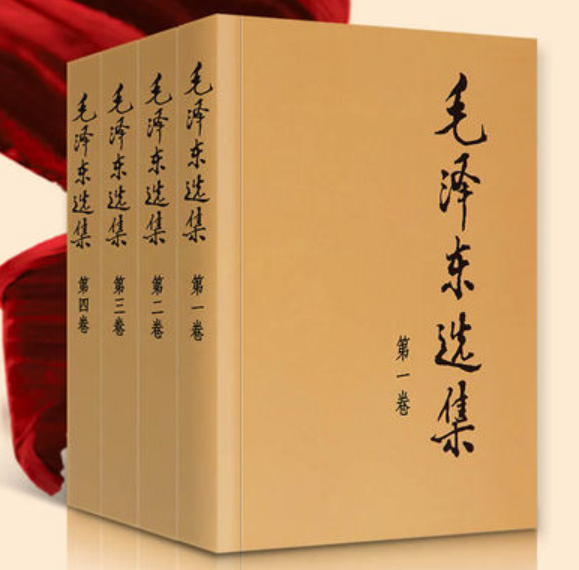
Chairman Mao opens with a deafening question: “Who are our enemies? Who are our friends? This is the primary question of the revolution.” I used to read that line as nothing more than a programmatic statement of the revolution. Now, unemployed at home, saddled with over 600,000 in mortgage debt, struggling day after day at the edge of survival, I finally understand the weight of those words. It was never an empty slogan — it is the very foundation on which every ordinary person settles their life and stands their ground. Only by seeing clearly the people around you and sorting out your own predicament can you find your place amid the storm, without confusion and without blind following.
Having finished the whole essay, what shook me most was Chairman Mao’s analysis of each class, precise to the bone — no obscure theory, no empty preaching, just the plainest language sketching out each class’s condition of survival and tendency of stance. And all of it fits today’s society perfectly. Those sentences I circled one by one, those annotations where I wrote “damn, that’s exactly me right now” — they are the deepest resonance between century-old words and the me of today.
1. From “Well-Off Household” to “Declining Fortunes”: The Downward Slide of the Petty Bourgeoisie
I was once one of the “petty bourgeoisie” in Chairman Mao’s writing — a stable job, a decent income, enough to cover the family’s expenses, and a sliver of ambition in my heart to climb upward, hoping to squeeze steadily into the ranks of the middle class. Back then I was like the segment of people in the original text who had “money to spare and rice left over” — I didn’t dream of getting fabulously rich, yet I held an extremely deep attachment to “making a fortune,” a simple expectation for life, and even when I occasionally felt it was hard, I always told myself that if I just endured a little longer I’d come out the other side.
But the world is fickle. Industry decline, age discrimination, workplace cutthroat over-competition pushed me step by step toward the abyss. Unemployment cut off my income, the mortgage pressed down until I couldn’t breathe, savings ran out, debts piled up. From what was once a “well-off household,” I gradually sank into the category of those whose “fortunes are declining,” tasting every day the despair of “looking ahead to the road before me and shivering with dread.” I finally understood the deeper meaning of the line “the mental suffering of such people is very great, because they have a comparison between their past and present that runs in opposite directions” — the gap of going from abundance to scarcity is far more tormenting than having been poor all along.
2. Shedding Illusions, Facing the Real Predicament of the “Semi-Proletariat”
Now I have long since shed the wavering and the illusions of the petty bourgeoisie, sliding completely into the “semi-proletariat” of Chairman Mao’s writing. I have no land, no property, no stable source of income; I have a body full of technical skill with nowhere to use it, and the only thing I can rely on is my own two hands — just as the original text describes, nothing to fall back on but one’s own labor. I used to think that if I just worked hard for others and put in honest effort, I could escape my predicament and change my fate. But reality struck me a hard blow — working for others has never been a real way out; it’s simply trading your blood and sweat for meager means of survival, and in the end you can’t escape the fate of being over-exploited and discarded.
We bottom-tier laborers sell our labor day after day, doing the hardest, most exhausting work for the least pay, while also enduring the grievance of age discrimination and damaged rights. Even giving it everything we have, we still can’t shake off the shackles of the bottom, let alone change our own class fate. Reading the original text’s descriptions of poor peasants, shop clerks, and street peddlers, I seem to see myself today, and I see the countless people around me just like me: we take meager wages, bear prices that rise every year, do the most grueling work, and yet are forever pushed along by life with no room to choose. This is the cruellest truth of working for others — it has never been a way out, only a stopgap to barely scrape by. It can’t give us real stability, it can’t give us the dignity we want, and it can’t change our fate of being over-exploited.
3. The “Rural Proletariat” and Today’s Outsourced Workers: The Shared Fate of the Employed
What made me suddenly see the light even more was Chairman Mao’s analysis of the “rural proletariat,” which strikes right at the core of “working for others has no way out.” Those employed long-hands and day-laborers, and today’s outsourced, dispatched, and temporary workers, are essentially no different — all are people with no means of production who can only earn a living by selling their labor. The original text says the rural proletariat has no land, no farm tools, no capital, and can only scrape by doing work for others. This is exactly the same as our predicament today: we work for others merely to create value for capital, while we ourselves get only a scrap of the leftovers — doing the most exhausting work, swallowing the most resentment, and in the end still owning nothing.
So-called “working for others” is nothing but trading your time and strength for temporary means of survival; it fundamentally cannot change your class fate, much less give you real stability. Just like those outsourced and gig workers, who seem to have a job but in reality live from one day to the next — when the project ends, the job is gone. The so-called “way out” is merely repeating the cycle of being over-exploited and discarded. This is the fate of working for others — it has never been a real way out, only the helpless survival choice of bottom-tier laborers, who in the end cannot escape being dominated by capital and swept along by reality.
4. The Middle Class Must Split: Standing Firm, No Longer Lost
Having read this essay, I no longer complain about my fate, nor am I lost in my predicament. Chairman Mao told us a century ago that the middle class must split — either running left into the revolutionary camp or running right into the counter-revolutionary camp, with no room to stay “independent.” When I have lost everything I could lose, when I no longer have any capital to compromise with or cling to, my stance has become completely firm — I no longer dream of climbing upward, no longer curry favor with the powers above. All I know is that those who, like me, struggle bitterly at the bottom, are over-exploited and ignored, are my kind; and those who collude with capital, over-exploit the bottom tier, and sell out national interests are our enemies.
Chairman Mao’s greatness has never lain merely in founding New China, but even more in the fact that with the most penetrating insight he saw through the underlying logic of human nature and society, and wrote words that still hold true a century later. This “Analysis of the Classes in Chinese Society” is not only a guide for the revolutionary era, but even more a mirror for today’s ordinary people to know themselves and see reality clearly. It made me understand that my suffering is not an isolated case, my struggle is not self-indulgent fussiness, but the inevitability of class decline, the shared predicament of bottom-tier laborers.
Conclusion: Having Nothing, I Fear Nothing
Now I am still struggling in the predicament of debt and unemployment, still “looking ahead to the road before me and shivering with dread.” But I am no longer lost, and I no longer hold unrealistic illusions — I have finally come to understand completely that working for others has never had a way out. Those day-after-day dashes, those early-morning-to-late-night efforts, are only for barely scraping by; they can neither earn a stable life nor change one’s bottom-tier fate. We bottom-tier laborers, even working for others with everything we’ve got, still cannot escape the fate of being over-exploited and discarded — just like those helpless proletarians in the original text, who can only barely survive on their own two hands yet can never shake off the fate of being dominated.
Reading the Selected Works of Mao is not reading history — it’s reading my own predicament, the voice of the bottom tier, and truths that never fade. A hundred years have rolled by, the winds of the era have shifted, yet Chairman Mao’s words still carry weight in every character and pierce the heart in every sentence. They make us understand that no matter how the era develops, no matter how society changes, distinguishing friend from foe, standing firm in one’s stance, and guarding one’s original heart are the most solid source of confidence for every ordinary person. And I, carrying this clarity and resolve, will hold fast in my predicament and press forward in my struggle, because I know: having nothing, I fear nothing.
The essence of the way of the world is a contest of family wealth, of resources, of starting points. Effort is only icing on the cake — it has never broken through the innate barriers of social strata.
Families with money and roots can give, from childhood, top-quality education, master-teacher resources, and breadth of vision, coasting all the way through elite schools. Now the workplace also grinds relentlessly on degree thresholds, and they are born holding the admission ticket — choosing a career is easy, the road is broad, the older they get the more secure they are, and their connections and resources can even be passed down through generations.
We come from honest farming families, and our starting point is a whole notch worse. Remote environment, meager teaching resources, limited vision, no one to guide us and no one to catch us if we fall — being able to study at all is entirely down to our own relentless grinding. The few from poor backgrounds who break through the encirclement are ultimately just a tiny minority of survivorship bias; they cannot represent the fate of the vast majority of rural children at all.
Most children of the bottom tier lose early at the starting line — they can’t get into good schools, are born at a disadvantage on credentials, and once they step into society they can only crowd into ordinary positions, earning a living by selling their strength and grinding away their time. While young they can still hustle to scrape by on energy and physical strength, but workplace rules have always been cold: once the age-35 threshold arrives and physical strength and energy decline, with no backer to prop them up and no resources to catch them, they immediately become the first to be “optimized” and eliminated. Work desperately for half a lifetime and in the end you’re still empty-handed, carrying life’s heavy burden, with no secure retreat even into old age.
Just as the Selected Works of Mao writes, one’s origin determines one’s initial economic position, and that position in turn locks in the direction of the road ahead. For people at the bottom to try to turn things around purely through working for others is itself the hardest road of all; the chasm of resources and family wealth is very hard to fill with hard work alone.
评论
0 条评论