Less than a day after yesterday’s post “DeepSeek Is Down Again—I Blamed My Own Router First” went out, I opened the dashboard this morning to find an apology letter plus a refund.
Let’s look at the letter first.
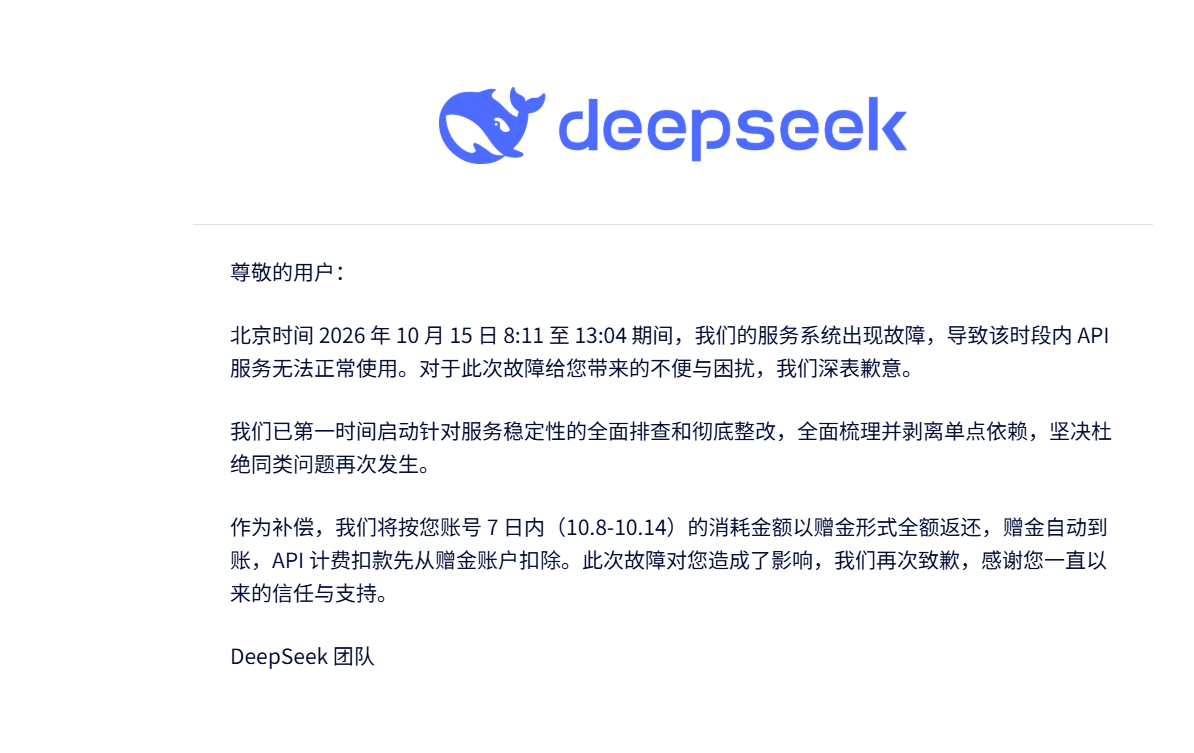
What the Letter Says
Three pieces of information.
First, the outage window: Beijing time October 15, 8:11 to 13:04, API service was unusable. When I was cursing them yesterday, the status page said “ongoing for 2 hours”; in today’s letter, the outage spans nearly five hours. In other words, it was down longer than I knew at the time.
Second, remediation direction: comprehensive review of service stability, “thoroughly identify and eliminate single-point dependencies.”
Third, compensation plan: based on each account’s consumption amount over 7 days (Oct 8–14), fully refunded in the form of credits, automatically deposited, with API charges deducted from credits first.
171.45 Yuan Appeared in My Account
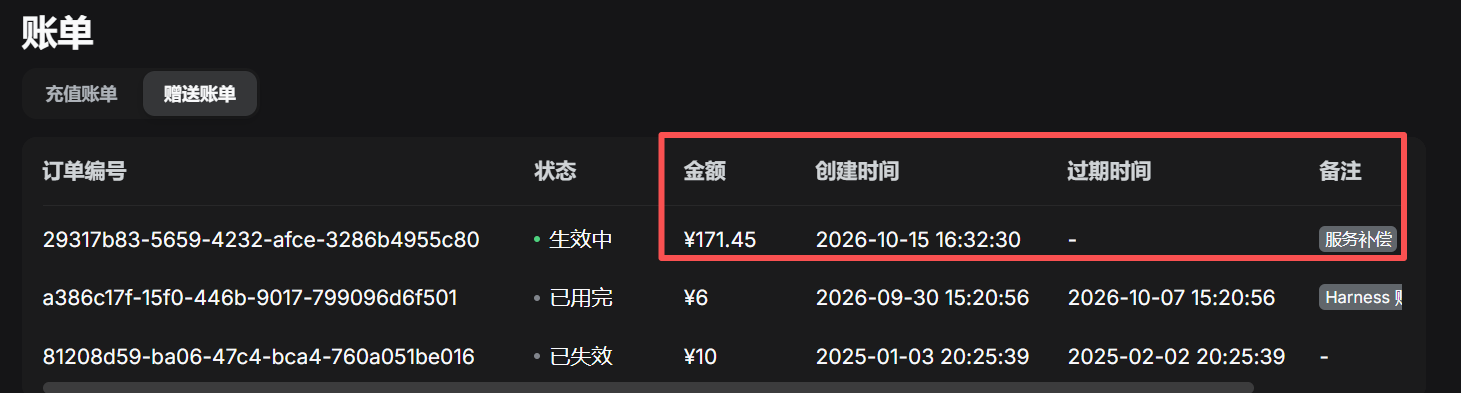
There’s an entry in my billing sitting there labeled “Service Compensation,” 171.45 yuan, status active, created yesterday afternoon at 16:32.
So the money went into the credit account yesterday afternoon, and the letter was probably sent around the same time—I just didn’t get around to checking until this morning.
Fair Assessment of How This Was Handled
Laying it all out: proactively acknowledging the outage, providing the time window, stating the remediation direction, offering compensation, automatic deposit, no buttons to click, credits deducted first when billing kicks in—procedurally there’s not much to fault. Among domestic API providers, very few can run through this entire playbook. Compared to certain enterprises that won’t even admit their brakes have failed and then try to scrub the entire internet, this is far better.
But there are two points I want to note.
First, “eliminate single-point dependencies”—those few characters are the most substantive technical statement in the entire letter. Translated plainly: we do have single points of failure, and when things break, we die on them. Being willing to write that sentence into a public letter to users is not common.
Second, the compensation framing is clever: what they’re compensating isn’t those five hours of outage—it’s the money I spent in the seven days before the incident. During those five hours of outage I indeed couldn’t use the service, but I also wasn’t generating any consumption during that period—refunding based on seven days of usage is essentially trading a refund for trust. What they’re acknowledging isn’t fault, it’s risk.
That’s a good deal, for both sides.
I’m Still the Same Me
171 yuan and 45 fen—almost exactly my usage over the past seven days. The letter’s message is straightforward: this one’s on us, here’s your money back, don’t leave.
Honestly, it does have an effect. Curse as I may, I took the money.
But I still need to be clear about something: in yesterday’s post, the most important point wasn’t that it went down—outages I can tolerate. What I was talking about is something else: that when it goes down, my first reaction is to curse my own router. That habit was conditioned into me by them, and one letter isn’t going to undo it.
So the conclusion stays for now: the default slot still holds the model that doesn’t turn red on me. DeepSeek stays as a backup—a vendor willing to admit single points of failure and willing to refund money deserves to keep a spot.
As for what row that spot is in—we’ll see if it turns red next time.
评论
0 条评论