Introduction
Li Shuo’s Cutting the Shang: The Yin-Zhou Transition and the Rebirth of Huaxia (《翦商:殷周之变与华夏新生》) is a history work that overturns your understanding. It does not tell the righteous narrative of “the Zhou overthrowing the Yin mandate” the way traditional histories do, but rather, grounded in archaeological evidence, uncovers the ancient truth deliberately concealed by the Zhou — the Yin-Zhou transition was by no means a simple change of dynasty, but a fundamental leap of Huaxia civilization from “theocracy and human sacrifice” to “rule by virtue and rites and music.”
This book made me realize for the first time: the ancient history we know well is a “purified version” filtered by the Duke of Zhou and the Confucians; the real history is full of bloodshed, original sin, and painful choices.
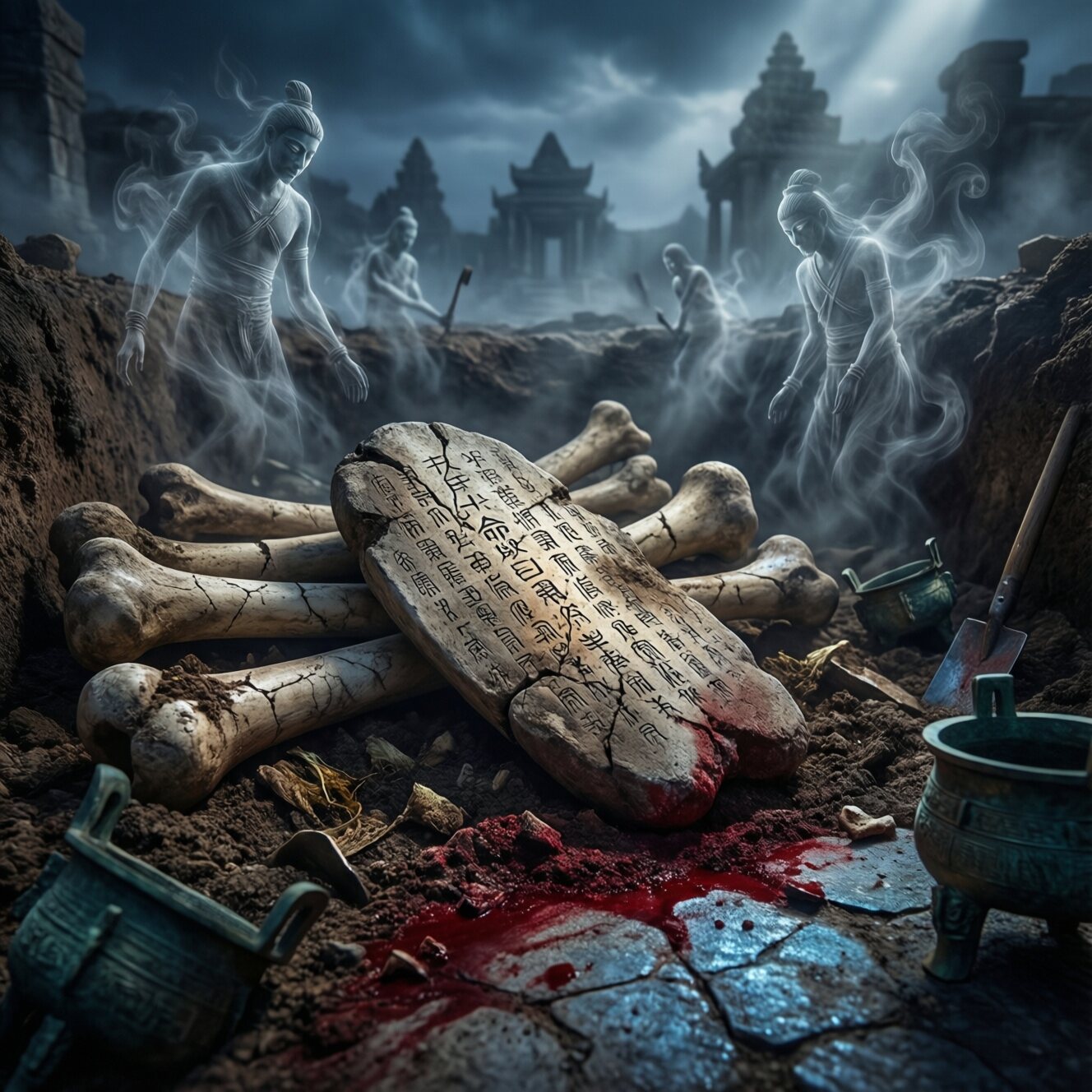
I. Why “Cut the Shang” — The Concealed Ancient Truth
In traditional historiography, the Yin-Zhou transition is molded into the righteous narrative of “King Zhou of Shang was brutal and tyrannical, while Kings Wen and Wu followed Heaven and responded to the people.” But through deep study of the Yin Ruins and oracle-bone inscriptions, Li Shuo found that this period of history was severely “purified” — the Zhou deliberately buried the most central ruling characteristic of the Shang: large-scale, institutionalized human sacrifice.
The “cutting of the Shang” in this book contains three dimensions:
| Dimension | Content | Executor |
|---|---|---|
| Military cutting of the Shang | Destroy the political power of the Shang dynasty | King Wu of Zhou |
| Civilizational cutting of the Shang | Negate the Shang’s theocratic system; establish rule by virtue and rites and music | The Duke of Zhou |
| Memory cutting of the Shang | Filter and bury historical memory | The Duke of Zhou |
This logic of “cutting the Shang three times” forms the core thread of the whole book and overturns our understanding of ancient civilization.
II. The Shang: A Dark Old World of Theocratic Supremacy and Human Sacrifice at Its Peak
1. Theocratic belief: The bloodthirsty worship of “Di” and ancestral gods
The Shang people believed in “Di” (the High God) and ancestral gods, holding that divine blessing could be obtained only through sacrifice. Unlike other ancient civilizations, the Shang’s human sacrifice was not an occasional, sporadic ritual but a institutionalized, daily, large-scale act of the state.
In the oracle-bone inscriptions, records of human sacrifice are everywhere:
- Praying for rain, averting disaster, laying foundations, building tombs
- Burial with the dead, celebrating victory in war
- A single sacrifice could reach several hundred people, and there are even records of “a thousand cattle and a thousand men”
2. The practice of human sacrifice: scale, sources, and the logic of rule
According to archaeological discoveries at the Yin Ruins:
- More than a thousand sacrificial pits have been excavated
- The total number of human sacrificial remains reaches tens of thousands
- Most were young adults, with bones showing clear marks of hacking and burning
Sources of human victims:
- Prisoners of war (mainly the Qiang people of the west) — the most important source
- Slaves and criminals
- A small number of aristocrats (used to sacrifice to ancestors)
Key discovery: The Zhou people (of the Ji surname) were originally a branch of the western Qiang, and for a long time were vassals of the Shang; one of their core duties was to hunt Qiang people and deliver human victims for the Shang king. The Zhou were “accomplices” in the Shang’s theocratic human-sacrifice system, and this identity burdened the Zhou with a heavy original sin.
3. The Zhou’s awakening: From submission to resistance
King Wen of Zhou, Ji Chang, was imprisoned by King Zhou of Shang at Youli for seven years, during which he witnessed the horror of Shang human sacrifice. The cruelest blow was this — his eldest son, Bo Yikao, was boiled to death by King Zhou of Shang, made into a meat stew, and the King of Wen was forced to eat it.
This painful experience completely shattered King Wen’s illusions about the Shang. Notably, in prison King Wen wrote the strategy for cutting the Shang and the plan for revenge into the hexagram and line texts of the I Ching. Li Shuo proposes a subversive view: the I Ching is not a book of divination but King Wen’s “plan for cutting the Shang.”
III. Cutting the Shang Three Times: From Military Victory to Civilizational Reconstruction
1. Military cutting of the Shang: The Battle of Muye (1046 BCE)
King Wu of Zhou, Ji Fa, inherited his father’s will and, with the aid of Jiang Taigong, fought the decisive battle against the Shang army at Muye. The Shang’s slave soldiers defected one after another, King Zhou of Shang burned himself to death, and the Shang dynasty fell.
But after destroying the Shang, King Wu had still not escaped the inertia of human sacrifice — to pacify the feudal lords, he imitated the Shang sacrificial rituals and sacrificed large numbers of Shang aristocratic prisoners of war. This shows: military victory does not equal civilizational awakening.
2. Civilizational cutting of the Shang: The Duke of Zhou’s revolution of rites and music
After King Wu died, the Duke of Zhou, Ji Dan, served as regent for seven years and carried out a series of fundamental changes:
(1) Banning human sacrifice, substituting animals for people
The Duke of Zhou issued a ban fully abolishing large-scale human sacrifice, stipulating that sacrifice could use only victims such as cattle, sheep, and pigs; at the same time he prohibited the institution of burial with the dead. This was the landmark event of Huaxia civilization moving from savagery to civilization — people were no longer “sacrificial offerings” and gained individual dignity.
(2) Reconstructing the view of the mandate of Heaven: From “divine blessing of violence” to “revering Heaven and protecting the people”
The Duke of Zhou proposed a wholly new view of the mandate of Heaven: the mandate of Heaven is inconstant and aids only the virtuous.
- The rise and fall of a dynasty does not depend on the scale of human sacrifice
- But on whether the ruler is “virtuous”
- The core is “revering Heaven and protecting the people”: revering Heaven, and even more, protecting the common people
This view of the mandate of Heaven turned politics from “god-centered” to “human-centered,” laying the foundation for Huaxia’s millennia-long secular ethics.
(3) Creating rites and music, establishing the lineage order
- The lineage (zongfa) system: centered on primogeniture, it established a social structure of “the family and the state as one.”
- The rites-and-music system: regulating the etiquette, music and dance, and clothing of different classes, distinguishing the noble from the base.
From then on, Huaxia civilization took “rites” as its core and formed the secular tradition of “revering ghosts and spirits while keeping them at a distance.”
3. Memory cutting of the Shang: The Duke of Zhou’s “historical plastic surgery”
The Duke of Zhou realized that to completely end the human-sacrifice tradition, he had to erase the memory of that blood-soaked history:
- Destroy the oracle bones and sacrificial records of the Shang about human sacrifice
- Falsify the historical records of the early Zhou
- Reconstruct the narrative: King Zhou of Shang was brutal; the Zhou were virtuous
This “memory cutting of the Shang” made later generations completely forget the dark human sacrifice of the Shang, and also forget the Zhou’s early “original sin.” Even when Confucius compiled the Six Classics, he followed the historical narrative filtered by the Duke of Zhou.
It must be emphasized: the Duke of Zhou’s “memory cutting of the Shang” was not a malicious falsification of history but a kind of “civilizational trade-off” — only by completely severing the memory of human sacrifice could Huaxia civilization truly bid farewell to savagery.
IV. Core Conclusions: The Civilizational Significance of the Yin-Zhou Transition
1. The “creation moment” of Huaxia civilization
In the history of human civilization, few civilizations have been able to actively negate their own violent tradition and complete self-purification and revolution. The human-sacrifice civilization of the Shang, like the civilizations of the Aztecs and the Maya, fell into the closed loop of theocratic violence; but the Zhou, through “cutting the Shang three times,” actively ended human sacrifice and built a new civilization of human-centeredness, rule by virtue, and rites and music.
This is the key turning point that distinguishes Huaxia civilization from other ancient civilizations.
2. The “concealment” and “truth” of history
The ancient history we know well is a “purified version” filtered by the Duke of Zhou and the Confucians, hiding within it a buried bloodshed and original sin. The value of Cutting the Shang lies in restoring the complete face of history — the progress of civilization has never been a smooth sail.
3. The cost and paradox of civilization
The Duke of Zhou’s “civilizational cutting” and “memory cutting” gave Huaxia civilization a new life but also exacted a certain cost:
- Suppressing the pluralism of civilization
- Strengthening ethical orthodoxy
- Forming a uniformity of historical memory
This “uniformity” has to a certain extent limited the innovation of civilization, but it has also allowed Huaxia civilization to maintain continuity and stability across a long history.
4. The core takeaway: To know one’s faults and be able to change
The progress of civilization lies not in “having no faults” but in “knowing one’s faults and being able to change.” The Zhou were once “accomplices” to the Shang’s theocratic violence, but through self-reflection and revolution they ended the violence and opened up a new civilization. This spirit of “self-redemption” is precisely the core driving force that has allowed Huaxia civilization to endure for thousands of years.
V. Core Figures and Key Quotes
Core figures
| Figure | Role | Core contribution |
|---|---|---|
| King Zhou of Shang | Theocratic tyrant | Promoter of human sacrifice, last ruler of the Shang |
| King Wen of Zhou | Founder of the plan to cut the Shang | Author of the I Ching, personally witnessed the horror of human sacrifice |
| King Wu of Zhou | Military executor | Completed the military cutting of the Shang, a transitional figure |
| The Duke of Zhou | Creator of civilization | Completed the civilizational + memory cutting of the Shang, laid the foundation of rites and music |
Key quotes
“The Yin-Zhou transition is Huaxia civilization’s thorough leap from theocracy to human-centeredness, from savagery to rites and music — the creation moment of Huaxia civilization.”
“The I Ching is not a book of divination but a record of King Wen’s strategy for cutting the Shang and his revenge; every hexagram text is testimony to the Zhou’s endurance and resistance.”
“In the Shang’s world, theocracy is supreme and people are sacrificial offerings; in the Zhou’s world, human-centeredness is supreme and people are ends — this is the most essential difference of the Yin-Zhou transition.”
“The Duke of Zhou’s destruction of the memory of human sacrifice was not a falsification of history but a way to let Huaxia bid farewell to bloodshed forever and move toward rebirth — a great civilizational trade-off.”
“A hundred generations all practice the Zhou system; the secular ethics and rites-and-music spirit of Huaxia are rooted in the Duke of Zhou’s revolution of cutting the Shang, in that self-redemption that bade farewell to theocratic violence.”
VI. Mind Map Outline
- Reading Notes on *Cutting the Shang*
- The Book's Core Positioning
- Core thesis: uncover the concealed truth
- Writing logic: archaeology + documents + literature
- Core thread: cutting the Shang three times
- The Shang: Theocracy and Human Sacrifice
- Theocratic belief
- Di and ancestral gods
- The state's great affairs are sacrifice and war
- The practice of human sacrifice
- Institutionalized, large-scale
- Human victims mainly Qiang people
- The Zhou's years of vassalage
- Hunting Qiang and delivering victims, bearing original sin
- King Wen imprisoned at Youli
- Bo Yikao boiled to death
- The *I Ching* = the plan for cutting the Shang
- Theocratic belief
- Cutting the Shang Three Times
- Military cutting of the Shang
- The Battle of Muye
- King Zhou of Shang burns himself; the Shang falls
- Civilizational cutting of the Shang
- Ban human sacrifice, substitute animals for people
- Revere Heaven and protect the people; match Heaven by virtue
- Create rites and music, establish the lineage order
- Memory cutting of the Shang
- Destroy human-sacrifice historical materials and oracle bones
- Reconstruct the historical narrative
- Later generations forget the truth of human sacrifice
- Military cutting of the Shang
- Core Figures
- King Zhou of Shang: theocratic tyrant
- King Wen of Zhou: founder of the cutting of the Shang
- King Wu of Zhou: military executor
- The Duke of Zhou: creator of civilization
- Core Conclusions
- The creation moment of Huaxia civilization
- The concealment and truth of history
- The cost and paradox of civilization
- To know one's faults and change, self-redemption
- The Book's Core Positioning
📋 View the plain-text version of the mind map
|
Conclusion
After finishing Cutting the Shang, I have a completely new understanding of Huaxia civilization.
We often say we are “a land of rites and etiquette,” but this rites-and-music spirit is not innate — it stems from a difficult civilizational revolution three thousand years ago. The Zhou turned from “accomplices” in human sacrifice into the “terminators” of human sacrifice, and through a “self-redemption” laid down the secular-ethical foundation of Huaxia for thousands of years.
The Duke of Zhou’s “memory cutting of the Shang” made us forget that blood-soaked history, but it also let civilization travel light. Today, when Li Shuo reopens this history through archaeological discoveries, it is not so we can criticize the past but so we can better understand the present: Huaxia civilization’s traditions of “rule by virtue” and “rites and music” stem from a self-revolution full of pain and choices.
Only by understanding this can we truly understand the roots and soul of Huaxia civilization.
Title: Cutting the Shang: The Yin-Zhou Transition and the Rebirth of Huaxia
Author: Li Shuo
Publisher: Guangxi Normal University Press, 2022
Rating: ★★★★★ (a model work combining archaeology and history)
评论
0 条评论