
In an Age of Rampant Consumerism, Save Yourself with “Subtraction” and “Breaking Attachment” to Regain Control of Your Life
My compulsive spending actually planted its seeds the moment I graduated. In 2011, fresh out of campus, I got a China Merchants Bank credit card with a 5,000-yuan limit—back when my monthly salary was only 1,500 yuan. After rent and basic living costs, almost nothing was left. In those days when I could barely get by, the credit card became my only “lifeline.” But I never expected that one swipe would lead to another, and I fell into the quagmire of spending ahead of my means—living off maxed-out credit every month, buying many things that were beyond my reach and that I could never really afford, just to briefly fill a bit of vanity in a tight, impoverished life.
At the end of 2013, I quit my job without a backup plan and left my hometown, coming to Hangzhou for a job at 3,500 yuan a month. I thought I could escape my earlier predicament, but that salary still couldn’t support my living costs, so I kept robbing Peter to pay Paul, spending on credit, and the debt slowly snowballed. To break out of that vicious cycle, in desperation I grasped at any straw—I even borrowed against my credit card to pay for a training course, hoping that learning could improve me and land me a higher-paying job, finally freeing me from the shackles of debt.
In October 2014, I quit that 3,500-yuan job again and spent half a year studying Java development full-time. But during those six months of full-time study I had no income at all, so I could only keep relying on credit to sustain basic living, and my debt kept growing. After the training ended, I got a 5,000-yuan job as I’d hoped—but by then my debt had ballooned to over 20,000 yuan, and on a 5,000-yuan salary I was already unable to repay it.
In the end, the card was overdue for three months, and I had to pay interest of five ten-thousandths per day. The bank’s collection calls came day and night, even reaching my family. In those days, anxiety and guilt pressed down on me so hard I could barely breathe. Later, I gave it everything and finally paid the debt off. But that experience of falling behind stayed with me like a deep brand, an unforgettable lesson—and since then, I’ve never let a credit card go overdue again.
I thought that after one debt crisis I would thoroughly rein in my desires. But as my income gradually rose and passed 10,000 yuan a month, I got cocky again, slowly forgetting the pain of being chased by debt, and once more fell into the obsession of “buy, buy, buy.” A new phone—buy. A new computer—buy. I bought a pile of all sorts of random electronic gadgets. The root cause was both an inner desire I couldn’t restrain and the pull of being swept along by the tide of consumerism.
But buying felt good only for a moment. Afterward I realized many things were useless, mostly left idle in corners, gathering dust; the toys I bought for my son piled up like a mountain, and the house became as messy as a garbage dump. Most toys were forgotten after being unwrapped, taking up space for no reason. In fact, many people have had this experience, and behind it—beyond consumerism—there’s the pushing from banks and online lending platforms. Let’s calm down and think: why do banks so aggressively promote credit cards? Why is it so simple and convenient to apply for all kinds of online loans? The answer is actually blunt: their core purpose was never to make our lives more convenient—it was to profit, to bind us to the chain of “spending ahead of our means” and turn us into tools for their continued profit.
Banks aggressively promote credit cards because, at heart, it’s a business that’s guaranteed to win. On the one hand, credit card interest and fees are an important source of bank income. Just like when my card was three months overdue and I had to pay five ten-thousandths of interest per day—small in a single instance, but accumulated over time it’s a considerable gain for the bank. Even without overdue payments, many people choose to pay in installments, and when the installment fees are converted, the effective interest rate isn’t low. This is exactly how banks profit from our spending ahead of our means. On the other hand, by promoting credit cards, banks cultivate our spending habits, turning us from “spending as needed” to “spending on credit”—so that even without enough money right now, we can satisfy our desires in advance. This spending pattern happens to align with the logic of consumerism: it lets the bank profit and drives the multiplication of capital. More importantly, banks bind users through credit cards, collect their spending data, and use it to more precisely push financial products and expand their profit range. Even when they proactively raise my credit limit, it isn’t goodwill—it’s that they hope I’ll spend more on credit, so they can earn more.
And the reason all those online loans are so simple and convenient to apply for—low-threshold, zero-collateral—is even more direct and utilitarian. Online lending platforms have a more direct profit model than banks: they issue loans at higher interest rates, targeting exactly the people whose credit limits are too small, who urgently need money, or who have weak self-control and easily fall into the trap of desire. They streamline the application process and lower the threshold precisely so more people can easily borrow—even those without sufficient repayment ability can quickly get a loan. For a lending platform, as long as someone borrows, it can earn high interest; whether the borrower falls into a debt crisis or is crushed by interest was never its concern. When I borrowed against my credit card years ago to pay for training and sustain full-time study, I was actually swept along by this “easy money” model—it seemed to solve an urgent problem, but in reality it pushed me step by step into the snowballing-debt trap, which is exactly the outcome the lending platforms wanted.
These operations by banks and lending platforms are essentially cooperating with consumerism, jointly weaving a net that ensnares us. Consumerism manufactures desire, making us want to buy and dare to buy, while banks and lending platforms provide “funding support,” letting us buy even without money—even if it means borrowing against the future and carrying debt. They seem to offer convenience, but in reality they exploit our desires and anxieties to reap huge profits from our debt, leaving us unable to escape the cycle of “spend ahead—repay debt—spend ahead again,” draining our financial reserves and our peace of mind. In fact, many people have had this experience. When the live-stream room’s “limited-time flash sales” keep erupting, when “refined living” keeps flooding social media, when “buying equals happiness” becomes a life creed for many, and with banks and lending platforms adding fuel—consumerism has become an invisible net that wraps us up tightly. The Canadian writer Cait Flanders, in The Year of Less (《不消费的一年》), exposed the trap of consumerism through her personal experiment; Hideko Yamashita elevated decluttering into spiritual practice in The Life-Changing Magic of Tidying Up (《断舍离》); and Buddhism’s wisdom of “few desires, contentment” and “breaking attachment to see the mind clearly” can offer us deeper spiritual guidance. Today, amid rampant consumerism, only by seeing through the profiteering nature of banks and lending platforms, fusing the power of these three, learning to do “subtraction” in life, and breaking the “attachment” within can we save ourselves and regain both financial and spiritual freedom.
The core reason capitalism desperately guides people to consume comes down to three points, and these are precisely the deep roots of our being swept up by consumerism. First, the essence of capital is to pursue maximum profit, and the cycle of production and consumption is the core path to capital multiplication. In a capitalist society, material goods are produced on a massive scale; without enough consumption to absorb these products, capital stagnates or even shrinks. So capital, through various means, binds “consumption” to “happiness,” “identity,” and “worth,” distorting our basic needs into endless desire, turning us from “buy when I need” to “buy when I want”—even beyond our means, spending ahead of our means, just to fuel capital’s multiplication. Just like when I graduated, I didn’t need things beyond my means, but in the consumerist atmosphere capital created, I was swept up by vanity, overspent on my credit card, and sank into a debt bog. This is exactly the outcome capital wants—our desire is its tool for profit.
Second, capitalism turns consumption into a hidden ideology, replacing practical value with the symbolic value of goods, making consumption a means to distinguish class and display the self. As the French philosopher Baudrillard analyzed in The Consumer Society (《消费社会》), consumption in modern society is no longer simply about satisfying use needs, but about pursuing the symbolic meaning behind goods—a new phone or high-end device is no longer just a tool but is endowed with the symbols of “success” and “taste.” Through marketing, capital constantly hints that only by owning these things can we gain recognition and display status; this idea is imperceptibly implanted into our cognition, making us involuntarily fall into the trap of “comparison-driven consumption.” After my monthly income passed 10,000, I couldn’t resist buying various new electronic devices. It seemed like my own desire acting up, but in reality I was kidnapped by the “symbolic consumption” capital created—thinking that owning these would prove my worth, forgetting the essence of consumption, and ending up with nothing but a pile of idle objects and an empty heart.
Third, through precision marketing, capital infinitely amplifies our desires and even manufactures false needs, making consumption a habit. From the live-stream room’s “limited-time flash sales” and social media’s flooding “refined living,” to the ubiquity of credit cards and consumer loans, capital uses every means to constantly stimulate our senses and blur the line between “need” and “want,” making us unknowingly fall into the cycle of “want—hoard—emptiness—want again.” Before capitalism, the value of goods lay in utility; in capitalist society, market logic replaced utility logic, and our desires, emotions, even anxieties were all turned by capital into marketable, manipulable selling points—it tells us “not consuming means no taste,” “buying new things can shake off anxiety,” making us keep consuming even in debt. All this is to let capital continually multiply in the cycle and firmly control society’s economic logic.
At this point, let’s face a heartbreaking question: what are the poor to the rich? The answer may be cruel, but it points straight at the essence—within the logic of capitalist multiplication and the trap of consumerism, the poor are essentially the “tools” and “nourishment” for the rich (capital holders) to keep profiting. By controlling capital and manipulating markets, the rich, on one hand, get banks and lending platforms to lower their thresholds and bind the poor to the chain of spending ahead of their means with credit cards and online loans; on the other hand, they manufacture desire through marketing so that the poor keep consuming even at the cost of borrowing against the future and carrying debt. And every act of the poor’s overspending, every debt, every irrational purchase ultimately converts into profit for the rich (capital). Banks never send coal in the snow—they only add flowers to the brocade.
Like me back then—seduced into a credit card on a 1,500-yuan salary, then swept up by the convenience of online loans on a 3,500-yuan salary, falling step by step into the debt bog. I thought I was “meeting an emergency” and “pursuing a better life,” little knowing I was just a chess piece in the profit chain of capital and the rich. Banks promoting credit cards and lending platforms simplifying applications are essentially helping capital harvest the wealth of the poor; the illusion of desire manufactured by consumerism makes the poor willingly hand over their hard-earned money, continuously, to the rich. Through capital operations, the rich trap the poor in the cycle of “work hard to earn—spend ahead—repay debt—work harder to earn,” forever serving the multiplication of capital, while the poor themselves are crushed by debt and desire, unable to break out of the shackles of class.
Even more worth pondering: this logic of “the rich profiting from the poor” is not accidental—it’s inherent to capitalism. The rich control the means of production and financial resources; by setting rules and manipulating markets, they make the poor the subjects of consumption and debt, while they themselves enjoy the dividends of capital multiplication. We work desperately and strive to earn money, yet unknowingly pour most of our income into meaningless consumption and into repaying interest and debt—ultimately just adding bricks to the wealth accumulation of the rich, while we ourselves remain trapped by financial pressure, unable to gain true freedom. This is exactly why I later firmly canceled my credit cards, paid off my mortgage early, and strictly controlled my spending—I don’t want to be a tool for capital and the rich to profit, I don’t want to be kidnapped by this unjust logic again; I only want to protect my wealth and control my own life.
In fact, many people have had this experience. When the live-stream room’s “limited-time flash sales” keep erupting, when “refined living” keeps flooding social media, when “buying equals happiness” becomes a life creed for many, consumerism has become an invisible net that sweeps us up. It constantly manufactures illusions of desire, making us, in the obsession to “own more,” fall into a vicious cycle—draining our financial reserves, wearing down our peace of mind, and filling our living space with useless things. The Canadian writer Cait Flanders, in The Year of Less (《不消费的一年》), exposed the trap of consumerism through her personal experiment; Hideko Yamashita elevated decluttering into spiritual practice in The Life-Changing Magic of Tidying Up (《断舍离》); and Buddhism’s wisdom of “few desires, contentment” and “breaking attachment to see the mind clearly” can offer us deeper spiritual guidance. Today, amid rampant consumerism, only by seeing through the underlying logic of how capitalism guides consumption, fusing the power of these three, learning to do “subtraction” in life, and breaking the “attachment” within can we save ourselves and regain both financial and spiritual freedom.
The Consumption Trap: The Modern Predicament of Being Swept Up by Desire
The essence of consumerism is to fill emptiness with material things and to kidnap life with attachment—which coincides exactly with the “three poisons” of greed, anger, and delusion that Buddhism warns against. And the pushing from banks and lending platforms makes it even easier for us to fall into this trap, all behind which is the driving logic of capitalist multiplication. The pain of being kidnapped by material desire is best understood by those deep within it—I often can’t help thinking, if I hadn’t carried a mortgage and car loan, and had upheld a consumption philosophy of living within my means, maybe I wouldn’t live so painfully. I wouldn’t lie awake all night over unemployment, wouldn’t frown over a fixed monthly mortgage, and wouldn’t fall into the mire of spending ahead of my means, borrowing from Peter to pay Paul with my credit card, borrowing against the future’s stability and confidence. The reason I sank into over 20,000 in debt years ago and even went overdue on my credit card was, beyond my own desire and being swept up by consumerism, inseparable from the lure of bank credit cards and the convenience of online loans—they seemed to give me a “lifeline” but actually pushed me toward the abyss of debt, all to profit from my debt. That’s how capital is: by amplifying our anxiety and desire, it makes us, in the process of spending against the future, continuously provide fuel for its multiplication. In The Year of Less, Cait found that her monthly savings rate was under 10% and her home was piled with clutter, yet she could never remember where the money went—the scented candles she bought didn’t make her more focused, the new phone she swapped in didn’t make life any smoother. Those items that seemed able to fill emptiness were just “painkillers” capital made, masking deeper problems and, in a false satisfaction, making us keep profiting capital. This is the core trap of consumerism: it constantly hints that “owning something” will make us the ideal self and free us from anxiety and confusion, and with the “funding support” from banks and lending platforms, we can easily overspend—yet overlooking a truth: the piling up of material things can never fill the hole in the heart; instead, it makes us sink deeper into the chasm of desire, crushed under the pressure of spending ahead and excessive debt.
Buddhism holds that “the greatest trait of ordinary people is that the mind follows circumstances”; the richer material pleasure is, the more easily the mind becomes chaotic, and the growth of greed is precisely the root of suffering. Capitalism exploits exactly this—it constantly stimulates our greed with material things, keeping us trapped by “self-attachment”: attachment to defining the self through material things, to the comparison of “if others have it, I must too,” to the illusion that “owning more is being happier.” This aligns highly with Buddhism’s critique of “attachment to the person-and-dharma formed by the five aggregates,” which ultimately leads to the suffering of cyclic existence. Even more to be wary of: some people, in pursuit of so-called “refinement,” even instrumentalize belief—using “Buddhist-style” as an excuse to escape reality, using meditation and prayer beads as social symbols to show taste. This not only betrays the core of Buddhism’s “breaking attachment,” but also makes one thoroughly lose oneself in the double trap of consumerism and utilitarian belief, ever more swept up by debt and anxiety, forgetting the composure life should have—which is exactly what capital likes to see: the more confused we are, the more easily we are swept up by consumption, the more easily we become tools for capital’s multiplication.
Threefold Wisdom: Unlocking the Path to Self-Rescue
The first step to self-rescue is, like Cait, to stop the footsteps of blind consumption and break the cycle of desire with “conscious restriction.” The core of The Year of Less is not ascetic austerity but “buy only necessities, refuse non-necessities,” defining the boundaries of consumption through three lists and re-examining one’s real needs within limits. Cait emptied her storage cabinets, donated 43% of her possessions, and sold valuable items she didn’t use. This process was not just clearing objects but a practice of facing inner desire—she finally understood that “the fewer the desires, the less you spend, and the less money you need”; true freedom is not “buying whatever you want” but “being able to not buy whatever you don’t want to.”
This “conscious restriction” coincides with Buddhism’s cultivation guideline of “few desires, contentment.” Buddhism advocates the “four reliances” of life, proposing “one meal a day, one sitting under a tree, wearing rag robes, taking rotting medicine”—not deliberately seeking poverty, but reducing the stimulation of material desire through a simple life, letting the mind settle, avoiding being swept up by greed. Just like the Plum Village meditation center led by Thich Nhat Hanh—even in highly modernized France, it always maintains a simple, natural atmosphere, because the essence of practice is to cut off afflictions and extinguish delusion, and a frugal living environment makes it easier to keep the mind pure. We don’t need to deliberately imitate this extreme simplicity, but we can borrow its core: reduce unnecessary consumption, refuse to be swept up by marketing, not be dazzled by “limited-time” or “limited-quantity” gimmicks, not blindly follow trends out of comparison, and let consumption return to the essence of “satisfying basic needs” rather than being a tool to fill desire.
The second step to self-rescue is to practice the wisdom of The Life-Changing Magic of Tidying Up, breaking attachment to objects amid “discard, dispose, detach,” and purifying life and mind. Hideko Yamashita elevated “discard = cut off what is not needed, dispose = throw away excess waste, detach = break free from attachment to objects” into a life philosophy, which aligns highly with Buddhism’s Prajna emptiness-view of “attaining nothing”—Buddhism holds that all dharmas have no fixed, unchanging nature; sentient beings, out of ignorance, cling to them as real, seeking all dharmas with a mind of attainment, and thus fall into affliction, while “one who attains nothing is truly liberated.” What The Life-Changing Magic of Tidying Up advocates is exactly this wisdom of “non-attachment”: cutting off unneeded objects from entering life is cutting off the attachment of “greedy seeking”; disposing of excess waste is letting go of the attachment to “possession”; breaking free from attachment to objects is shifting from “material-axis” thinking to “space-axis” thinking, understanding that objects serve life rather than becoming life’s burden.
Practicing tidying doesn’t require seeking “complete emptiness”—you can start with one drawer, one piece of clothing: distinguish “necessary, suitable, pleasant” from “unnecessary, unsuitable, unpleasant,” and actively dispose of things that are useless, unliked, and merely a burden. This process is also one of purifying the mind. Just as Cait, while clearing objects, gradually saw her own desires, we too, while discarding excess items, are letting go of inner comparison and anxiety and slowly accepting our true selves—no longer clinging to brand names and luxury goods to advertise status, no longer thinking “owning more” is being happier, but learning to cherish what we already have and feel life’s authenticity in simplicity. This “dispose” is not passive giving up but active choosing—control over your own life and a practice of Buddhism’s wisdom of “breaking attachment.”
The third step to self-rescue is to borrow Buddhism’s wisdom of “contemplating the self” (觀自在), looking inward, reshaping values, and fundamentally breaking free from the kidnapping of consumerism. The core of consumerism is to make us chase outward, forever fixated on “what we don’t have,” while Buddhism guides us to explore inward, to understand that “Buddha-nature is inherent”—true abundance is not in external materials but in inner clarity and peace. The Heart Sutra says: “When Bodhisattva Avalokitesvara was practicing the profound Prajna Paramita, he illuminated the five aggregates and saw that they were all empty, and thus overcame all suffering and distress.” The so-called “contemplating the self” is learning to examine your own mind, see the essence of desire, and not be deluded by external circumstances.
The Path of Practice: Transformation from Cognition to Action
This inward examination is exactly the core that The Year of Less and The Life-Changing Magic of Tidying Up jointly emphasize. In her year of less, Cait not only achieved financial freedom but rethought the meaning of work and life, quit a high-paying job that didn’t match her values, turned to freelance writing and blogging, and found a way of living that fit her true heart; Hideko Yamashita, through tidying, lets people rediscover themselves in the process of organizing objects and understand what they truly care about. Combining Buddhism’s wisdom, we can regularly reflect: “Who am I? What am I good at? What do I truly want in this life?” When we no longer pin happiness on material things, no longer use consumption to escape reality, but focus on inner growth, meaningful relationships, and a life aligned with our values, consumerism naturally loses its power to sweep us away.
In addition, we should learn to replace “material things” with “experiences,” and “greedy seeking” with “gratitude.” In The Year of Less, Cait found that the joy of buying something lasts at most three days, while a trip or time spent with friends can be remembered for three years; Buddhism also emphasizes that the spiritual nourishment brought by “experience” far exceeds the fleeting pleasure of material things. We can reduce spending on non-necessities and invest time and money in experiences that nourish the soul—reading, hiking, gathering with family and friends—which cost little but bring lasting joy. At the same time, practicing Buddhism’s concept of “gratitude,” cherishing everything we already have, from the clothes in the closet to the cookware in the kitchen, reminding ourselves each time we use them that “we already have enough,” no longer clinging to “wanting more”—this shift in mindset is the key to escaping the trap of consumerism.
The Mind’s Home: Only by Not Clinging to Things Can You Be Free
Today, amid rampant consumerism, traps are everywhere, and behind it all is the underlying logic of capitalism pursuing multiplication—it needs us to keep buying, needs our desires to keep inflating, to sustain capital’s cycle and expansion. But the road to self-rescue has never been closed: The Year of Less teaches us to “limit desire, control consumption,” The Life-Changing Magic of Tidying Up teaches us to “let go of attachment, simplify life,” and Buddhism’s wisdom teaches us “few desires, contentment, inward practice.” Fused together, they essentially all teach us to “do subtraction”—subtract excess objects, subtract unnecessary desires, subtract external comparison, see clearly the truth of how capital guides consumption, return to the essence of life, and reclaim inner peace.
True abundance is never about owning more material things, but about having clear self-awareness, meaningful relationships, a life aligned with your values, and the right to choose freely. Just as Cait, through a year of not consuming, regained financial and spiritual freedom; just as tidying conveys—a simple life brings a rich soul; just as Buddhism reveals—only “non-attachment” brings true liberation. And I too, after life’s tests, have begun to practice this “subtraction” and “breaking attachment,” step by step breaking free from the shackles of material desire and financial pressure.
In 2023, my previous company began large-scale layoffs, cutting more than half of its staff from over 3,000, and I barely survived several rounds. At that time I deeply realized that by working for others I could hardly make it to retirement, and that rather than passively waiting in anxiety, I should act on my own to build a safety line for myself and my family. So I began doing the following things:
First, I canceled my credit cards, keeping only one with a limit under 20,000. Even when the bank proactively texted to raise my limit, I firmly refused, cutting off the possibility of spending ahead from the source—I know deeply that behind a raised limit there is never goodwill but a wish for me to spend more on credit, so they can earn more interest and fees. I will never be tempted by such “benefits” again and repeat the overdue mistake of years past.
Second, I started paying off part of my mortgage early, first fully repaying the several hundred thousand of my commercial loan, which took about half a year, then keeping only the housing provident fund loan and paying part of it off early too. Currently my monthly payment is under 4,000, so even if something unexpected happens, there won’t be much financial pressure.
Third, I strictly controlled my spending. Apart from daily necessities, I basically stopped buying any new electronic products or large items, thoroughly abandoning the old obsession of “buy, buy, buy,” and if I really need something I first check Xianyu for a second-hand one, letting consumption return to its essence.
Fourth, I limited the number of extracurricular classes for my child, refusing all rat-race-style “tiger kid” programs and keeping only Lego and basketball, which my child is genuinely interested in. Because I understand that health is very important, and the main way to stay healthy is to eat well, sleep well, and exercise. Exercise is an important-but-not-urgent second-quadrant thing that brings a continuous compounding effect and requires long-term persistence, and it also lets my child grow up happily rather than being swept up by anxiety.
Fifth, I forced myself to save every month, without fail. I keep six months of cash flow to avoid unexpected expenses.
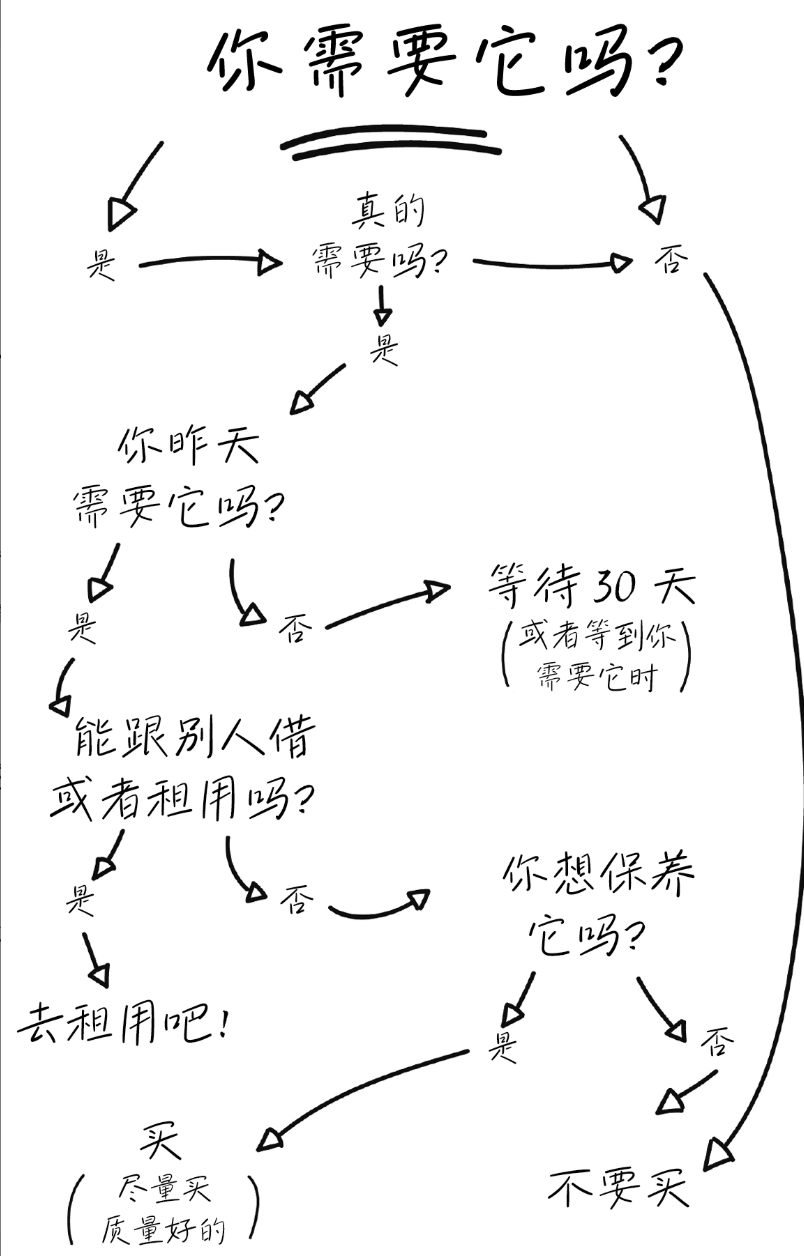
All these actions are really about reducing my own pressure. I don’t want to be crushed to death by financial problems, and even less do I want to return to the old days of being kidnapped by material desire and troubled by debt. I know deeply that banks promoting credit cards and lending platforms simplifying applications was never about making things convenient for us but about profit—they, together with consumerism, weave a net that ensnares us. Only by seeing this clearly—only by seeing that the desires amplified by capital and the illusions created by marketing ultimately bring no true happiness, only by seeing clearly the underlying logic of how capitalism makes people buy, buy, buy, guarding our true heart, learning subtraction, breaking attachment, not being kidnapped by material things, not being swept up by desire—can we break free from the manipulation of capital and financial platforms, regain control of our lives, and live as we truly want to be.
评论
0 条评论