Counselling for Toads — A Deep-Learning Report
Applicable mode: Deep mode | Knowledge level: General | Estimated reading time: 60 minutes
📚 Book Metadata
| Item | Content |
|---|---|
| Title | Counselling for Toads |
| Author | Robert de Board |
| Translator | Chen Ying |
| Publisher | Tianjin People’s Publishing House |
| Year | 2020 |
| Pages | About 200 |
| Type | Psychology / introductory book on counseling |
| Core Framework | Transactional Analysis (TA) |
| Main storyline | Mr. Toad’s full journey from depression to growth through 10 counseling sessions |
🗺️ Content Map
Core Structure of the Book
|
Network of Core Concept Associations
|
💡 Deep Dive into Key Points
Point One: The Three Ego States
[Knowledge level: General]
🦴 Layer 1: Skeleton Extraction
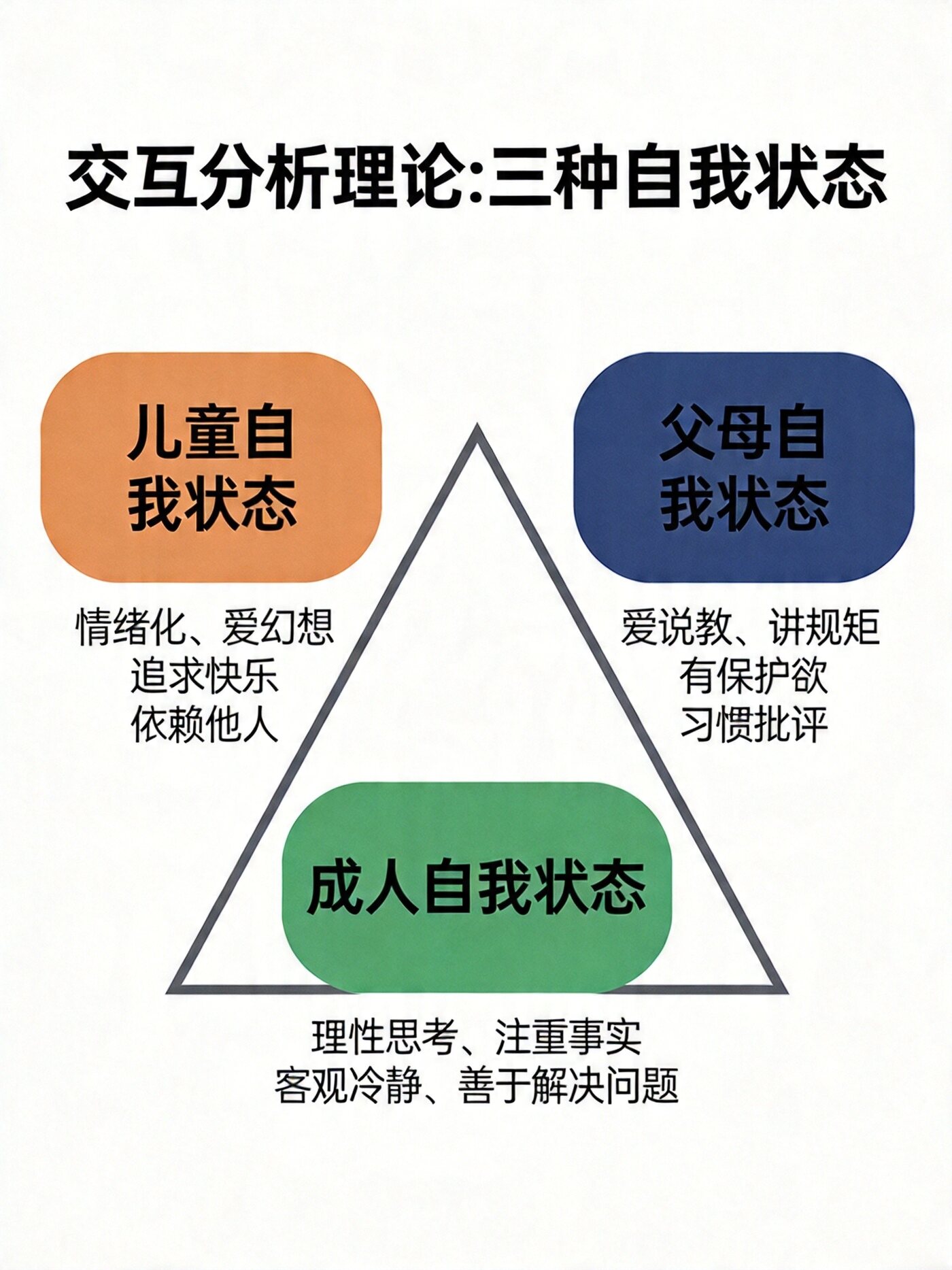
Definition:
An ego state is the pattern of a person’s inner functioning at a particular moment. TA theory holds that three “ego states” exist within everyone at the same time:
- Child Ego State: Re-enacting the behavior and feelings of childhood
- Parent Ego State: Behaving like one’s own parents
- Adult Ego State: Responding to the present reality rationally and pragmatically
Heron’s exact words: “When we ask ‘what state is he in,’ we’re really asking ‘what is the mode of his existence.’”
Underlying logic:
These three states are not role-play but real psychological functions formed from actual experience. Each state has its value; the key is to switch flexibly in different situations, rather than being trapped in any one state.
🥩 Layer 2: Flesh Digging
Why analysis:
Understanding the three ego states is the foundation of self-awareness. Most interpersonal conflicts stem from the two sides being in different ego states—one reasoning from the “Adult state” while the other throws a tantrum from the “Child state,” talking past each other.
Boundary of applicability:
- This is a descriptive framework, not a prescriptive one
- All three states are healthy; what’s needed is integration, not eliminating any one state
Case 1: Case from the original
During counseling, Toad realizes that whenever Badger visits, he automatically enters the “Child Ego State”—feeling small, powerless, and wanting to please Badger. He recalls the feeling of facing his stern father in childhood; this is the “Adapted Child” at work.
Case 2: Workplace scenario
[Source: created] When product manager Zhang Ming presents a plan at a meeting, operations director Mr. Wang suddenly explodes: “Who did this plan? It’s garbage!” Mr. Wang is in the “Critical Parent State,” expressing displeasure through judgment and blame. Zhang Ming feels a surge of fear and wants to apologize immediately—he has entered the “Child state.” But Zhang Ming later realizes he can switch to the “Adult state” and respond calmly: “Mr. Wang, I understand you have doubts about the plan. Could you specify which parts need improvement?”
Case 3: Family scenario
[Source: created] Thirty-five-year-old Li Na feels inexplicably irritable every time she gets a call from her mother. Her mother always nags “why aren’t you married yet,” “is your job stable,” and Li Na finds herself either talking back and arguing or silently enduring and regretting it afterward. This is because her mother’s “Parent state” triggers Li Na’s “Child state”; she hasn’t set boundaries from the “Adult state.”
Case reading:
All three cases show how ego states are automatically activated in daily life. The key isn’t judging which state is “good” or “bad” but becoming aware of the current state and choosing whether to switch.
✨ Layer 3: Essence Extraction
Trigger signals:
When you feel the following, you may be in a non-“Adult state”:
- Feeling powerless, wanting to escape, being forced to comply → possibly the Child state
- Wanting to criticize, blame, lecture others → possibly the Parent state
- Reacting emotionally rather than responding rationally → deviating from the Adult state
Cross-Industry Transfer Matrix:
| Industry | Application Scenario | Specific Practice |
|---|---|---|
| Counseling | Client state assessment | Identify the client’s current state and adjust the counseling strategy |
| Corporate Management | Conflict mediation | Judge the states of both parties in conflict and help them switch from an emotional state to rational dialogue |
| Education/Training | Teacher-student interaction | Identify whether a student is in a “learning Child state” or a “rebellious Parent state” and adjust the teaching approach |
| Intimate Relationships | Couple communication | When one side enters the “Critical Parent” mode, the other can gently remind “we both need to calm down now” |
| Healthcare | Doctor-patient communication | Doctors need to identify whether the patient is in a fearful “Child state” or a questioning “Parent state” and adjust the way they explain |
Execution SOP: When you find yourself becoming emotional
|
⚖️ Layer 4: Residue Utilization
Critical perspective:
Oversimplification risk: The three ego states are an oversimplification of complex human psychology. In reality, psychological states are far richer and more varied than these three labels.
Cultural limitation: This framework is mainly based on Western individualist culture. In cultures that emphasize collectivism and interpersonal harmony (such as China and Japan), the definition of the “Adult state” may need adjustment.
The myth of the “Adult state”: The book implies that the “Adult state” is the ideal state, which is itself a value judgment. In fact, sometimes entering the “Child state” (such as enjoying happiness or expressing vulnerability) is also healthy and necessary.
Ignoring power dynamics: This framework doesn’t fully consider the impact of structural power inequality (such as workplace manipulation or control in intimate relationships) on psychological states.
Point Two: The Child Ego State and Basic Emotions
[Knowledge level: General]
🦴 Layer 1: Skeleton Extraction
Definition:
The Child Ego State contains the basic emotions we’re born with (joy, anger, sadness, fear), plus the adapted emotions formed in childhood to adapt to the environment.
Heron’s exact words: “When you’re in the ‘Child state,’ you experience the feelings of childhood, good and bad. You re-enact past situations and re-experience past emotions.”
Underlying logic:
A baby is born with only limited basic emotions. These emotions are like the primary colors on a palette, mixed and adjusted in interaction with the caregiver, ultimately forming each person’s unique behavior pattern.
🥩 Layer 2: Flesh Digging
Why analysis:
Understanding basic emotions is the starting point of emotional intelligence. Many people are taught from childhood “don’t cry,” “don’t get angry,” and end up unable to recognize and express their emotions, finally losing connection with their inner selves.
Case 1: Case from the original
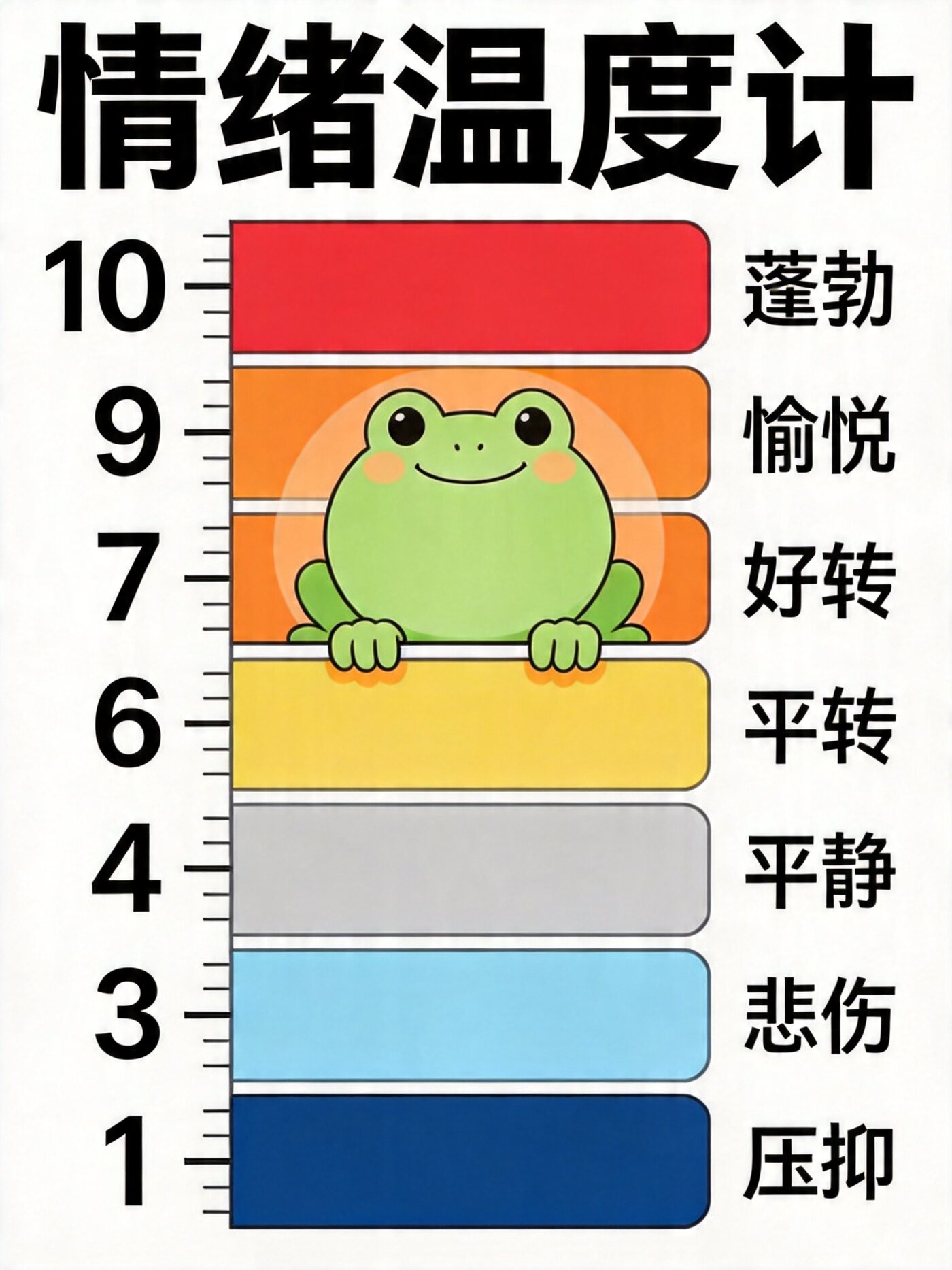
Heron uses a thermometer metaphor to guide Toad in identifying emotions. He draws a scale from 1 to 10 and asks Toad to rate his feelings. Toad rates between 1 and 2 and admits he has had suicidal thoughts. This simple tool helps Toad “see” his emotional state for the first time.
Case 2: Workplace scenario
[Source: created] Twenty-eight-year-old programmer Chen Hao was taught from childhood that “boys don’t cry” and “be strong.” When publicly criticized by his boss at the company, he clearly feels anger and humiliation but can’t identify these emotions, only feeling “my chest is tight.” He escapes these feelings by binge eating. The counselor helps him re-identify: feeling angry when publicly criticized (basic emotion), feeling disrespected (adapted emotion), and worrying about being fired (fear).
Case 3: Parent-child scenario
[Source: created] Six-year-old Tiantian has her toy snatched by a classmate at kindergarten, and she cries. Her mother says, “Don’t cry, you’re the older sister, you should let the younger child have it.” Tiantian is forced to stop crying, but her heart is full of grievance. This experience teaches her to suppress anger and sadness. As an adult, in intimate relationships she always silently endures and can’t express dissatisfaction.
Case reading:
These cases show how basic emotions are “tinted” by the environment. The key isn’t eliminating negative emotions but learning to recognize, accept, and express them in a healthy way.
✨ Layer 3: Essence Extraction
Emotion-recognition training: Three questions a day
|
Cross-Industry Transfer Matrix:
| Industry | Application Scenario | Specific Practice |
|---|---|---|
| Counseling | Emotion-focused therapy | Help clients recognize and name vague emotional experiences |
| Education/Training | EQ courses | Teach children to recognize “I now feel [emotion word]” |
| Human Resources | Employee care | In EAP counseling, help employees recognize emotional signals before burnout |
| Healthcare | Mind-body medicine | Recognize the emotions of “somatization”—e.g., long-term stomach pain may be suppressed anxiety |
| Retail | Customer experience | Train staff to recognize customers’ “negative emotion signals” and respond proactively |
⚖️ Layer 4: Residue Utilization
Limits of naming emotions: Research shows that over-analyzing negative emotions may actually reinforce them. The mindfulness method of “observing without judging” may be a more effective path.
Arbitrariness of emotion classification: The classification of basic emotions itself carries cultural bias. Some cultures may recognize more or fewer “basic” emotions.
Over-personalization risk: Personalizing emotional problems may ignore the impact of social structural factors (such as poverty, discrimination) on psychological states.
Point Three: The Adapted Child and Compliant Behavior
[Knowledge level: General]
🦴 Layer 1: Skeleton Extraction
Definition:
The “Adapted Child” is a behavior pattern in which a child adjusts his natural emotions to adapt to a harsh upbringing environment. These adjustments include: compliance, people-pleasing, apologizing, dependence, and suppressing anger.
Heron’s exact words: “The child is father of the adult. The most intense emotions experienced in childhood inevitably become the feelings we often have as adults.”
Checklist of compliant behavior:
- Agreeing: Saying “okay” without thinking
- Pleasing: Working hard to make others happy or like you
- Apologizing: Being the first to admit fault in a conflict
- Depending: Needing others’ confirmation to make decisions
Underlying logic:
When a child faces a powerful force he can’t escape (a parent), compliance is the most effective survival strategy. This strategy protected us in childhood, but if used unconsciously as adults, it harms self-development.
🥩 Layer 2: Flesh Digging
Why analysis:
Compliant behavior can avoid conflict and protect the self in the short term, but in the long run it leads to: inability to express real needs, blurred boundaries, and self-worth depending on others’ approval.
Case 1: Case from the original
Toad recalls his childhood: every time his father blamed him, he would immediately apologize and promise to change. He even habitually apologized before doing anything wrong. This is because Toad learned to “predict” his father’s mood, avoiding bigger punishment by apologizing in advance. As an adult, Toad still uses the same strategy with friends—when Rat frowns slightly, he apologizes immediately.
Case 2: Workplace scenario
[Source: created] Thirty-two-year-old administrative specialist Liu Fang never refuses any request at the company. A colleague asks her to help print documents; even though her own work is piling up, she puts it down to help. When her leader assigns overtime, even if it affects her private plans, she never says no. At the year-end awards, she finds that the “kids who cry” actually get more resources. She begins to realize that her compliance hasn’t won her true recognition.
Case 3: Intimate relationships
[Source: created] Forty-year-old Wang Lei grew up under a “tiger dad” education, having to obey every decision of his father. After marrying, he finds himself always the “one who compromises” in front of his wife too—where to eat, whose home to visit for the New Year, which extracurricular classes the child takes—he always follows his wife. He thought this would make the family harmonious, but in reality he is full of grievance and anger, and finally in an outburst he says, “I’ve never dared to be myself.”
Case reading:
Compliant behavior often operates unconsciously. The person may be completely unaware of “pleasing” or “apologizing,” taking it as “normal social etiquette” or “considering the big picture.”
✨ Layer 3: Essence Extraction
Self-assessment questionnaire to identify compliant behavior
|
Cross-Industry Transfer Matrix:
| Industry | Application Scenario | Specific Practice |
|---|---|---|
| Counseling | Self-growth workshop | Help clients recognize compliant patterns learned in childhood |
| Corporate Management | Leadership training | Identify overly compliant employees (“yes-men”) and cultivate a healthy feedback culture |
| Sales Training | Customer communication | Avoid unhealthy customer relationships caused by excessive compliance |
| Legal Consulting | Marital property | Help clients recognize the power imbalance in a relationship |
| HR Recruiting | Team building | Identify candidates’ compliant tendencies and avoid building an overly “harmonious” team lacking innovation |
Execution SOP: Practice saying “no”
|
⚖️ Layer 4: Residue Utilization
Relationship applicability: Not all compliance is pathological. In some highly dependent relationships (such as doctor-patient, teacher-student), moderate compliance is necessary. The problem is “unconscious, automatic” compliance.
Cultural factors: In Eastern cultures that emphasize “harmony” and “humility,” complete non-compromise may destroy important relationships. You need to find a balance between personal boundaries and cultural adaptation.
Economic dependence: Much “compliance” is in fact the result of economic dependence. Personalizing a psychological problem may mask structural inequality.
The risk of change: Breaking away from a compliant pattern may cause temporary social discomfort and relationship tension. The “cost” of change needs to be evaluated for whether it’s worth it.
Point Four: The Expression and Transformation of Anger
[Knowledge level: General]
🦴 Layer 1: Skeleton Extraction
Definition:
Anger is one of the basic emotions, but different people express anger differently. A child learns to express anger in a “non-aggressive” way—the most typical example is “sulking.”
Heron’s exact words: “A sulker is always sullen, gloomy, and unnaturally quiet. In my view, among all the behaviors of the ‘Adapted Child,’ sulking best illustrates how time can dilute anger.”
Continuum of anger expression:
|
🥩 Layer 2: Flesh Digging
Why analysis:
Anger itself isn’t the problem; the problem is how it’s expressed. Many people either “explode” and harm the relationship or “suppress” and harm themselves. The healthy way is to find a “non-aggressive way to be angry.”
Case 1: Case from the original
As a child, Toad never dared to get angry at his father, because he knew his father was stronger and getting angry was useless. Toad learned to suppress his anger and instead attack himself—self-blame, guilt, self-punishment. Heron helps Toad see that his anger hasn’t disappeared but transformed into “sadness” and “self-criticism.”
Case 2: Workplace scenario
[Source: created] Forty-five-year-old department director Zhao Qiang is a “nice guy” who never publicly criticizes anyone. But his team finds that in private he “makes things hard” for certain employees—assigning more work, ignoring their contributions when reporting, using silence to express displeasure. This “passive aggression” is more destructive than direct conflict.
Case 3: Family scenario
[Source: created] Fifty-five-year-old retired teacher Aunt Zhou never says anything bad about her daughter-in-law in front of outsiders. But at family gatherings she “casually” sighs, brings up “young people today don’t know their place,” and says things like “I wouldn’t have been like that back then.” Her daughter-in-law feels stabbed by a hidden arrow but can’t retort, because Aunt Zhou has never said anything “directly.”
Case reading:
Passive aggression (indirect aggression) is a hidden expression of anger. It avoids the “danger” of direct conflict but also can’t truly solve the problem, and it creates distrust in the relationship.
✨ Layer 3: Essence Extraction
The “Feldenkrais method” of healthy anger expression
|
Cross-Industry Transfer Matrix:
| Industry | Application Scenario | Specific Practice |
|---|---|---|
| Counseling | Anger-management therapy | Help clients recognize the “transformations” of anger (such as depression, somatic symptoms) |
| Conflict Mediation | Labor disputes | Guide both sides to turn “anger” into “statements of need” |
| Marriage Counseling | Couple communication | Train a “gentle but firm” way of expressing |
| Crisis PR | Customer service | Recognize the needs behind customer anger (to be respected, to be heard) |
| Education/Training | Adolescent psychology | Teach teens to recognize that “sullenness” may be a transformation of anger |
⚖️ Layer 4: Residue Utilization
The idealization of “non-aggressive anger”: Some cultures have strong taboos against directly expressing anger. Even after learning the “healthy” way to express it, it may still be unacceptable in some situations.
The function of anger: Anger is sometimes a signal that something genuinely needs to change. Accepting anger and then “letting it go” without discrimination may miss an important opportunity for change.
Power dynamics: In relationships of unequal power (such as boss and subordinate), asking the weaker party to “directly express anger” may instead put them in a more dangerous position.
Point Five: The Parent Ego State
[Knowledge level: General]
🦴 Layer 1: Skeleton Extraction
Definition:
The Parent Ego State is when a person behaves like his own parents, repeating the way his parents treated him. It includes two types:
- Critical Parent: criticizing, blaming, judging
- Nurturing Parent: caring, concerned, protecting
Heron’s exact words: “In the ‘Parent Ego State,’ we behave just like our parents. Remember, they were the first people we came into contact with, so their influence on us is immeasurable.”
Important insight:
The Parent Ego State isn’t only directed outward (criticizing others) but also inward (criticizing oneself). Toad realizes that there’s a “Critical Parent” inside him constantly judging and punishing himself.
🥩 Layer 2: Flesh Digging
Why analysis:
When a person overuses the “Critical Parent” mode, it damages relationships (making others feel judged) and also traps the person in anger, unable to feel satisfied. When a person overuses the “inner Critical Parent,” it leads to low self-esteem, depression, and self-sabotage.
Case 1: Case from the original
Badger visits Toad Hall, playing a typical “Critical Parent.” He criticizes Toad for not pulling himself together, demands that Toad resign, and tells Toad what to do. Toad feels like a prisoner on trial, powerless to retort. Heron helps Toad see: Badger’s inner parent comes from Badger’s own harsh upbringing environment; Badger is just unconsciously repeating his parents’ pattern.
Case 2: Workplace scenario
[Source: created] Project manager Liu Wei finds that team member Zhang Tao is always the last to leave but has low output. She can’t help criticizing at the meeting: “Zhang Tao, is there a problem with your efficiency? The same work others finish in half a day takes you a day and a half.” Zhang Tao immediately becomes dejected. Later Liu Wei realizes that Zhang Tao’s problem may not be “attitude” but a lack of skills or resources. Her “criticism” is actually a repetition of how her father treated her since childhood.
Case 3: Family scenario
[Source: created] Thirty-eight-year-old stay-at-home mother Chen Jing can’t help criticizing her 10-year-old son: “Why are you so stupid? You can’t even do such a simple problem?” “Can’t you be as sensible as Xiao Ming next door?” When she calms down, she’s horrified to find that what she says is exactly what her mother said back then. She once swore never to become someone like her mother, but the “criticism” has become automatic.
Case reading:
The operation of the Parent Ego State is often automatic and unconscious. Awareness is the first step to change—“I was just criticizing, why did I do that?”
✨ Layer 3: Essence Extraction
Triggers for becoming aware of the “Critical Parent”
|
Cross-Industry Transfer Matrix:
| Industry | Application Scenario | Specific Practice |
|---|---|---|
| Counseling | Working with the client’s inner parent | Help clients recognize and soften the inner critic |
| Corporate Management | Coaching-style leadership | Shift from a “judging” to a “developing” feedback culture |
| Parent-Child Education | Parent growth groups | Help parents become aware of their “automatic criticism” |
| Legal Mediation | Alternative dispute resolution | Guide parties to distinguish “judgment” from “stating facts” |
| Leadership Development | Executive coaching | Help leaders recognize their tendency toward the “Parent state” under pressure |
Execution SOP: Transforming the inner critic
|
⚖️ Layer 4: Residue Utilization
The moralizing risk of labels: The label “Critical Parent” may make a person self-critical—“how am I criticizing again?”—which instead reinforces the problem.
Ignoring the value of the Nurturing Parent: The book mainly discusses the “Critical Parent,” but the Nurturing Parent (such as protecting, caring) also has its function. Excessive “Adult state” may deprive one of necessary emotional support.
Simplification of blame attribution: The statement “the Parent ego state comes from parents” may let readers shift blame to their parents, ignoring the initiative of personal choice.
The complexity of intergenerational trauma: Merely “becoming aware” of parents’ influence may not be enough to handle complex intergenerational trauma, which may require deeper psychotherapeutic work.
Point Six: The Adult Ego State
[Knowledge level: General]
🦴 Layer 1: Skeleton Extraction
Definition:
The Adult Ego State is when a person can rationally and pragmatically assess the present situation, making decisions based on facts rather than emotion or fixed ideas.
Heron’s exact words: “The ‘Adult Ego State’ means we act rationally rather than emotionally. It lets us respond to the reality happening here and now. In the Adult state, we can plan, consider, decide, act—we can behave rationally and sensibly.”
Features of the Adult state:
- Rationally assessing the situation
- Integrating past experience with present reality
- Making decisions based on facts
- Being able to consider both one’s own and others’ feelings
- Taking responsibility for one’s emotions and behavior
🥩 Layer 2: Flesh Digging
Why analysis:
The Adult state is the mark of psychological maturity but also the most “effortful” state. Compared with the automatic Child state and Parent state, the Adult state requires continuous conscious effort. Many people habitually spend most of their time in the Child or Parent state, avoiding the Adult state.
Case 1: Case from the original
In the last counseling session, Toad realizes that Heron never directly told him what to do but kept asking questions, guiding Toad into his own Adult state to find the answer. Heron says: “I can’t force you into the Adult state, only encourage you. Only you can decide what to do.”
Case 2: Workplace scenario
[Source: created] Product director Li Mei proposes a new plan at a review meeting. Someone objects: “This plan is too risky—what if it fails?” Li Mei isn’t dragged into the Child state by this “fear” (withdrawing and giving up), nor does she enter the Parent state (suppressing dissenting voices). Instead she enters the Adult state and analyzes rationally: “Thank you for your concern. Let’s look specifically at where the risk points are. What can we do to reduce the risk? If the risk materializes, what’s our response plan?”
Case 3: Intimate relationships
[Source: created] Chen Wei, married for 5 years, argues with his wife over “whose home to visit for the New Year.” Chen Wei feels anger (Child state wanting to attack) and grievance (Child state wanting to escape), and his wife feels similar emotions. Both sides fall into emotional confrontation. After calming down, Chen Wei enters the Adult state and proposes: “We both love our parents and want to spend the New Year with them. Let me calculate: this year go to your home (2 days), next year to mine (2 days), then bring the parents here for the rest of the holiday. Can we try that?”
Case reading:
The Adult state isn’t “having no emotions” but being able to be aware of and accept emotions without letting them control action. It’s a “reason with emotional support.”
✨ Layer 3: Essence Extraction
The “3-second anchoring method” to quickly enter the Adult state
|
Cross-Industry Transfer Matrix:
| Industry | Application Scenario | Specific Practice |
|---|---|---|
| Counseling | Cognitive behavioral therapy | Guide clients to create space between “automatic thoughts” and “rational assessment” |
| Corporate Management | Decision training | Train pause-observe-choose of the “Adult state” in high-pressure decisions |
| Crisis Communication | Crisis PR | Train spokespeople to keep the “Adult state” during a crisis, avoiding emotional responses |
| Medical Decisions | Doctor-patient communication | Help patients’ families enter the Adult state when emotional, to make rational medical decisions |
| Education/Exams | Exam psychology | Train students to keep the “Adult state” under exam pressure, not controlled by anxiety (Child state) |
⚖️ Layer 4: Residue Utilization
Over-rationalization of the Adult state: Overemphasizing “reason” may suppress emotion, leading to “emotional isolation”—looking mature but actually being a defense mechanism of emotional isolation.
The hidden bias of the “Adult state”: This framework implies Western rationalist values. In some cultures, emotional expression and collective decision-making may be valued more than “individual reason.”
Power and the Adult state: When a person is in a systematically powerless position (such as an oppressed minority group), requiring them to stay “Adult-state” and respond rationally may be another form of oppression.
Integration over replacement: The ultimate goal of TA theory isn’t “always staying in the Adult state” but a flexible integration of the three states. A healthy self needs to switch flexibly in different situations.
Point Seven: Life Positions and Self-Fulfilling Prophecy
[Knowledge level: General]
🦴 Layer 1: Skeleton Extraction
Definition:
The life position is a four-quadrant model describing a person’s basic view of “self” and “others.” It forms in early childhood and is continually validated throughout life.
| Position | Meaning | Basic Attitude |
|---|---|---|
| I’m OK; You’re OK | I have worth, and so do you | Open, cooperative, trusting |
| I’m OK; You’re not OK | I’m superior, you have problems | Critical, blaming, defensive |
| I’m not OK; You’re OK | I have problems, you’re the victim | Compliant, depressed, victim mentality |
| I’m not OK; You’re not OK | We’re all terrible | Nihilistic, giving up, confrontational |
Heron’s exact words: “The key to everything lies in that ‘life position.’ Once we decide in childhood which attitude and viewpoint to use, we’ll cling to our choice for the rest of our lives. These attitudes and viewpoints become the underlying architecture of our existence.”
Self-fulfilling prophecy:
We create a world that continually confirms and supports these beliefs and expectations. We control how events occur, ensuring the prophecy comes true.
🥩 Layer 2: Flesh Digging
Why analysis:
The life position determines how we view the world, interact with others, and interpret events. It isn’t “fact” but a “story” we choose to believe—yet this story affects all our experiences and actions.
Case 1: Case from the original
Toad has long been in the “I’m not OK; You’re OK” position. He always messes things up, disappoints friends, and becomes a laughingstock. Whenever he tries to change, a small setback pulls him back, confirming “I really am no good.” Heron helps him see that this is a “self-fulfilling prophecy”—Toad is unconsciously creating situations that make him fail.
Case 2: Workplace scenario
[Source: created] Salesperson Xiao Zhang firmly believes “customers are all out to take advantage.” Every time he meets a customer, he carries a defensive mindset and isn’t willing to communicate sincerely. His insincerity is perceived by the customer, who naturally becomes more guarded. Xiao Zhang’s belief is “validated”: see, there really are no good customers. His leader suggests he try a different mindset, and he replies: “That’s because you haven’t met the real bad guys.”
Case 3: Intimate relationships
[Source: created] Xiao Hong was neglected by her parents since childhood, forming the belief “I’m not OK; you’re not OK.” She has had several boyfriends and each time would “discover” the other’s flaws, finally breaking up and validating “men really are all unreliable.” She fears loneliness but more fears “being proven right.” Now she decides to stay single while complaining “no one can truly love me.”
Case reading:
The operation of the self-fulfilling prophecy is hidden. The person tends to “selectively attend” to information that fits his belief and ignore or distort information that doesn’t. Changing the life position requires enormous courage and sustained effort.
✨ Layer 3: Essence Extraction
Assess your life position
|
Cross-Industry Transfer Matrix:
| Industry | Application Scenario | Specific Practice |
|---|---|---|
| Counseling | Cognitive restructuring | Help clients recognize “positional beliefs” and develop new choices |
| Corporate Management | Organizational culture diagnosis | Assess whether the overall organizational atmosphere is “I’m OK you’re OK” or “I’m OK you’re not OK” |
| Education/Training | Growth mindset | Cultivate the belief “I’m not good enough yet, but I can get better” |
| Healthcare | Chronic disease management | Help patients shift from “I’m a victim” to “I’m responsible for my own self-care” |
| Social Work | Community development | Shift from a “problem community” narrative to a “strengths perspective” narrative |
Execution SOP: Breaking the cycle of the self-fulfilling prophecy
|
⚖️ Layer 4: Residue Utilization
The fluidity of positions: The life position isn’t fixed and may change with situations and relationships. A person who is “I’m OK, you’re OK” at work may fall into “I’m not OK, you’re OK” in intimate relationships.
Structural factors: A person’s “position” is often not the result of “choice” but the product of the upbringing environment. Structural factors such as poverty, discrimination, and abuse deeply affect the formation of the position. Merely “changing your thinking” may not be enough; the environment also needs to change.
Oversimplification risk: The four-quadrant model may oversimplify the complex human experience of self and others.
The trap of “I’m OK, you’re OK”: Pursuing “I’m OK, you’re OK” may lead to excessive compromise and blurred boundaries. True health may be the flexibility to choose different positions in different situations.
Point Eight: Psychological Games
[Knowledge level: General]
🦴 Layer 1: Skeleton Extraction
Definition:
Psychological games are repetitive behavior patterns that seem reasonable at the social level but have a hidden motive at the psychological level. The player ultimately gets some kind of “negative emotion” as a payoff, even though on the surface they seem to “win.”
Heron’s exact words: “Psychological games operate on two levels: at the social level, everything seems open and honest. But the player’s real motive is hidden at the psychological level. There’s also deception hidden there. As for the inevitable outcome of the game? It’s always to produce negative emotions.”
Common examples of psychological games:
| Game Name | Meaning | Inevitable Outcome |
|---|---|---|
| PLOM (Poor Little Old Me) | Poor, weak little me | The victim feeling of gaining attention/sympathy |
| NIGYYSOB (Now I’ve Got You, You Son of Bitch) | I’ve caught you, you bastard | Moral superiority, but unable to feel satisfied |
| I’m So Unfortunate | Constantly seeking evidence of one’s own bad luck | Depression |
| Why Do You Always Let Me Down | Presupposing others will let you down | Anger, defensiveness |
| Love Me No Matter What I Do | Deliberately doing wrong things to test others’ tolerance | Fear of abandonment |
🥩 Layer 2: Flesh Digging
Why analysis:
Psychological games look like “problems” but are actually ways of solving problems. They’re learned in childhood as strategies for adapting to the environment. Although they bring pain, they’re “familiar,” and familiarity brings a sense of security—this is why people keep “playing” the same game.
Case 1: Case from the original
After Badger’s visit, Toad feels he’s about to give in again. He almost starts writing a resignation letter. Heron points out that Toad is playing the “PLOM” game—by appearing pitiful and helpless, making the other side (Badger) look like a bullying villain. Toad wins the surface “moral high ground” but loses his sense of power and initiative.
Case 2: Workplace scenario
[Source: created] Department manager Mr. Wang often plays the “NIGYYSOB” game. When an employee makes a small mistake, he calls the person into his office and blows up: “What did I tell you? Can’t you understand plain speech?” The employee apologizes tremblingly and promises not to do it again. Mr. Wang feels he’s “won”—proving he’s right and the employee wrong. But this victory is fleeting; he soon finds a new “problem” and needs a new “victory” to fill it.
Case 3: Family scenario
[Source: created] Sixty-year-old mother Aunt Li always plays the “I’m So Unfortunate” game. She sighs at family gatherings: “I’ve never enjoyed a good life,” “the children don’t understand me.” Whenever the children try to help her, she says: “You go do your own things, don’t worry about me.” In reality, she can’t accept help, because that would break the “I’m the victim” script. Ultimately the children do gradually drift away—and she’s won: “See, I told you you couldn’t be relied on.”
Case reading:
The essence of a psychological game is “the loser wins an emotional victory” or “the winner falls into emptiness.” Recognizing the game you and others are playing is the first step to change.
✨ Layer 3: Essence Extraction
The “signal lights” for recognizing a psychological game
|
Cross-Industry Transfer Matrix:
| Industry | Application Scenario | Specific Practice |
|---|---|---|
| Counseling | Game analysis | Recognize the games the client repeatedly plays and explore their function |
| Marriage Counseling | Couple-interaction analysis | Help couples recognize the “game patterns” that damage the relationship |
| Corporate Management | Team diagnosis | Recognize the “political games” in the organization (passing the buck, claiming credit, etc.) |
| Legal Mediation | Dispute mediation | Recognize whether both sides are playing a “right-and-wrong game” rather than solving the problem |
| Education/Training | Adolescent counseling | Recognize whether a student is playing the “I’m stupid” game to escape challenges |
Execution SOP: Exiting the psychological game
|
⚖️ Layer 4: Residue Utilization
The function of games: Many “games” do have a function in the short term—gaining attention, maintaining self-esteem, avoiding intimacy. Asking people to stop “playing games” without offering alternative strategies may make them more anxious.
Power and games: In some relationships of unequal power (such as workplace manipulation), “stopping the game” may put the weaker party in a more dangerous position. Safety needs to be considered first.
The hidden nature of games: Psychological games often operate unconsciously. “Awareness” alone doesn’t automatically bring change—it requires continuous practice and support.
The identity cost of change: Stopping the game may mean losing the identity of “victim” or “rescuer,” a major psychological shift that takes time.
Point Nine: The Collusion Mechanism
[Knowledge level: General]
🦴 Layer 1: Skeleton Extraction
Definition:
Collusion is when two people unconsciously cooperate to jointly create and maintain a pattern that is unfavorable to both.
Heron’s exact words: “Collusion means reaching a secret agreement. By ‘collusion’ I mean that you secretly or unconsciously cooperate with the other to create unhappiness for yourself—this is playing a psychological game.”
Typical forms of collusion:
- Victim ↔ Rescuer
- Controller ↔ Obeyer
- Critic ↔ Self-critic
Key insight:
In a collusive relationship, on the surface one person “harms” the other, but in reality both are participating in the game. The victim’s “weakness” may be exactly what reinforces the controller’s “sense of power.”
🥩 Layer 2: Flesh Digging
Why analysis:
Collusion explains why some people always encounter people who “bully” them. It’s not a matter of “attraction” but that they unconsciously create the same pattern, with both sides maintaining the system.
Case 1: Case from the original
Every time Badger visits, he plays the “Critical Parent,” and every time Toad acts like a helpless child. On the surface, Badger is bullying Toad. But Heron points out: Toad’s “weakness” and “inability to retort” also reinforce Badger’s behavior pattern. If Toad didn’t react this way, Badger’s game couldn’t continue.
Case 2: Intimate relationships
[Source: created] Thirty-two-year-old Chen Li, every time she dates, encounters a “controlling” boyfriend. They make her report her schedule, check her phone, limit her socializing. She complains she always “meets scumbags.” But her friends notice: Chen Li tends to “lose herself” in intimate relationships, revolving entirely around the other. Men with a strong desire to control are often attracted to “compliance,” and Chen Li’s compliance reinforces the other’s control. The two’s “scripts” fit perfectly.
Case 3: Workplace scenario
[Source: created] Project manager Zhang Hua is always assigned “firefighting” tasks. When a customer complains, his leader dumps the problem on him; after he puts out the fire, no one remembers his contribution. He keeps complaining that “the leader is unfair.” But on closer look: Zhang Hua never proactively fights for resources, never says no, always silently takes it on. The leader finds it easiest to hand problems to him. Zhang Hua’s “cooperation” keeps this unreasonable pattern going.
Case reading:
Collusion means responsibility is twofold. But this doesn’t mean “the victim is at fault” or “being bullied is self-inflicted”—rather, it reminds us: change needs to start with oneself, because the other’s behavior is often a response to our behavior.
✨ Layer 3: Essence Extraction
The “signals” for recognizing a collusive relationship
|
Cross-Industry Transfer Matrix:
| Industry | Application Scenario | Specific Practice |
|---|---|---|
| Counseling | Relationship dynamics analysis | Identify the client’s “collusive” role in relationships |
| Organization Development | Team dynamics | Identify the “problem employee–management” collusion system in a team |
| Marriage Counseling | Couple therapy | Help couples see both sides’ “contribution” and break rigid roles |
| Conflict Mediation | Labor mediation | Identify how both sides collude in “confrontation” to maintain the conflict |
| Social Work | Domestic violence intervention | Understand the collusion mechanism of abuse survivors “staying in the relationship” (but never blame the victim) |
Execution SOP: Breaking the collusion cycle
|
⚖️ Layer 4: Residue Utilization
The risk of misusing the concept of “collusion”: “Collusion” may be used to “blame the victim”—“you were colluding too, so you’re responsible.” This reading completely departs from the original meaning. Collusion is systemic, not an individual moral issue.
Power asymmetry: In relationships of severe power imbalance (such as abusive relationships), emphasizing the victim’s “collusion” may obscure the abuser’s responsibility and make the victim feel more guilty.
Real obstacles to change: Many collusive relationships have realistic dependence factors (economy, housing, children). Not all “change” is possible, and not all “leaving” is safe.
The inertia of the system: A long-term collusive system has strong inertia. Merely “knowing” the pattern may not be enough to change it; sustained effort and professional support are needed.
Point Ten: The Emotional Thermometer
[Knowledge level: General]
🦴 Layer 1: Skeleton Extraction
Definition:
The emotional thermometer is a simple self-assessment tool using a 1–10 scale to help clients quantify their current emotional state.
|
Functions:
- Help identify vague emotions
- Track emotional trends
- Open the possibility of dialogue
- Assess changes in psychological state
🥩 Layer 2: Flesh Digging
Why analysis:
Many people lack emotional vocabulary from childhood and can’t accurately describe their feelings. The “emotional thermometer” provides a simple framework that makes emotions measurable and discussable.
Case 1: Case from the original
The first time Toad uses the emotional thermometer, he unthinkingly rates it “pretty good, thanks.” Heron insists he think again. This time Toad rates between 1 and 2 and admits he has had suicidal thoughts. This simple tool helps Toad “acknowledge” his real state for the first time, opening the possibility of change.
Case 2: Workplace scenario
[Source: created] The counselor assigns a “mood diary” exercise to the client. Each day, record three things and their emotional temperature (1–10). The client finds that he thought he “had no emotions,” but the records show his daily mood fluctuates between 5 and 8. When the score stays below 5, he realizes he needs to proactively regulate (such as exercise or talking to a friend). This tool shifts him from “passively coping with emotions” to “actively managing emotions.”
Case 3: Parent-child scenario
[Source: created] A mother and her 9-year-old son set up an “emotional weather” system. Sunny means happy (8–10), cloudy means average (5–7), rainy means sad/angry (1–4). Every morning the son tells his mother “whether it’s sunny or rainy today.” This simple approach helps the son learn to recognize and express emotions and lets the mother offer support in time.
Case reading:
The value of the emotional thermometer isn’t in “how accurate” it is but in that it creates the possibility of dialogue. When a person can say “I’m at X right now,” they’ve begun to build a relationship with their own emotions.
✨ Layer 3: Essence Extraction
Advanced uses of the emotional thermometer
|
Cross-Industry Transfer Matrix:
| Industry | Application Scenario | Specific Practice |
|---|---|---|
| Counseling | Initial assessment and progress tracking | Use the thermometer to assess counseling effectiveness |
| School Education | Emotional education | Teach students to use the emotional thermometer for self-awareness |
| Corporate Management | Employee mental health | Use as a check-in tool to assess the team’s emotional state |
| Sports Training | Athlete psychology | Assess pre-competition anxiety levels and adjust preparation strategies |
| Medical Care | Patient mood monitoring | Periodically assess patients’ emotional state, especially chronic patients |
⚖️ Layer 4: Residue Utilization
The illusion of numbers: Reducing complex emotions to a single number may be too crude. A “6” may hide a complex state of “anxiety 4 + sadness 2 + anger 1.”
Subjectivity: The emotional thermometer relies entirely on subjective reporting and may be affected by immediate factors like “feeling good today, so I’ll score a bit higher.”
Cultural difference: Different cultures may understand a “5” differently. In cultures used to “reporting good news and not bad,” the client may tend to report high.
Over-reliance on the tool: The emotional thermometer is the starting point, not the endpoint. It should lead to deeper emotional exploration, not replace it.
Point Eleven: Emotional Intelligence
[Knowledge level: General]
🦴 Layer 1: Skeleton Extraction
Definition:
Emotional intelligence (EI) is the ability to understand your inner emotional world and manage it, plus the ability to understand others and build good relationships with them.
Heron’s exact words: “What does emotional intelligence really mean? It means understanding your inner emotional world and being able to manage it. You can manage emotions, and bounce back from sadness and misfortune. But perhaps most importantly, they can control impulses and understand delayed gratification, avoiding rash decisions and inappropriate behavior.”
The four dimensions of emotional intelligence:
- Self-awareness: Understanding your own emotions, strengths, limitations
- Self-management: Managing emotions, delaying gratification, controlling impulses
- Social awareness: Recognizing others’ emotions, understanding others’ perspectives
- Relationship management: Building and maintaining healthy interpersonal relationships
🥩 Layer 2: Flesh Digging
Why analysis:
In the last counseling session, Heron emphasizes: IQ (intelligence) lets us understand the external world, but emotional intelligence lets us understand the internal world—our own and others’. In modern society, skills can be replaced by AI, but “empathy” and “relationships” are the core value of being human.
Case 1: Case from the original
Heron points out that Toad’s emotional intelligence rose significantly throughout the counseling process. He begins to be able to:
- Recognize his own emotions (“I feel angry”)
- Understand the reasons behind emotions (childhood experiences)
- Respond in the Adult state rather than the Child state
- Build more genuine relationships with friends
Case 2: Workplace scenario
[Source: created] Two project managers, Zhang Ming and Li Qiang, are roughly equal in skills and experience. The leader finds: Zhang Ming is always caught up in team conflicts, with difficult work coordination; Li Qiang can effectively resolve disagreements, and the team atmosphere is good. Where’s the difference? Li Qiang has higher emotional intelligence—he can be aware of his own emotions and stay calm under pressure; he can recognize colleagues’ needs and worries and communicate in a way the other can accept; he can handle conflict rather than avoid or suppress it.
Case 3: Parent-child scenario
[Source: created] A mother asks her two sons: “What kind of people do you want to be when you grow up?” The older son says: “Rich, like Dad.” The younger son says: “Happy, like Mom.” The mother is surprised: “Doesn’t being happy also need money?” The younger son says: “Mom, sometimes you don’t have money either, but you’re always happy when you’re with friends. Dad has money but is always unhappy.” This 9-year-old’s insight shows emotional intelligence beyond his age—he can observe, empathize, and distinguish “wealth” from “happiness.”
Case reading:
Emotional intelligence isn’t “being good with people” or “being slick” but an ability to deeply understand oneself and others. This ability lets people make wiser choices, build healthier relationships, and live more fully.
✨ Layer 3: Essence Extraction
Emotional intelligence self-assessment questionnaire
|
Cross-Industry Transfer Matrix:
| Industry | Application Scenario | Specific Practice |
|---|---|---|
| Counseling | Emotional-intelligence training | Help clients develop the four dimensions of emotional intelligence |
| Corporate Management | Leadership development | Include emotional intelligence in leader assessment and development |
| Education/Training | SEL courses | Offer Social-Emotional Learning in schools |
| Healthcare | Doctor-patient relations | Train doctors’ emotional intelligence to improve patient satisfaction |
| Customer Service | Service training | Train staff to recognize and respond to customers’ emotions |
Execution SOP: Daily emotional-intelligence practice
|
⚖️ Layer 4: Residue Utilization
The over-commodification of emotional intelligence: Daniel Goleman’s emotional-intelligence model has been heavily commercialized, producing countless “EQ training” products. But real emotional-intelligence development can’t be achieved by attending a few days of training.
Ignoring structural factors: High emotional intelligence doesn’t guarantee success. In an environment of systemic discrimination, groups with high emotional intelligence but lacking power remain disadvantaged.
The trap of “high emotional intelligence”: Overdeveloping “relationship management” while ignoring “authenticity” may lead to “people-pleasing” or an “emotional mask.”
Measurement problems: The validity of emotional-intelligence scales has long been disputed. Self-reported emotional-intelligence tests may measure “social desirability” rather than real ability.
Point Twelve: The Essence of Counseling
[Knowledge level: General]
🦴 Layer 1: Skeleton Extraction
Definition:
Counseling is a process in which a client and a counselor cooperate, with the aim of helping the client understand himself, develop himself, and make changes. The counselor isn’t the one who gives answers but the one who accompanies and guides the client in finding his own answers.
Heron’s exact words: “The main goal of counseling is to enable you to find the answers yourself. I’ll assist you, but only you can make the decisions.” “Counseling has always been a voluntary process; both the counselor and the client must come voluntarily.”
Core principles of counseling:
- The client is the subject: Change must come from within the client
- The counselor is a container: Providing a safe, accepting space
- The relationship is the tool: The counseling relationship itself is therapeutic
- The process matters more than the conclusion: Learning in the process, rather than obtaining an answer
🥩 Layer 2: Flesh Digging
Why analysis:
Many people come to counseling with the mindset of “give me an answer,” but truly effective counseling helps the client develop the ability to “give the answer himself.” If the counselor gives the answer, the client remains dependent on external authority and can’t truly grow.
Case 1: Case from the original
At the first session, Toad asks Heron: “Are you going to tell me what to do?” Heron responds with silence. Toad tearfully tells his miserable experiences, waiting for Heron to offer advice. But Heron just listens and asks questions. In the end, Toad, guided by Heron, finds the answer himself—this is true learning.
Case 2: Workplace scenario
[Source: created] Entrepreneur Xiao Wang goes to a startup mentor: “Should I do direction A or direction B?” The mentor doesn’t answer directly but asks: “What do you think yourself?” Xiao Wang lists a bunch of concerns. The mentor keeps probing. After discussing for 2 hours, Xiao Wang says himself: “I think I have the answer in my heart; I just needed someone to listen to me say it out loud, to help me clarify my thoughts.” The mentor smiles: “Then you can start now.”
Case 3: Education scenario
[Source: created] A child asks his mother: “Should I learn piano or violin?” The mother doesn’t decide directly but asks: “Which do you like?” The child says he doesn’t know. The mother asks: “Then can you try? Take one lesson of each first?” The child agrees. A year later, the child says: “I prefer the violin, because…” The child not only made a choice but also understood “what choosing means.”
Case reading:
These three cases show the difference between “giving an answer” and “guiding to find the answer.” The former is fast but creates dependence; the latter is slow but empowering.
✨ Layer 3: Essence Extraction
Identifying whether you need counseling
|
Cross-Industry Transfer Matrix:
| Industry | Application Scenario | Specific Practice |
|---|---|---|
| Corporate EAP | Employee psychological support | Provide free counseling resources |
| School Education | Student psychological counseling | Build a school counseling system |
| Community Service | Grassroots psychological services | Train community counselors |
| Medical Institutions | Mind-body medicine | Integrate counseling with physical treatment |
| Prison System | Inmate psychology | Psychological intervention to prevent reoffending |
⚖️ Layer 4: Residue Utilization
The class nature of counseling: In many cultures counseling is still a “luxury” that ordinary working-class people can hardly afford. Emphasizing “everyone needs counseling” may aggravate class division.
The limitations of the Western framework: Many theories and practices of counseling are based on Western individualist culture. In collectivist cultures, “self-exploration” may conflict with “family responsibility.”
The controversy of “depth psychology”: The therapeutic effect of “deep” schools such as psychoanalysis isn’t prominent in empirical research. “Short-term, focused” methods such as cognitive-behavioral therapy are often more effective.
Over-idealizing counseling: Counseling isn’t a panacea. Some problems can’t be solved by “talk therapy” and may need medication, physical therapy, or social intervention.
🎯 Feynman Test · Scenario Simulations
Scenario One: Identifying Ego States in a Workplace Conflict
Situation:
You’re a middle manager at a company. At a department meeting, your subordinate Xiao Li proposes a plan, and you think there’s a problem, so you criticize directly: “This plan is completely unworkable. Who told you to write it this way?” Xiao Li’s face immediately goes pale and he says in a low voice: “Sorry, I’ll redo it.”
Think about:
- What ego states are you and Xiao Li each in now?
- If you were Xiao Li, how would you respond to enter the “Adult state”?
- If you were this manager, how would you adjust your response?
Reference answer:
|
Scoring standard:
- Can identify both sides’ states (2 points)
- Can propose an Adult-state response (4 points)
- Can analyze the manager’s possible inner motives (4 points)
- Total: 10 points
- Pass line: 7 points
Scenario Two: Compliant Behavior at a Family Dinner
Situation:
At a Spring Festival family dinner, relatives start “caring about” you again:
- “When are you getting married?”
- “How much do you earn? Bought a house?”
- “Look at so-and-so, doing much better than you”
You feel irritated and aggrieved, but habitually smile and say “it’s fine, it’s fine.”
Think about:
- What psychological game might you be playing now?
- What did this compliant behavior protect you from, and at what cost?
- Design a “small-step experiment” and try a different way of responding.
Reference answer:
|
Scoring standard:
- Can identify the psychological game (3 points)
- Can analyze function and cost (3 points)
- Can design an executable experiment (4 points)
- Total: 10 points
- Pass line: 7 points
Scenario Three: Collusion in an Intimate Relationship
Situation:
The pattern of your relationship with your partner is as follows:
- You often work overtime and rarely have time to accompany your partner
- Your partner complains “you don’t care about me”
- You feel guilty, so you work even harder (wanting to earn more to make life better)
- Your partner complains more
- You feel more guilty and continue working overtime
- The cycle repeats…
Think about:
- Is there “collusion” in your relationship? What roles do each of you play?
- If you were you, how would you break this cycle?
- What changes does your partner need to make?
Reference answer:
|
Scoring standard:
- Can identify the collusion pattern (3 points)
- Can propose change strategies starting from yourself (4 points)
- Can analyze both sides’ responsibility and change (3 points)
- Total: 10 points
- Pass line: 7 points
📝 Critical Summary of the Whole Book
Core Contributions
As an introductory psychology book, Counselling for Toads has the following notable contributions:
Popular accessibility: It presents TA theory in an easily understandable way, making psychology no longer out of reach
Practicality: Through Toad’s 10 counseling sessions, it shows the complete process of counseling, letting readers understand “what counseling is actually doing”
Self-awareness tools: It provides various practical tools (three states, life positions, emotional thermometer) for readers’ self-exploration
Empowerment orientation: It emphasizes that the client is the one responsible for his own change, rather than a passive “patient” receiving treatment
Therapeutic narrative: Toad’s complete arc from depression to growth brings readers hope
Theoretical Limitations
1. Risk of oversimplification
The framework of three ego states oversimplifies the complex psychological reality of humans. The inner world of a person can’t be described by three “states”; many people may be in a mix of multiple states at the same time.
2. Western individualist bias
This theory assumes that people make choices as independent individuals. But in many cultures (such as China, Japan, Korea), an individual’s identity and choices are deeply intertwined with family and collective. The call to “become yourself” may conflict with values such as “filial piety” and “harmony.”
3. Ignoring structural factors
The book mainly focuses on individual inner psychology and pays insufficient attention to the impact of social structural factors (poverty, discrimination, violence, oppression) on psychology. The root of many people’s “psychological problems” isn’t childhood but their current living environment.
4. The “blaming” trap of psychological games
Concepts such as “collusion” and “psychological games” risk being misused—to blame the victim: “you were cooperating too.” This completely goes against the original intention of the theory. These concepts need to be used carefully.
5. The implicit superiority of the “Adult state”
The book implies that the “Adult state” is the ideal state and that the other states need to be “transcended.” But this statement is itself a judgment. Often, entering the “Child state” (enjoying happiness, expressing vulnerability) or activating the “Nurturing Parent” (caring for others) is healthy and necessary.
Practical Advice
Scenarios suited to using this book:
- ✅ Introductory psychology learning
- ✅ Self-awareness and growth exploration
- ✅ Understanding the basic principles of counseling
- ✅ Preparing to receive counseling
- ✅ Basic training to improve interpersonal communication
Situations needing supplementary resources:
- ⚠️ Severe mental illness (such as clinical treatment of depression, anxiety)
- ⚠️ Professional handling of childhood trauma
- ⚠️ Complex interpersonal relationship problems
- ⚠️ Intervention for addiction problems
- ⚠️ Cross-cultural application requiring cultural adaptation
Action Advice After Reading
|
Conclusion
Counselling for Toads isn’t a “treatment guide” but a window—helping you see the inner corners you usually can’t see. As Heron says, change isn’t achieved overnight but is a continuous process.
Perhaps the core message of this book is:
You have the ability to become better, but it requires your willingness, courage, and effort. No one can do this for you, but you don’t need to do it alone either.
May everyone who reads this book, like Toad, find their own path of growth.
Report generation info:
- Deep mode: 15 core knowledge points
- Each knowledge point: definition + 3 cases + 3+ industry transfers + execution SOP + critical perspective
- 3 Feynman test scenario questions
- Critical summary of the whole book
This report was generated with AI assistance, for study reference only. If you have mental health needs, please seek professional help.
评论
0 条评论