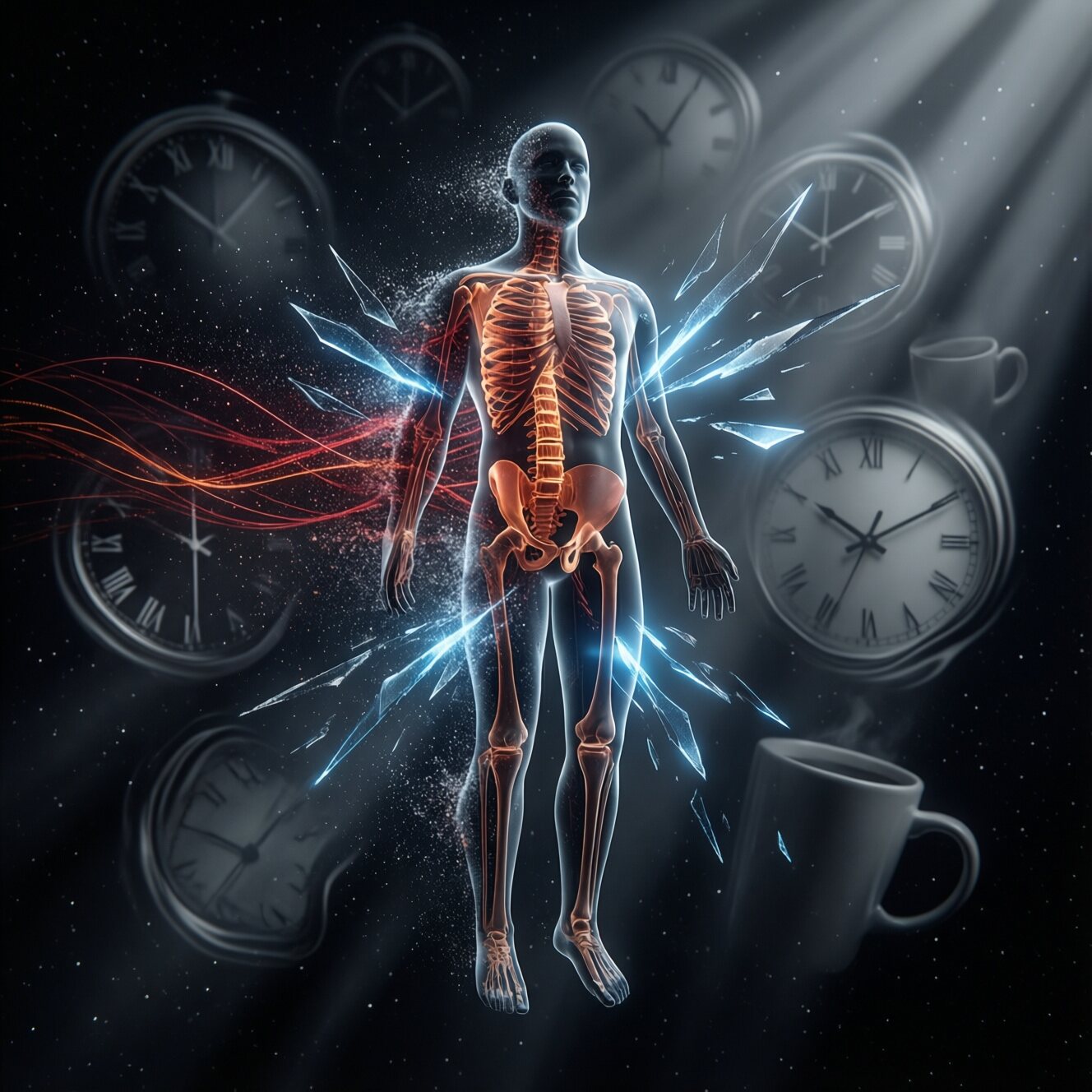
For me, “staying up late” has never been a choice but a long-term helplessness—I suffer from chronic insomnia, and my sleep quality is extremely poor. Always weighed down by stress and habitually drinking coffee to stay alert, I can sleep only about 3 hours a day, and my deep-sleep ratio is very low. My watch shows that I wake up as many as four or five times during the night. The truths Matthew Walker reveals in Why We Sleep? let me understand the root of this torment and see the fatal dangers of long-term sleep deprivation.
The Definition and Recognition of Insomnia
The book makes clear that insomnia differs from mere sleep insufficiency: my situation is insomnia—there’s plenty of time to attempt sleep, yet the ability to produce sleep is lacking; even lying in bed for the full 7 to 9 hours, I cannot obtain sufficient sleep quantity and quality. This is the typical manifestation of chronic insomnia, and stress and caffeine are precisely the two key triggers aggravating my insomnia.
The Fatal Dangers of Sleep Deprivation
Sleep’s impact on health is far greater than imagined: sleeping only 3 hours a night like me—far below the minimum standard of 6 to 7 hours—not only severely damages the immune system and doubles the risk of cancer, but also affects blood sugar and raises the risk of cardiovascular disease. Worse still, sleep deprivation aggravates anxiety and emotional distress, forming a vicious cycle of “stress causing insomnia, insomnia worsening stress,” and the coffee I rely on makes it even worse.
The Hidden Dangers of Caffeine
As the world’s most widely used stimulant, caffeine’s harms far exceed my understanding: it masks fatigue by occupying the adenosine receptors in the brain that produce sleepiness, and its half-life is as long as 5 to 7 hours—even a cup in the evening leaves half of it still active in the body by the early morning, directly causing my low deep-sleep ratio and frequent night waking. Worse still, long-term consumption creates dependence, and after stopping there is a “caffeine crash” with doubled fatigue, further worsening the insomnia.
The Scientific Mechanism of the Sleep Cycle
Sleep is not simple rest; it runs in 90-minute cycles divided into non-REM and REM sleep. The first half of the night is dominated by deep sleep that repairs the body, and the second half by REM sleep that regulates emotions. My low deep-sleep ratio and frequent night waking completely disrupt this cycle, and when I’m insomniac my brain can’t detach from anxious thoughts while the sympathetic nervous system is overactive, so the body and brain simply cannot complete repair—every day is wrapped in lingering fatigue.
The Widespread Reality and Misconceptions of Insomnia
The book emphasizes that sleep is the most important of the three elements of health, nature’s best remedy given to us against death, and that chronic insomnia has long become a widespread problem—1 in every 9 people meets the clinical standard, and women are twice as likely as men to suffer it. Regrettably, many people fall into misconceptions, relying on sleeping pills to relieve insomnia, unaware that sleeping pills only sedate the brain and cannot solve the root problem; non-pharmacological therapy is the more effective choice.
12 Tips for Healthy Sleep
For me, improving sleep is urgent. The 12 healthy-sleep tips Matthew Walker gives in the book’s appendix provide a clear direction for insomniacs like me, and are worth consulting and practicing for anyone troubled by sleep:
1. Stick to a fixed sleep schedule. Go to bed at the same time and wake up at the same time every day; as creatures of habit, humans find it hard to adapt to changes in sleep patterns.
2. Exercise is very beneficial, but don’t do it too late in the day. Try to exercise at least 30 minutes a day, but finish 2 to 3 hours before bedtime.
3. Avoid caffeine and nicotine. Coffee, cola, certain teas, and chocolate all contain caffeine, whose effects may take 8 hours to clear completely; drinking it later in the afternoon will affect sleep at night. Nicotine, as a stimulant, makes smokers sleep more lightly, and those quitting may wake early from withdrawal reactions.
4. Avoid alcoholic drinks before bed. A little alcohol may relax a person, but large amounts will lose REM sleep, leading to lighter sleep, and may also cause breathing problems at night; once the alcohol’s effect wears off, one easily wakes in the middle of the night.
5. Avoid large meals and drinks late at night. A simple snack is acceptable, but a large meal causes indigestion, and too much liquid leads to frequent trips to the toilet, disturbing sleep.
6. Try to avoid medications that delay or disrupt sleep. Some heart, blood-pressure, and asthma medications, as well as some over-the-counter cold and allergy drugs and herbal medicines, may disrupt sleep patterns.
7. Don’t nap after 3 p.m. Naps can make up for lost sleep, but an afternoon nap may make it harder to fall asleep at night.
8. Relax before bed. Don’t pack the day too full; reserve time to relax, and do light activities like reading or listening to music before bed.
9. Take a hot bath before bed. The drop in body temperature after a bath induces sleepiness and also helps relax and relieve tension, aiding sleep onset.
10. Keep the bedroom dark and cool, and don’t place any electronics in it; insomniacs should turn the clock face away from view to avoid anxiety about time.
11. Get some sunlight. Daylight is the key to regulating daily sleep patterns; try to be in natural sunlight for more than 30 minutes every day.
12. Don’t lie in bed awake. If you’re still awake or feeling anxious after 20 minutes in bed, get up and do something light until you feel sleepy, to avoid sleep-onset anxiety worsening the insomnia.
Conclusion: Sleep Is the Repair Code of Life
These tips fit the practical needs of insomniacs—without complicated operations, they can nonetheless improve the state of sleep in a targeted way. Sleep hides the code of life and is our cheapest yet most effective way of self-repair. May everyone troubled by insomnia like me stop toughing it out, face the importance of sleep squarely, practice these simple changes, and slowly escape the torment of insomnia to gain health and clarity.
评论
0 条评论