Reflections on A History of Quack Medicine
Flipping casually through A History of Quack Medicine, the part that resonated with me most turned out to be the section on “enemas”—after all, I myself once experienced a standard enema treatment in the hospital because of enteritis. Reading those absurd historical practices while recalling my own experience, the more I read the more I felt, and I couldn’t help but form some small thoughts about medicine.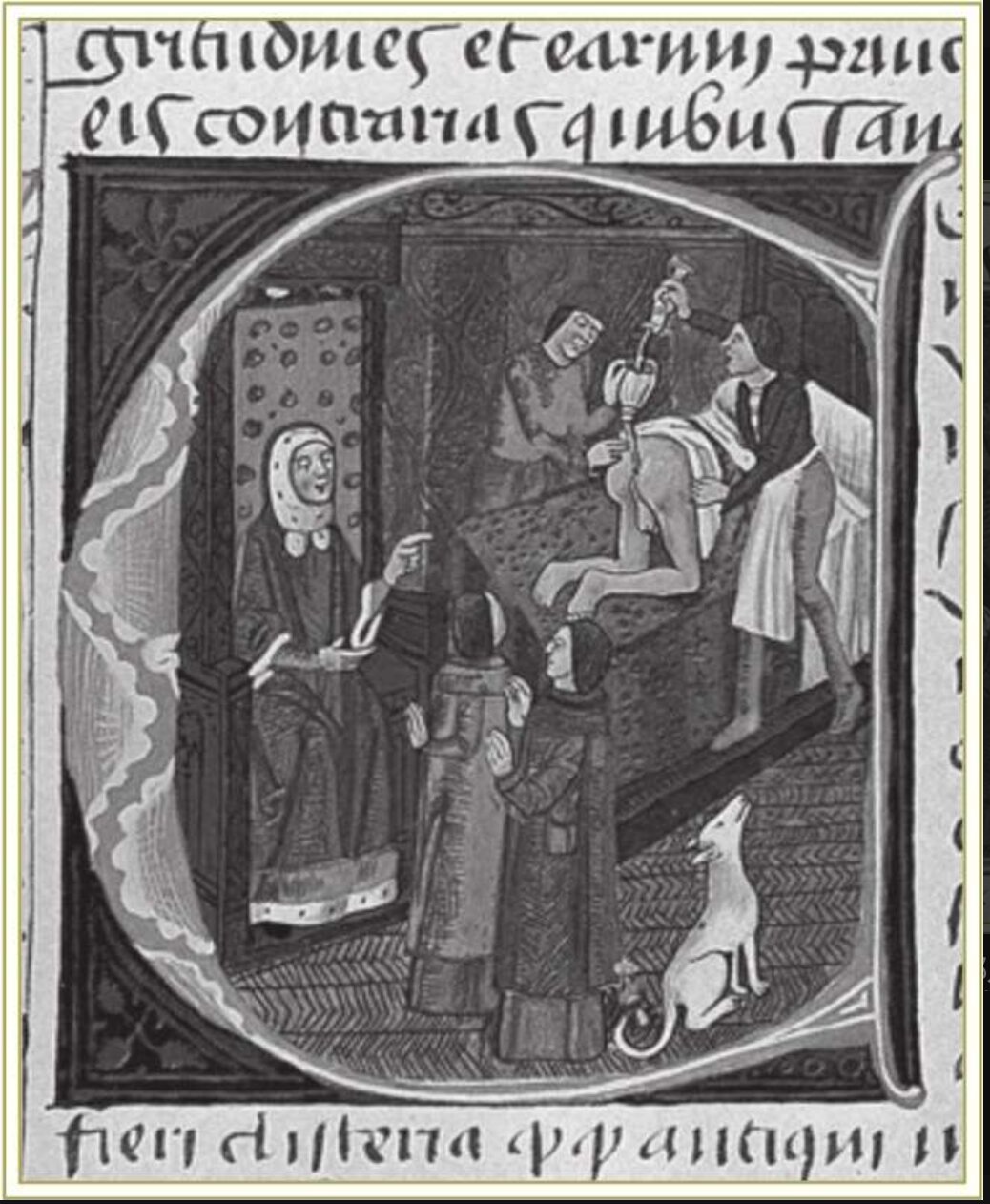
The enemas described in the book are so absurd as to be laughable. In the past, especially in the French royal court, enemas were actually a “must for health preservation”—Louis XIV had 2,000 enemas in his lifetime, which is quite a thought. Even more absurd were the enema procedures of the time: the medication was arbitrary—water, milk, and beer aside, even turpentine and soap could be added, with no scientific basis at all, purely a desperate search for any cure. The claimed scope of treatment was wildly exaggerated—from minor headaches and listlessness to tuberculosis, appendicitis, and even drowning, an enema was worth a try. No wonder Mozart’s father joked that “they treat a headache through the buttocks,” hitting precisely on the absurd beliefs of people at the time.
And the root of all this absurdity was a mistaken theory believed for thousands of years—the “autointoxication theory.” People firmly believed that feces were full of toxins, and that if they stayed too long they would seep into the body, causing illness and insanity at best, and at worst—exaggeratedly—sparking a world war or an alien invasion. Even more amusingly, as early as over 1,600 BC the pharaoh had a dedicated “guardian of the anus” responsible for enemas, and in the 15th century some delivered the liquid by blowing with their mouths—the scene both absurd and hilarious, and one can’t help but marvel that people in the age of scarce medical knowledge really went to great lengths to cure illness.
Besides enemas, another absurd therapy in the book that left a deep impression on me is bloodletting, and the most lamentable among them is the story of the musical genius Mozart. In his later years Mozart suffered from severe illness—weight loss, anemia, persistent vomiting and diarrhea, along with edema in the limbs—and could no longer compose; he even firmly believed he had been poisoned. Yet his doctors used the most popular bloodletting therapy of the time to save him. It’s estimated that in the last week of his life he lost at least 4 pints of blood, and ultimately, after bloodletting, he grew weak and unconscious and never woke again. No one wanted to murder this genius; the doctors genuinely wanted to save him—only that everyone then believed in the humoral theory, thinking that bloodletting could expel “bad humors” and balance the body, unaware that it was precisely this that hastened his death.
And bloodletting therapy is also inextricably linked with the barber’s pole we see so commonly today. In ancient Rome there were people called “tonsors” who not only cut hair and trimmed nails but also performed bloodletting; by medieval Europe, barbers doubled as “surgeons,” able to perform amputations, cupping, bloodletting, and more besides beautifying—smallpox, epilepsy, and plague could all be “treated” by bloodletting. The barber’s pole outside the shop was the barber-cum-bloodletter’s “advertisement”—the red line on the pole stood for blood, the blue for veins, the white for the tourniquet, and the bowl at the bottom symbolized the blood-collecting vessel. Put plainly, that pole is a “living fossil” of the bloodletting therapy of the day, and looking at it now it’s truly both absurd and interesting.
This makes me think of my own experience: when I went to the hospital earlier because of enteritis, the doctor gave me an enema of Kangfuxin Liquid made from Periplaneta americana extract. Compared with the absurd practices in the book, it’s worlds apart. Modern enemas have a clear scope of application, target only intestinal diseases, and the medication is scientifically verified; the core function is to repair the intestinal mucosa and relieve inflammation, without blind exaggeration or messy procedures—a thoroughly rigorous medical treatment. In that moment I truly felt that medicine is indeed advancing step by step from ignorance toward maturity.
Having finished this book and combined it with my own experience, my most profound reflection is this: might the medical conclusions we hold sacrosanct today also be regarded by later generations as “quack therapies” a few hundred years from now? Just as people then firmly believed bloodletting and enemas could cure all diseases—which now looks utterly absurd—the drugs and treatments we use now are all based on current scientific understanding; as research deepens, they too may be replaced by more precise, safer options.
But this is not to say today’s medicine isn’t reliable; on the contrary, it precisely shows that medicine is by nature a history of ceaseless trial and error and ceaseless progress. The absurdity of the past came from people’s limited understanding of the body and disease; the rigor of today is the result of countless people accumulating experience from mistakes and exploring ceaselessly. Like the enema in the book—from a “universal miracle cure” back then to a targeted treatment today—is exactly the best proof of medical progress.
The most valuable thing about this book is never to mock the ignorance of the past, but to teach us to revere medicine—to revere its rigor and also its “imperfection.” At the same time it reminds us that when facing illness we must not blindly follow folk remedies; trusting science and following doctors’ orders is the most reliable choice. And as for today’s medicine, we should both trust it and stay rational, understanding that it is always iterating and always becoming better.
评论
0 条评论