
The 5 AM Alarm
These past two months, I’ve turned into the kind of person I used to not understand at all.
Up at five in the morning, sitting in front of the computer until the early hours. Not for overtime — addicted. Addicted to AI.
OpenClaw, ChatGPT, Claude, MCP, Agent… every new concept is like a magnet, nailing me to the screen. I started using AI to write code, to analyze data, to make content, even to think for me.
My body started sounding the alarm: stiff neck, dry eyes, a protruding lumbar disc.
I decided to put the computer down today and go hike North Peak, to breathe some real air.

The Fortune-Teller at the Mid-Slope
The trail up wasn’t steep, but the stone steps were dense. Halfway up, it suddenly got lively — the roadside was lined with fortune-tellers, each with a divination stall, shouting “palm reading, fortune-telling, avoid bad luck and seek good luck.”
I don’t believe in this stuff, but one auntie cracked me up with a single line.
She was talking with a girl, and I only heard the girl say: “Aren’t you born in the Year of the Dragon? And this year is the Year of the Horse, right? Dragon-horse spirit! Dragon and horse are next to each other!”
I nearly laughed out loud — that idiom chaining, smooth as anything, seamless.
That’s a skill. Being able to bullshit is also a skill.
I even posted my thoughts to WeChat Moments: after so many years of work, I’ve deeply felt that if you’ve got a sharp tongue, even if your technical skills are a bit lacking, it doesn’t matter. If you can make the client happy, you can make money. Emotional value is value too, and an important one.
A fortune-teller climbing this high up the mountain, making money with his mouth alone — the man’s got real skills.
What Do You Call “Lying Down and Making Money”?
Climbing a few more flights of steps, I saw another person — a disabled man, missing one hand.
He was sitting by the stairs with a basin in front of him, a QR code pasted onto it, scrolling short videos on his phone with his one hand, and whenever someone passed by he’d say “congratulations and may you prosper.” Some tourists going up scanned the code, some didn’t. There were also some bills and coins in the basin.
I suddenly thought of a popular internet meme: What do you call lying down and making money?
That man, now that’s truly lying down and making money.
No clocking in, no overtime, no writing PowerPoints, no carrying KPI. Climb the mountain, find a spot, sit down, scroll your phone, collect money as it comes, breathe fresh air, get away from the city’s noise, soak up the sun.
Compared with my days slaving away at a big tech company, that was a completely different world.
While I was battling requirements with other departments in the meeting room, he was scrolling short videos;
While I was fixing bugs and handling emergency incidents at dawn, he was sleeping;
When HR called me in to talk about the layoff, he was still sitting there, and his QR code may well have gotten a few more tips.
Hard to say which life is better.
But at least in that moment, I envied his ease.
My Old Company at the Foot of the Hill

After coming down from the hike, my old company was right there at the foot of North Peak.
I’d arranged to have a meal and chat with former colleagues. HB and BJ were among the few friends I got along with at my old company. HB was also my former-former team lead, and BJ was the colleague I handed my work to when I left. Both knew about my layoff, and knew I’d been “studying like crazy” these past two months.
Before the meal, BJ messaged me on WeChat: he’d actually been meaning to reach out today anyway. “Did you know MK’s AI team is hiring?”
I actually did know. Two days earlier MK had posted a job opening on WeChat Moments and asked if I wanted to give it a try. I’d glanced at it and assumed it was the kind of tech-support role our previous department used for basic troubleshooting — not interested, so I’d just replied under the post that I wasn’t interested in doing tech support.
But the two of them said, “It’s an opportunity anyway, take a look, we can refer you.”
I thought about it — fair enough, I’m here anyway, no harm in chatting and seeing what the role actually is. Seeing what products they’re building with AI. It’s a learning opportunity too.
An Unexpected Match
So I set up a WeChat chat with MK, went back to the long-missed “back garden,” and only then realized the role really was different from what I’d assumed.
It wasn’t firefighting-style tech support, but product and technical operations for an AI project — helping business teams and enterprise clients build sites with AI, all handled by AI from front end to back end. Sure, kimi and claude code can do this kind of thing too, and under the hood it’s certainly a wrapper built on top of those existing large models. But people who truly understand code, who understand the development process, are still few and far between. The value of this kind of service is that it lets people who don’t understand the internet or AI easily fulfill their own needs in natural language — and the pages the product produces look pretty good. The interface is clean and simple too, without flashy, redundant features.
They said, “You should take a look. I see you’ve been studying like crazy lately, and the boss is really interested — send us the projects you’ve done and we’ll show our lead. If it works out I can set you up.”
So I sent my blog — over the past two months I’d written all my AI practice into it, and I’d also updated my résumé there: the automated practice on the open-source project OpenClaw AI, and even the Mermaid chart rendering problem I’d just solved today with a Feishu-submitted request, plus some open-source projects I’d done. I showed them all to the person in charge.
The head of the team looked it over and was quite interested; they set up an interview for that very afternoon.
I felt a little smug inside. Two months of studying like crazy had finally given me a real sense of being recognized.
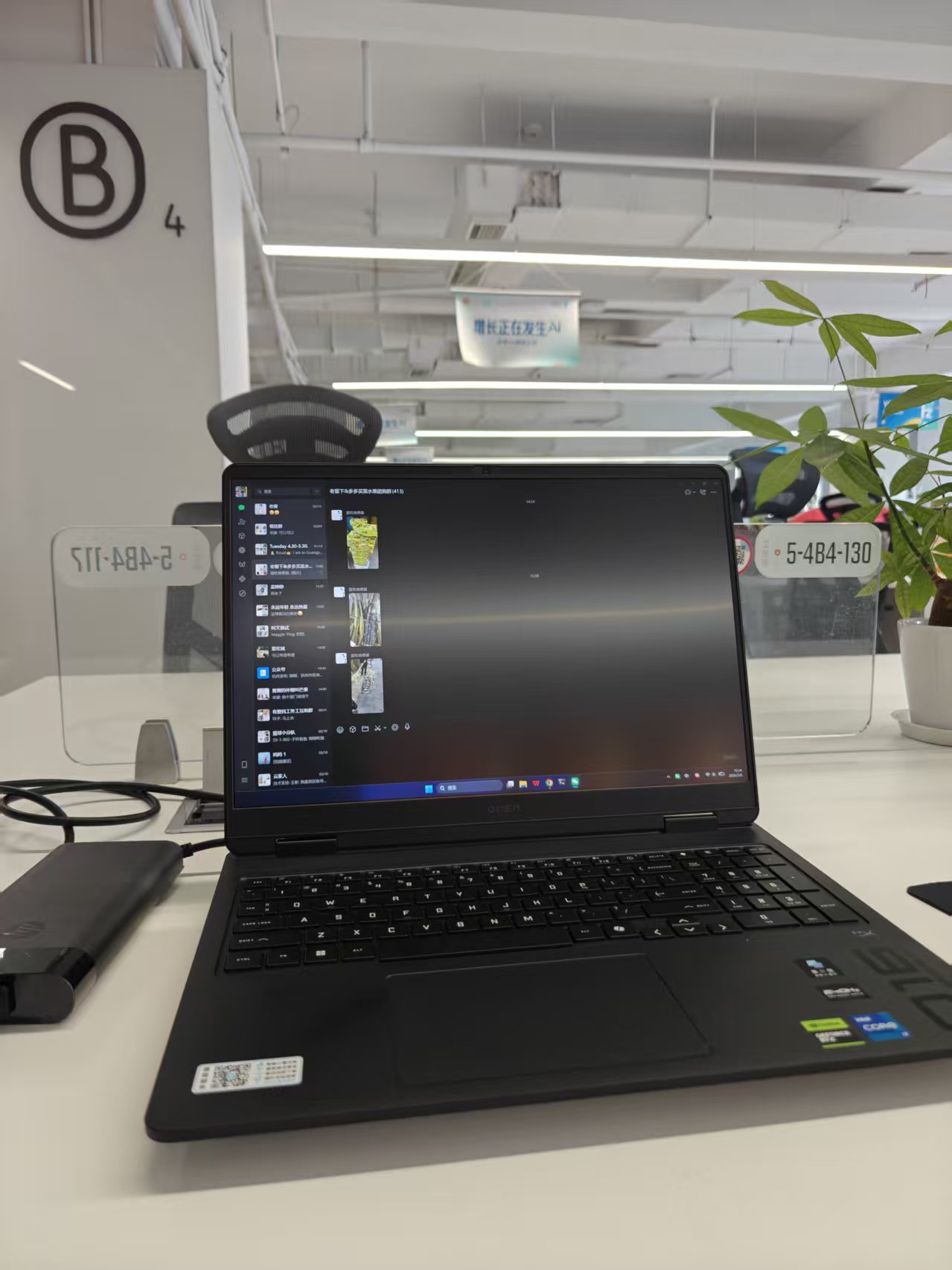
Walking into the familiar office building — the elevator, the corridor, even the smell in the air — all exactly the same as two months ago.
Consultant? Or Full-Time?
The team’s lead was a partner. His background is HR — I remembered seeing him once at an interviewer training. We chatted a bit; he asked what I’d been doing during my gap, my understanding of AI and RPA, and also asked why I was laid off. I answered everything truthfully — there was nothing to hide. He joked that after five years at the company, the severance must not have been small. And that being laid off doesn’t necessarily mean you’re really incompetent. Then he felt my skills and abilities matched the role well, but he threw out a condition that instantly made me unhappy:
“We’d like to start with a consultant arrangement for two months, paid the same as before, and see how it goes.”
My heart skipped a beat.
I know this playbook too well.
In fact, in the first month after being laid off, I updated my résumé a little and changed my status to “left,” and lots of outsourcing recruiters from Alibaba and ByteDance reached out to me. I didn’t reply to a single one. Some I couldn’t tell were outsourcing and chatted with a bit, then proactively asked whether it was an outsourcing role; when they said yes, I lost interest immediately. I didn’t reply to a single one of the outsourcing people who contacted me — I felt my technical foundation and work ability shouldn’t sink to the level of going into outsourcing. I also know many roles at companies today onboard people in the form of “partners” or “consultants,” which, plainly put, is outsourcing. Last year a former ByteDance colleague also asked whether I’d be interested in joining as an contractor, and I refused outright. A full-time employee makes 30k+ a month; a dispatched worker makes 20k. The cost saved is the company’s profit — you do the work, but promotions and bonuses have nothing to do with you. And from the company’s side it allows flexible staffing. A lot of companies are going this route now.
Two months ago I was just laid off and got N+1. Now they want me to come back as a consultant — what does that mean?
- No social insurance or housing fund — I’ve been paying flexible-employment social insurance myself these two months; the pension alone is over a thousand
- No labor-law protection — if after two months they don’t want you or the business doesn’t pan out, they just say the word and the collaboration may be over
- Service-remuneration tax — I might even have to invoice myself, with a higher tax rate. We didn’t get into specifics, but if it’s not a labor contract but something like a manuscript fee, the rate could differ.
They explained: “It’s for flexibility; both sides get a trial period.”
I understand. It’s to save cost and avoid risk.
Just like the fortune-teller on the mountain, who gets people to hand him money with just his mouth; and like the disabled man by the stairs, who gets paid lying down.
The company also wants to test my value at the lowest cost.
The question is, am I willing?
What Am I Torn About?
Honestly, I’m a little tempted. Mainly because I want a change of work content — in my previous role I really felt I’d hit a ceiling. I wasn’t learning anything new. The role content is different now, and I think I could learn something different. After all, even a full-time offer with onboarding carries the risk of being cut during probation; at least this consultant arrangement lets me first see whether the work is even worth doing.
These two months of solitary study, though fulfilling, have also been lonely. Facing the computer screen every day, talking with AI, I sometimes doubt myself: is any of this actually useful? Am I really improving? I need an environment to put what I’ve learned into practice.
The other side looked at my work and felt it was really cool, a great match — like a shot in the arm, confirming for me: these two months weren’t wasted.
But reason tells me:
Going back as a consultant, plainly put, is outsourcing — putting myself in a position with no protection. And I have a deep aversion to outsourcing.
They value my ability but don’t want to bear the risk of employing me. If the two months go well, maybe they convert me to full-time; if not, it’s just “collaboration over.”
And besides, I just took N+1 and walked away, and now I’m going back as a consultant — will the company think I’m easy to deal with? Will they be able to push me around at will in the future? These are all things I’m weighing.
The final point: AI is evolving way too fast. Their product, plainly put, is still a wrapper on top of underlying large models, making money off the information gap, and it may not go far. That’s one of my concerns too.
Thoughts on Two Ways of Making Money
On the way home, I thought again about the two people on the mountain.
The fortune-teller relies on his gift of gab, on emotional value. He doesn’t produce anything physical; what he sells is reassurance, hope, a psychological massage. Clients pay willingly, because they’re happy.
The disabled man relies on his position, on a traffic mindset. He just sits there, makes no extra effort, and as people come and go, someone always scans. He doesn’t force it, but he doesn’t refuse either.
And me — I relied on technical ability, selling my time and labor. Nine to ten every day, writing code, fixing bugs, handling customer issues, sitting in meetings, reporting, and drawing a salary at month’s end.
After being laid off, I suddenly realized that these three ways of making money carry completely different risks.
- The fortune-teller: no fixed clients — income today, maybe none tomorrow, but he can change location anytime, free
- The disabled man: income is uncertain, but his cost is almost zero; he earns even lying down
- Me: fixed income, but the company can lay you off whenever it wants; N+1 looks like compensation, but really it’s buying out six years of my time
Now the company wants me to be a consultant, which is really saying: We recognize your ability, but we don’t want to bear your risk.
No Answer On the Spot
At the end of the interview, they raised that consultant plan. I’d already said clearly: “I don’t think this arrangement quite meets my expectations. I still want a stable job I can commit to long-term.“
They didn’t say much more, just explained: “The project is running and just starting out; we don’t want to invest too many resources all at once.” From their perspective, I understand completely.
Then they told me I didn’t need to answer on the spot — go home and think it over.
Still Haven’t Decided
Back home, I took a shower and sat down at the computer to write today’s experience down.
I’m thinking: if I had a million in savings right now, I’d refuse this offer without hesitation and keep exploring independent projects, taking on consulting gigs, even trying a side hustle. A few days ago someone approached me to write them a scraper — the functionality was simple, just tedious — and said I could earn twenty or thirty thousand. But after talking it over in detail, I felt there was legal risk, so I didn’t take it. Still, I feel that at my age, the side-hustle path is something I have to start on. Working for someone else improves your ability only very marginally; you’re forever passively waiting for someone to hand you a piece of meat.
If I had only ten thousand left, I’d probably accept it, even on unequal terms, because survival comes first.
But I’m somewhere between the two right now — I have some confidence, but not much.
This reminds me of an old saying: Money is a person’s courage.
But I know even better that the reason I lack confidence is very real — mortgage pressure, and a kid still in kindergarten. These are soft spots; they don’t allow me to be willful.
What I lack is absolute confidence in my own value, plus resources and capital.
If they truly recognized me, they should be willing to go through the formal onboarding process, even with a probation period. I know this might be a negotiation tactic — it’s just a matter of who gives in first. But actually I’m not in a hurry, because I only just started looking for a job today. This counts as the first interview.
If they just want a low-cost trial, then two months later I might have another “being optimized” experience. Though even with a labor contract, if they lay me off it’s the same — just one extra month’s salary. That might be the calculation they’re making.
Next Wednesday’s Workshop
They said there’s a workshop next Wednesday and I’m welcome to come try it out first, to get a feel for what they’re actually doing. I think that’s worth going to listen to, if I have time. A former colleague also pulled me into the group chat.
I really appreciate them taking the time to meet and talk with me, and I appreciate my former colleague’s referral and his recognition of my past work ability. But whether to take this gig, I still haven’t decided.
Whatever. I’ll deal with it next week.
But at least tonight, the mountain breeze of North Peak, the fortune-teller’s “dragon-horse spirit,” and that disabled guy lying there scrolling short videos all gave me one reminder:
There are many ways to make money, but dignity can’t be traded away.
Afterword
By the time I got to here, it was already 8:30 at night. Tomorrow I have to get up early to send out résumés again.
Whatever I end up choosing, these two months of studying like crazy have at least given me the confidence to choose.
评论
0 条评论