Introduction
Chen Xubin’s Two Thousand Years of the Qin System (《秦制两千年》) is a history book that gives you chills down your spine after reading it. It tears away the warm veil of “prosperous ages” and “benevolent governance,” laying the essence of two thousand years of Chinese imperial history bare before the reader: from Qin to Qing, dynasties changed and family names rotated, but the core of rule never changed.
This book is not a simple historical narrative but an anatomy of power. Through 16 historical cross-sections, it peels apart layer by layer the ruling code of the “Qin system” that lasted two thousand years. After reading it, you’ll understand why “in prosperity the common people suffer; in decline the common people suffer” is not a literatus’s sentimental lament but the inevitable result of how the institution operated.
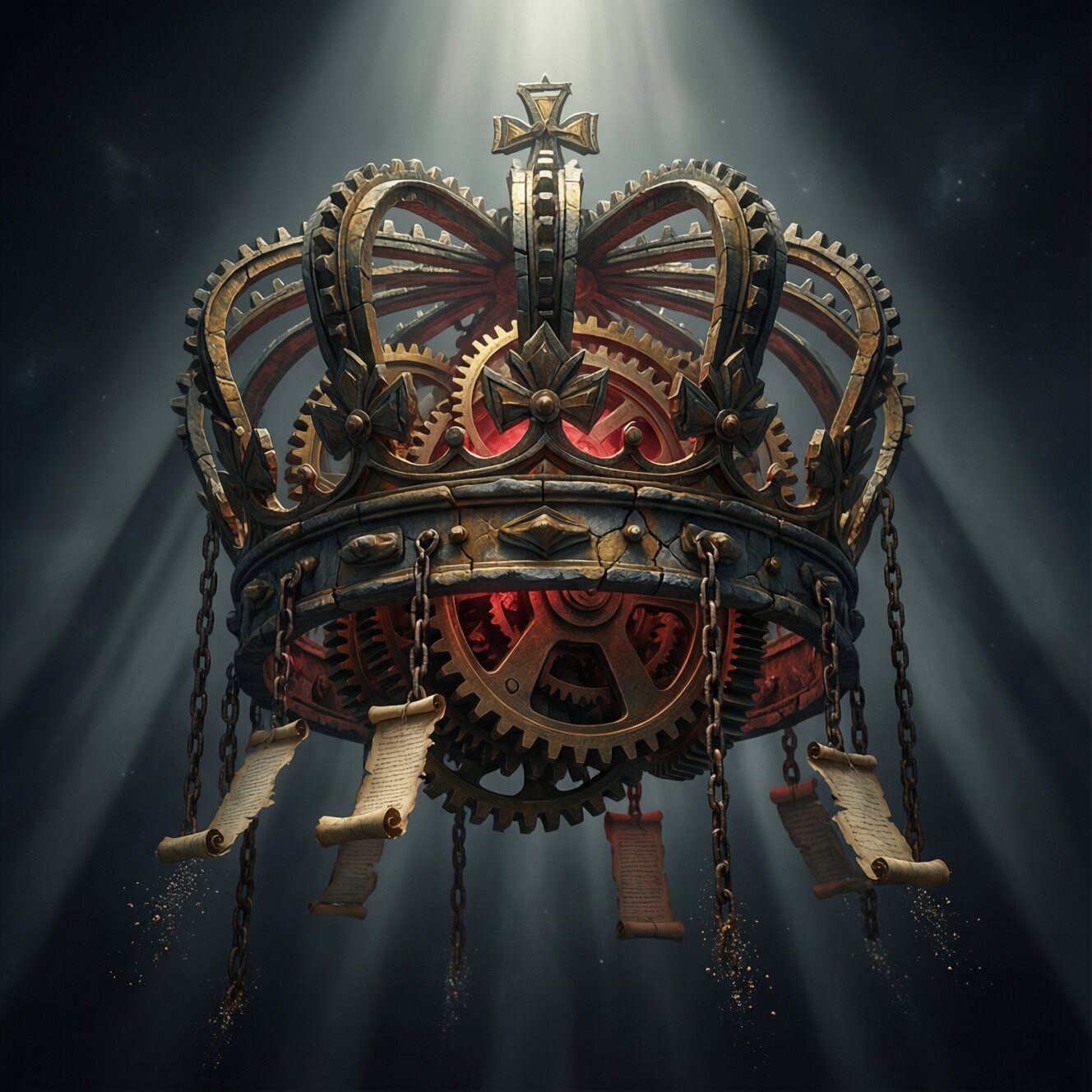
I. What Is the “Qin System”?
First we need to clear up a misconception: the Qin system is not the same as the institutions of the Qin dynasty.
The Qin system is a system of imperial rule whose theoretical foundation was laid by Shang Yang and Han Fei, whose practical framework was fixed by Qin Shi Huang, and which later dynasties continuously optimized and perfected. It has two fundamental characteristics:
1. Base of Rule: Bureaucrats Replace Aristocrats
Abolishing the enfeoffment system and implementing commanderies and counties; replacing hereditary aristocrats with a mobile, replaceable, non-hereditary bureaucratic group. Bureaucrats are both tools of imperial power and constantly suspected, checked, and suppressed by it — guarding against factions, dividing authority, supervision: not one of these can be spared.
2. Core Goal: Maximizing Extraction + Social Atomization
The ultimate purpose of all institutional design is only two things:
- Extracting taxes, corvée, and soldiers from the populace
- Eliminating every possible civil organization that could challenge imperial power
Clans, powerful local families, merchant guilds, popular associations — all must be broken up. The ideal state is for the common people to become “a heap of loose sand,” so that individuals are powerless to resist and can only survive by clinging to imperial power.
3. Ideology: Confucian on the Outside, Legalist on the Inside
This is the most ingenious ruling technique —
On the surface, it honors Confucianism, speaks of benevolent governance, and stresses ethics, packaging legitimacy;
At the core, it uses Legalist statecraft, harsh laws and severe punishments, the collective-punishment system, household registration control, and the suppression of commerce in favor of agriculture.
As the author says: “Governing the state by the way of Shang Yang and Han Fei, while concealing the fact that one is a follower of Shang Yang and Han Fei.”
II. The Three Great Pillars of the Qin System
Pillar One: Managing Officials — A Closed Loop of Control over the Bureaucracy
Imperial power’s attitude toward the bureaucratic system is contradictory: it must use it, and it must guard against it.
- Selecting officials: from the recommendation system and the nine-rank system to the imperial examinations, the core is to break the monopoly of great families and select “humble-gate” men and “obedient subjects” loyal to imperial power. Make bureaucrats the “hired hands” of imperial power, not warlords ruling their own domains.
- Checks and balances: the Three Departments and Six Ministries checking one another, the Censorate’s supervision, the factory guards (secret police), the secret-memorial system, rotation of officials, avoidance-of-kin appointments… strictly preventing bureaucrats from banding together and growing too powerful.
- Rewards and punishments: promotion determined by “performance” (essentially extraction efficiency), and severe punishment for corruption, factionalism, and defiance of orders. Bureaucrats are both an instrument of rule and a scapegoat imperial power can sacrifice at any time.
Pillar Two: Managing the People — Weakening, Impoverishing, Dispersing, and Information Asymmetry
Shang Yang’s “five techniques for managing the people” (weakening the people, impoverishing the people, exhausting the people, humiliating the people, and information asymmetry) ran through two thousand years:
| Method | Specific institution | Purpose |
|---|---|---|
| Household registration control | The ten-household/five-household system, the baojia system, the Yellow Registers/fish-scale registers | Nail people to the land and have them spy on one another |
| Economic control | Suppressing commerce in favor of agriculture, state monopoly of salt and iron | Curb the flow of capital, freeze the small-peasant economy |
| Disbanding organizations | Banning parties and associations, suppressing clans | Eliminate the congregation of popular forces |
| Thought domestication | Sole veneration of Confucianism, literary inquisitions | Unify ideology, eliminate dissent |
Chain of logic: an impoverished people is easy to govern, a dispersed people is unorganized, an ignorant people is easy to subdue.
Pillar Three: Extraction and Maintaining Stability — The Root of the Cycle of Order and Chaos
Under the Qin system, what is the essence of a “prosperous age”?
It is not the people being rich, but high extraction efficiency, temporarily eased contradictions, and a bureaucratic system that can still function. The Rule of Wen and Jing, the Rule of Zhenguan, the Kang-Qian Prosperity — behind all of them were short-term adjustments of light taxes and low corvée, not a qualitative change in the institution.
The logic of decline is always strikingly similar:
Unlimited extraction → land consolidation, people unable to live → bureaucratic corruption, collapse of efficiency → roving refugees everywhere, peasant uprisings → dynastic change → the new dynasty rebuilds the Qin system → endless repetition
As long as the core stays the same, there is no escape from this cycle.
III. 16 Historical Cross-Sections: The Trajectory of the Qin System’s Evolution
This book selects 16 key nodes to show how the Qin system was implemented, optimized, and solidified:
| Dynasty | Key node | Evolution of the Qin system |
|---|---|---|
| Qin | Shang Yang’s reforms | Foundation: abolish the well-field system, implement commanderies and counties, military merit nobility, collective punishment |
| Qin | Qin Shi Huang | Fixation: uniform script, uniform cart gauge, burning books and burying scholars, harsh laws and severe punishments |
| Han | Han inherits the Qin system | Packaging: sole veneration of Confucianism, the recommendation system, the pattern of Confucian outside and Legalist inside takes shape |
| Wei-Jin | Nine-rank system | Compromise: rise of the powerful clans, imperial power and aristocrats temporarily co-rule |
| Sui-Tang | Institutional rebuilding | Revival: imperial examinations, equal-field system, fubing (militia) system, strengthened centralization |
| Song | Strong trunk, weak branches | Extreme: reclaim military authority, divide administrative authority, keep standing armies and a swollen officialdom, maximize fiscal extraction |
| Ming | Abolish the chancellorship, create the cabinet | Pinnacle: abolish the prime minister, create the cabinet, factory guards, Yellow Register control, maritime ban |
| Qing | Grand Council | Closed loop: Grand Council, secret-memorial system, literary inquisitions, tax reform merging the head tax into the land tax, a twin peak of centralization + extraction |
Other important cross-sections include: Wang Mang’s reforms (the failure of a restorationist reform), Northern Wei’s equal-field system (an extraction innovation of a northern regime), the An Lushan Rebellion (the implosion of the military-governor system), Wang Anshi’s reforms (a technological upgrade of fiscal extraction), Zhang Juzheng’s reforms (the efficiency optimization of the single-whip tax law), the late-Ming refugee crisis (the general collapse of the institution), the collapse of the late Qing (disintegration under external shock), and so on.
They all point to one thing: every reform was aimed at repairing the Qin system and strengthening imperial power/extraction, and never touched the core of the Qin system.
IV. Core Conclusions: The Sharpest Insights
1. A Hundred Generations All Practice Qin Governance
From Qin to Qing, dynasties changed their family names, but the core of the Qin system did not change: imperial power supreme, bureaucrats managing the people, extraction to the limit, social atomization, Confucian outside and Legalist inside.
2. In Prosperity the People Suffer; in Decline the People Suffer
Under the Qin system, the common people are forever the object of extraction.
- A prosperous age is a “low-pain period” (a temporary easing of the squeeze on interests)
- An age of chaos is a “period of total eruption” (contradictions irreconcilable)
3. The Cycle of Order and Chaos Has No Solution
As long as the core of the Qin system stays the same, there is no escape from the cycle of “establishment—extraction—corruption—collapse—rebuilding.” Two thousand years of history are nothing but different renditions of the same script.
4. Tear Off the Filter and Face the Truth
This book is not a denial of history but a restoration of the true rules of imperial power: everything is for the stability of imperial power, not for the people’s well-being. The so-called “benevolent governance” and “rule by virtue” are nothing but the lubricant of rule.
V. Reflections and Takeaways
After finishing the book, several questions worth pondering:
Q1: Why could China maintain two thousand years of great unity?
The “success” of the Qin system lies in its creation of a set of ultra-stable ruling techniques — by breaking up society and atomizing individuals, it made large-scale centralized rule possible.
Q2: Why did capitalism not emerge spontaneously in China?
The core logic of the Qin system is “suppressing commerce in favor of agriculture” — the flow of capital threatens the stability of rule and must be suppressed. With no protection of property rights and no spirit of contract, merchants were forever the imperial power’s cash machine.
Q3: When did this system end?
It did not end with the fall of the Qing dynasty. The real end is a change in the institutional foundation — the shift from the static extraction of an agrarian society to the dynamic development of a modern society. This is a long process.
VI. Mind Map Outline
- Reading Notes on *Two Thousand Years of the Qin System*
- Core Definition
- Qin system ≠ institutions of the Qin dynasty
- Two characteristics
- Bureaucrats replace aristocrats (abolish enfeoffment, implement commanderies and counties)
- Maximizing extraction + social atomization
- Confucian outside, Legalist inside
- Three Great Pillars
- Managing officials
- Selecting officials: imperial examinations, breaking the great families
- Checks and balances: division of power, supervision, secret memorials
- Rewards and punishments: performance determines promotion
- Managing the people
- Household registration control (ten-household, baojia, Yellow Registers)
- Suppressing commerce in favor of agriculture (freeze the small peasant)
- Ban popular associations (break up organizations)
- Thought control (Confucian domestication, deterrent punishments)
- Extraction and maintaining stability
- Prosperous age = high extraction efficiency
- The cycle of order and chaos has no solution
- Managing officials
- 16 Historical Cross-Sections
- Qin: Shang Yang's reforms, Qin Shi Huang (foundation and fixation)
- Han: sole veneration of Confucianism, recommendation system (Confucian outside, Legalist inside)
- Wei-Jin: nine-rank system (compromise with powerful clans)
- Sui-Tang: imperial examinations + equal-field system (revival of centralization)
- Song: strong trunk, weak branches (financial extreme)
- Ming: abolition of the chancellorship, factory guards (pinnacle of totalitarianism)
- Qing: Grand Council, secret memorials (closed loop of centralization)
- Core Conclusions
- A hundred generations all practice Qin governance
- In rise and fall, the people always suffer
- The cycle of order and chaos has no solution
- Everything for imperial power, not for the people's livelihood
- Core Definition
📋 View the plain-text version of the mind map
|
Conclusion
Two Thousand Years of the Qin System is a book that sober you up. It does not eulogize prosperous ages or beautify emperors, but uses a cool scalpel to dissect the underlying logic of how power operates.
After reading it, when you look again at the “enlightened rulers” and “honest officials” in historical dramas, you’ll have a completely different perspective. Those policies of “light taxes and low corvée” and “let the people rest” are, in essence, nothing but the ruling machine maintaining itself; those “peasant uprisings” and “dynastic changes” are nothing but different outputs of the same program.
Understanding the Qin system is a key to understanding Chinese history. It cannot answer every question, but it can let us face history with less romantic imagination and more rational scrutiny.
Title: Two Thousand Years of the Qin System: The Power Rules of Feudal Emperors
Author: Chen Xubin
Publisher: Zhejiang People’s Publishing House · Jingweidu Series, 2021
Rating: ★★★★★ (a must-read in the history category)
评论
0 条评论