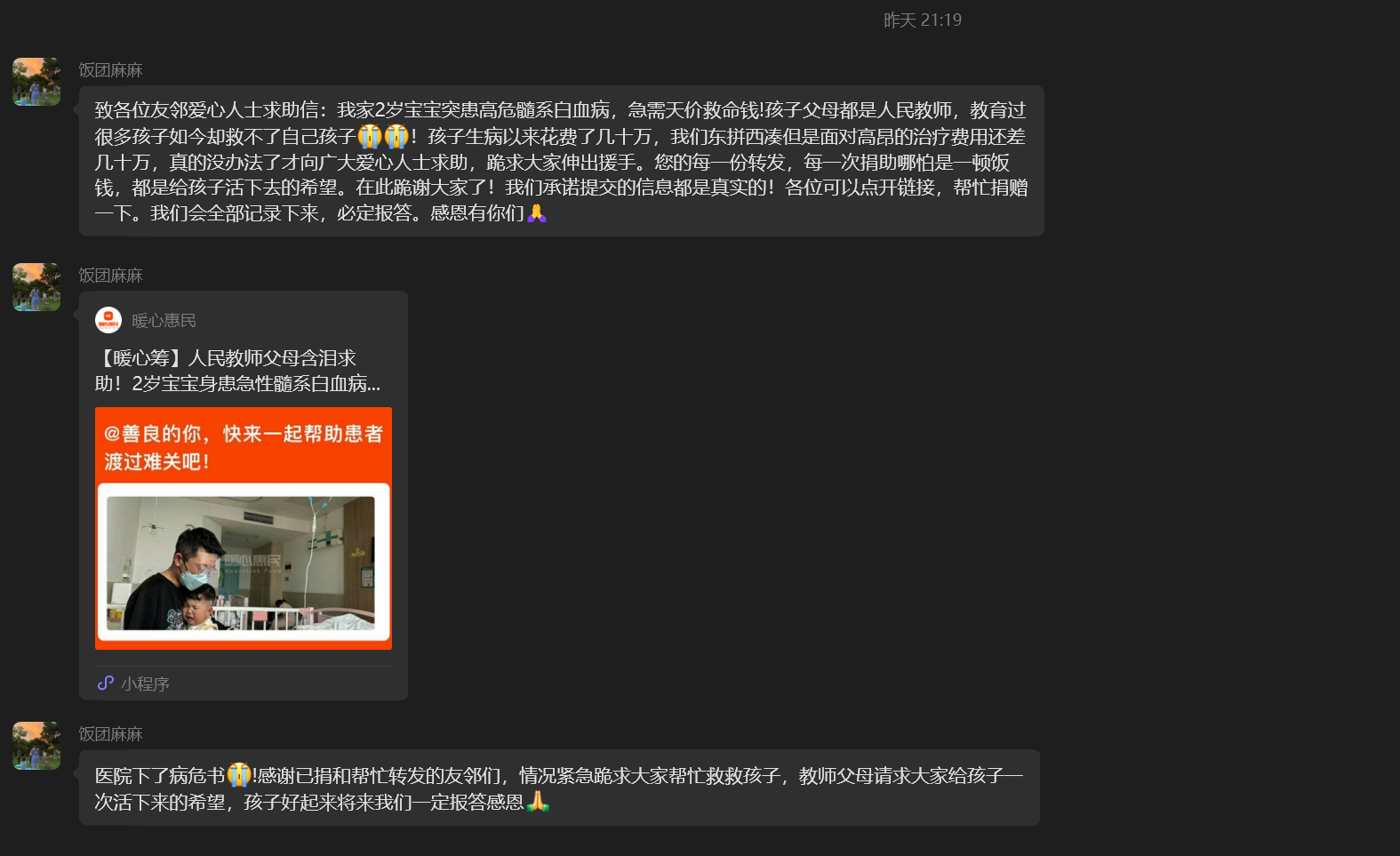
Last night at 9 p.m., a tear-choked plea suddenly flooded the homeowners’ group: “An open letter to all dear neighbors and kind-hearted people: my 2-year-old baby has suddenly been diagnosed with high-risk myeloid leukemia, and we urgently need a huge sum of life-saving money! The child’s parents are both public-school teachers. We’ve taught so many children, and now we can’t save our own…”
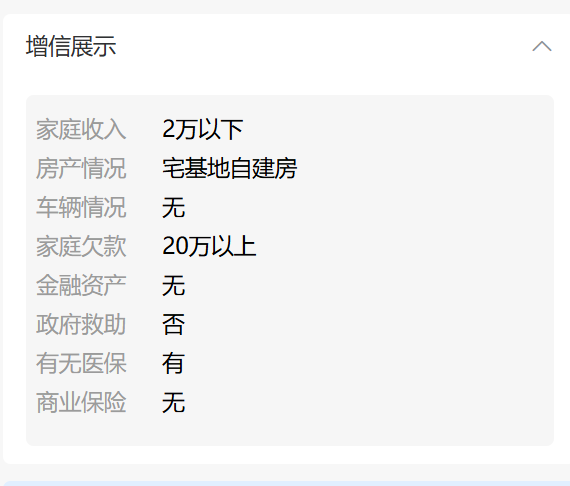
A plea like this, attached to a mini-program link, will instantly break down almost anyone’s psychological defenses. But when I clicked the link, I found a whole chain of details that chilled me to the bone: the apartment number was written only as a vague “59-3,” with no full unit number; the fundraising platform was one I’d never heard of, called “Warm-Heart Benefit for the People”; the donation page said “household income under 20,000 yuan, self-built house on homestead land, debts of over 200,000 yuan”—which flatly contradicted the plea’s claim that the parents were “tenured teachers.”
The more I looked, the more alarmed I became—this was no plea for help. It was a scam wearing the cloak of compassion.
1. The Fatal Contradictions Hidden in “Homeowners’ Group Fundraising”
A genuine plea from someone truly at their wit’s end, needing neighbors’ help, will never wear down everyone’s trust with vague information. A scammer’s plea, by contrast, is riddled with flaws from the very start:
1. Identity Information: A Vague Apartment Number Is the Scammer’s “Lifeline”
A legitimate homeowner’s plea will always spell out the complete apartment number, and will even actively offer, “Anyone can contact me privately to verify.” But scammers only dare to write vague things like “59-3,” because they aren’t residents of the complex at all—they’re afraid the property management or neighbors will come knocking to verify, and one poke would burst the bubble.
Police in many places have exposed this trick: scammers use nicknames like “Rice Ball Mama” to sneak into dozens of homeowners’ groups across complexes, copy-pasting the same plea script. The moment they’re pressed for a specific apartment number or asked whether neighbors can visit, they go silent, quit the group, or get kicked out by the admin.
2. Contradictory Information: “Teacher Parents” and “Annual Income Under 20,000” Are a Lie by Themselves
The plea repeatedly stresses “the child’s parents are both public-school teachers,” yet the donation page says “household income under 20,000.” This is the most obvious logical hole. Even a tenured teacher in a remote region basically earns well over 50,000 a year, with full social insurance, medical insurance, and housing fund—many also have supplementary medical coverage, giving them an extremely high reimbursement rate for serious illness. There’s simply no way they’d reach the point of needing to crowdfund life-saving money from stranger neighbors.
The phrase “self-built house on homestead land” flatly conflicts with the identity of “an urban complex homeowner.” If they really were a resident of this complex, the home would be either commercial housing or a demolition/resettlement unit—there’s no way this obvious trace of an out-of-town fake template would show up.
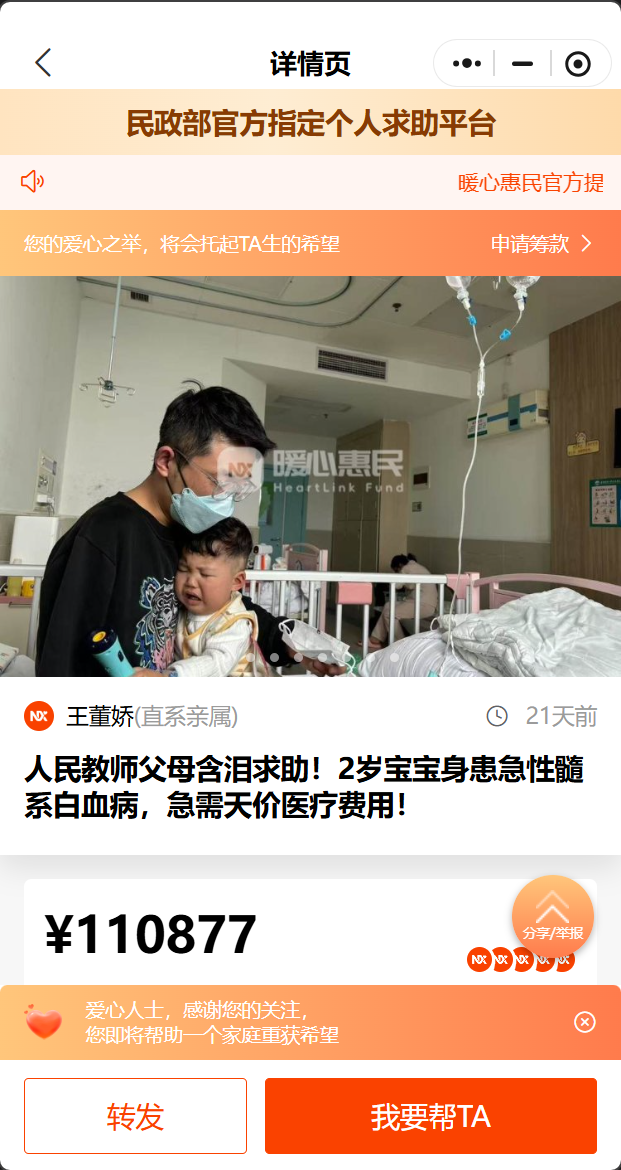
3. Platform Traps: Obscure Platforms Like “Warm-Heart Benefit for the People” Are the Scam’s “Protective Umbrella”
Many people think, “The platform opens, it looks like a legitimate fundraising site,” and let their guard down. But in reality, these platforms aren’t legitimate public-welfare platforms registered with the Ministry of Civil Affairs at all—they’re just gray tools run by commercial companies:
- Their “review” is mostly just going through the motions—the system takes a glance to see if there’s a photo of a medical record and a stamp, and approves it, without even calling the hospital to verify;
- There’s even a whole forgery industry chain—for a few dozen yuan you can get someone to Photoshop a medical record, a diagnosis certificate, or a payment slip, easily fooling the platform’s automated review;
- The platforms themselves don’t do any fund supervision either. The money you donate may go straight into the scammer’s private account, never reaching the patient at all.
2. A Genuine Plea for Serious Illness Will Never Show These Traits
Many people say, “What if this is real? Not donating is too cold-hearted.” But people who genuinely need help will never use this kind of vague, contradictory information to plead. A legitimate plea will always meet these conditions:
- Transparent identity: They actively provide the full apartment number and the patient’s name, and are even willing to cooperate with neighbors visiting to verify the information;
- Complete materials: A legitimate platform posts the full hospital diagnosis certificate, hospitalization payment slips, and the patient’s ID, and all materials can be matched to the patient’s information;
- Compliant platform: They only use well-known legitimate platforms like Shuidichou, Qingsongchou, or Tencent Charity—never an obscure mini-program with a knockoff-sounding name;
- Self-consistent logic: Income, property, and debt information all match, with no low-level contradictions like “a teacher’s income below the poverty line.”
3. A Scam-Prevention Guide for Homeowners’ Group Fundraising: Protect Your Goodwill, Don’t Let Scammers Succeed
Faced with a fundraising plea in a homeowners’ group, you don’t have to coldly refuse outright—but you should definitely do these things, so you neither wrong a good person nor let a scammer wear down your goodwill:
Step One: Verify First—Don’t Donate, Don’t Forward
No matter how soft-hearted you are, don’t act yet. Once your money goes into a fake platform, it’s gone for good. And don’t forward it for the scammer either—every forward you make helps him widen the scam’s reach.
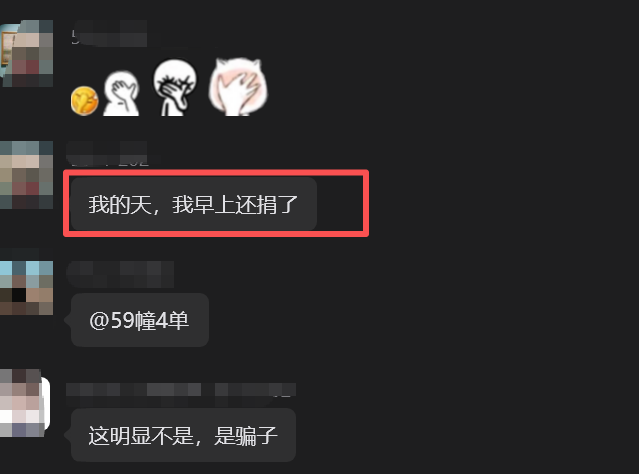
Step Two: Ask Politely, and Poke Holes in the Scammer’s Lies
You can ask politely but firmly in the group. People who genuinely need help will be willing to provide information; a scammer will only change the subject and guilt-trip you:
- “Could you tell us the child’s hospital, department, and bed number? We’d like to verify the situation, and it’d also make it easier to visit and help at the hospital later.”
- “You only wrote ‘59-3’ for the apartment number—which unit is that? I’m with property management and want to register the information so we can assist later.”
- Search for the keyword “xxx platform scam”—that’s how I found it: https://mp.weixin.qq.com/s/3ChDfuA7bzbUrmwSLnlN8g?scene=1&click_id=1
Step Three: Verify with Property Management / the Group Owner, and Give the Scammer Nowhere to Hide
Send the plea straight to property management or the group admin, and have them:
- Check whether the poster is actually a resident of the complex, and whether that household really exists at the apartment number;
- Post an announcement in the group reminding everyone to verify information before donating, so more neighbors don’t get scammed.
Step Four: Report the Link and Account, So Fewer People Get Scammed
Report the fundraising mini-program link and the poster’s WeChat as “false information / fraud” within WeChat. The platform will handle this kind of violating content, sparing more people from being scammed.
Final Thoughts: Goodwill Is Not a Scammer’s “Get-Out-of-Jail-Free Card”
Many people think, “Refusing to donate is cold-hearted.” But your goodwill shouldn’t become a scammer’s ATM. A genuine plea will never wear down everyone’s trust with vague information, contradictory identities, and an obscure platform.
More important than donating blindly is protecting that goodwill and leaving a path open for those who genuinely need help. After all, every bit of your vigilance protects more people’s goodwill from being betrayed.
The best approach is simply to take part in no form of donation whatsoever. Even the Red Cross has all kinds of forgery; and yet here you are, brimming with kindness, giving money to some no-name commercial “charity” company—which only shows you have no brains.
评论
0 条评论